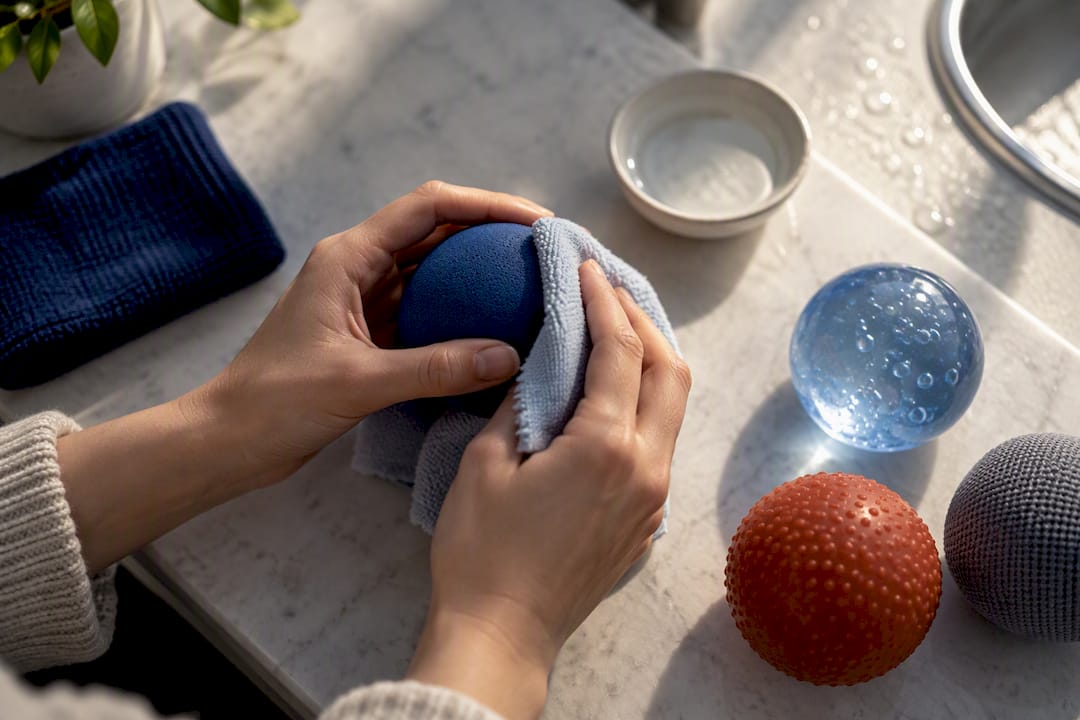
For most stress balls, the safest first move is a barely damp soft cloth with one drop of mild dish soap, wiped gently, then wiped again with a clean damp cloth and air-dried completely. Never soak the ball or run it under a faucet, and skip the dishwasher, heat, or alcohol entirely. Foam and gel versions need extra caution. If it’s punctured or leaking, stop using it and follow poison-center guidance instead of trying to clean it.
TL;DR:
- Foam stress balls are highly water-sensitive and should only be cleaned with a barely damp cloth using mild soap, avoiding soaking or heat.
- Punctured or leaking stress balls must be discarded immediately, especially if they show signs of trapped moisture, tears, or persistent stickiness.
- Disinfect nonporous stress balls with EPA-registered disinfectants or diluted bleach, but avoid harsh disinfectants on porous foam or gel balls.
- Regular cleaning is essential for shared or mouthed stress balls, with daily wiping for classroom use and immediate cleaning after contact with saliva or dirt.
- Choose stress balls with clear care instructions and made of washable materials to ensure safe cleaning and prolong their lifespan.
Table of Contents
- What Type of Stress Ball Do You Have?
- How Do You Clean a Stress Ball Step by Step?
- How Do You Remove Sticky Residue or Stains?
- Should You Disinfect a Shared Stress Ball?
- When Should You Throw Away a Stress Ball?
- How Often Should You Clean and Store a Stress Ball?
- What Mindpanda Looks For in a Washable Stress Ball
- Where to Find Washable, Themed Stress Balls
- Sources
- FAQ
What Type of Stress Ball Do You Have?
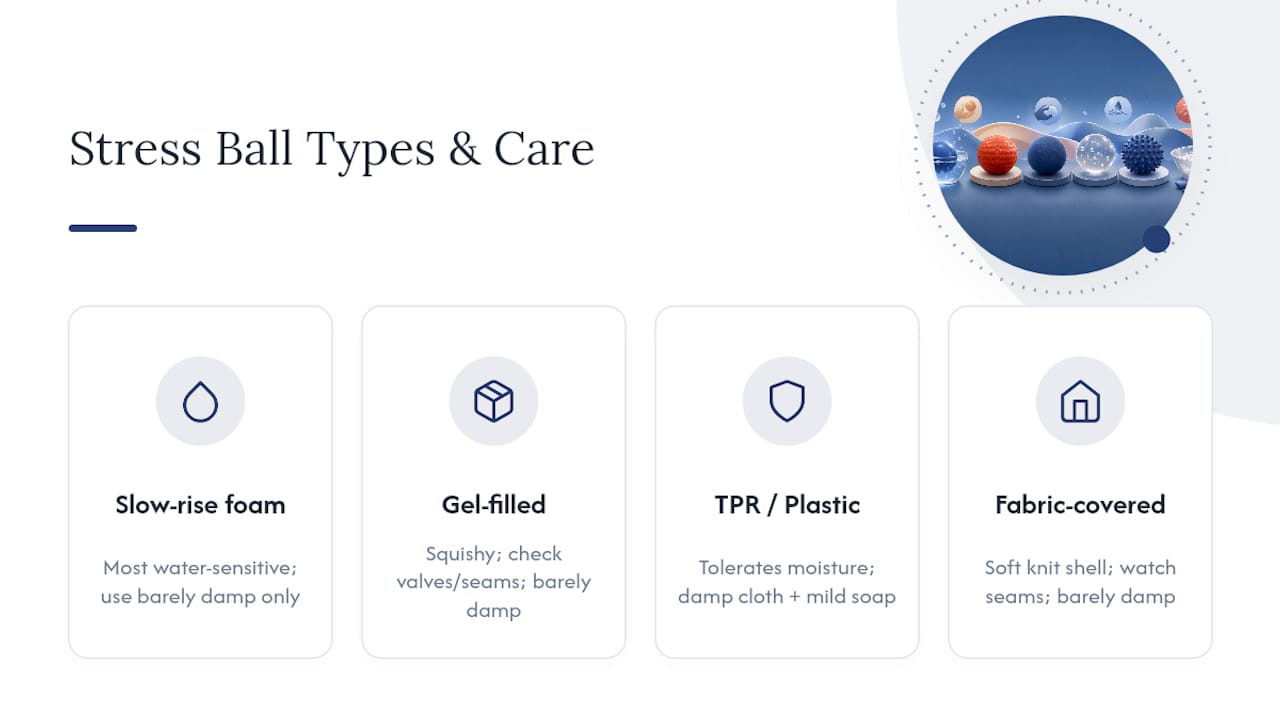
Squeeze it once before you clean anything. Slow-rise foam stress balls compress slowly and feel spongy, almost like a firm marshmallow, and they’re the most water-sensitive of the bunch. Gel-filled balls feel squishy and shift weight in your palm. TPR or hard plastic balls bounce back instantly and have a smooth, slightly rubbery skin that tolerates moisture far better. Fabric-covered balls have a soft knit or felt shell, often over a bead or foam core.
Before wiping anything, check the seams, any printed logo, valves (on liquid or gel balls), and spots that already look worn. A cracked seam or a soft, mushy patch on a gel ball means water can get inside, and that’s the point where cleaning becomes a safety question rather than a cosmetic one. TPR and plastic tolerate a damp cloth and mild soap well. Foam, gel, and fabric all call for the gentler, barely damp approach.
How Do You Clean a Stress Ball Step by Step?
You don’t need anything specialized for this. Gather:
- Mild dish soap (a drop or two)
- Two soft cloths, microfiber or cotton
- A cup of lukewarm water
- A dry towel for the drying stage
Follow these four steps in order, and don’t skip the spot test even if you’re in a hurry:
- Spot test first. Dab a little diluted soap on a hidden section of the ball and check after a minute for color change, tackiness, or texture shift.
- Wipe with a barely damp soapy cloth. Wring the cloth until it’s damp, not dripping, then wipe the surface in light strokes. This is the safe method recommended for squishy stress toys, and it works because the soap lifts oil and grime without ever forcing water into the material.
- Wipe with a clean damp cloth. This removes leftover soap residue, which otherwise dries into a filmy, dull layer.
- Air dry fully, then check for trapped moisture. Squeeze gently in a few spots. Any give that feels wetter or heavier than the rest means moisture got inside, and that ball needs a longer drying window before you use it again.
A few things to actively avoid:
- Don’t soak it or hold it under running water. Soaking is the top cause of stickiness and lost texture in slow-rise foam.
- Don’t put it in a dishwasher or washing machine. Both trap heat and moisture inside a sealed shell.
- Don’t use isopropyl alcohol or bleach on foam or gel. Both break down the surface coating and can cause permanent tackiness.
- Don’t use a hair dryer or leave it near a heater to speed up drying. Heat warps foam and gel unevenly.
Pro Tip: Press and blot a filled stress ball dry instead of twisting it. Twisting stresses the seams exactly where a puncture is most likely to start.
How Do You Remove Sticky Residue or Stains?
Sticker glue and tape residue respond well to a tiny amount of cooking oil rubbed on with a cloth, followed by the gentle soap-and-water wipe to clean the oil off. Always spot test first, since oil can leave a faint mark on light-colored fabric covers.
For stains on slow-rise foam, mix baking soda with just enough water to form a paste, and work it in lightly with a soft toothbrush rather than scrubbing. Rinse with a barely damp cloth and let it air-dry completely before the next use.
- Cooking oil lifts adhesive residue on TPR and plastic surfaces.
- Baking soda paste lifts light surface stains on foam without soaking it.
- A soft toothbrush distributes the paste without abrading the surface.
Stop immediately if the material starts feeling tacky, if color starts transferring onto your cloth, or if the surface loses its usual bounce. That’s the material telling you it’s absorbed more moisture or chemical than it can handle, and continuing will only push the damage further in.
Should You Disinfect a Shared Stress Ball?
Clean before you disinfect, always. Grime and saliva block disinfectants from actually reaching the surface, which is a core rule in public-health guidance on cleaning children’s toys in group settings. Skipping straight to disinfectant on a dirty surface wastes the disinfectant.
For nonporous stress balls, TPR and hard plastic, approved options include EPA-registered disinfectants or a diluted bleach solution, commonly one tablespoon of bleach per gallon of cool water, applied with enough contact time to work, then rinsed if the item is likely to be mouthed.
- Nonporous balls: EPA-registered disinfectant or diluted bleach, followed by a rinse if mouthed.
- Porous foam: avoid harsh disinfectants; they soak in and can be retained in the material long after wiping.
For shared or mouthed items made of slow-rise foam, the safer route is replacement or choosing washable, nonporous alternatives for that use case in the first place, since public-health guidance for group settings specifically recommends selecting washable toys for shared use.
When Should You Throw Away a Stress Ball?
After cleaning and drying, run your fingers over every seam, valve, and printed area. You’re feeling for softness, tackiness that hasn’t dried out, or any spot that gives differently than the rest, which usually means moisture got trapped inside during a previous cleaning attempt.
If you find a puncture or active leak, stop using the ball immediately. Don’t try to patch it or keep squeezing it to “test” the damage.
- Wipe or rinse the mouth if any filling was ingested, and offer water if that’s appropriate for the person involved.
- Rinse exposed skin with lukewarm water if filling made contact.
- Call your local poison center for further instructions rather than guessing.
Discard the ball outright if you see a visible leak, feel trapped moisture that won’t dry out, notice a persistent sticky or crumbly surface, or spot a torn seam. Once a toy leaks, hygiene stops being the main concern. Ingestion and chemical exposure risk make replacement the safer call every time.
How Often Should You Clean and Store a Stress Ball?
Wash your hands before picking one up, and store stress balls in a breathable container rather than a sealed plastic bag, which traps humidity against the surface.
- Clean immediately after any mouthing or contact with saliva.
- Clean frequently for stress balls shared in a classroom or office setting.
- Clean regularly, or whenever visibly dirty, for a personal desk or home stress ball.
Keep stress balls away from direct sunlight, radiators, and car dashboards, since heat is what turns slow-rise foam gummy over time. If you use several in rotation, that also gives each one more time to fully air out between sessions.
Pro Tip: Keep one stress ball at your desk and a separate one in your bag. Rotating two instead of relying on a single ball cuts your cleaning frequency roughly in half.
What Mindpanda Looks For in a Washable Stress Ball
Some stress ball designs include care instructions on the product page, indicating whether a specific ball is wipe-clean before use. That matters more than it sounds. A lot of squishy toys ship with no material guidance at all, which is exactly how people end up soaking foam and ruining it. Look for product listings that state washable or wipe-clean finishes, and packaging designed to keep that information with the product, not buried in fine print.
— Ravi
Where to Find Washable, Themed Stress Balls
There are other places to buy a stress ball, but most give you zero information about what the surface is actually made of or how to keep it clean. Mindpanda lists its stress ball collection with the material and care approach spelled out on the product page, so you’re not guessing whether it’s foam, TPR, or gel before you buy.
If you’re replacing a ball that’s past saving, look for a washable or wipe-clean label, and consider an aromatherapy option if you want the cleaning routine to double as a calming ritual. For offices, schools, or corporate gifts where several people will handle the same items, Mindpanda’s business and wholesale solutions cover bulk orders, branded partnerships, and bespoke branding for shared-use scenarios where washable materials matter even more. Browse the collection, check the care details on the listing you like, and order the one that fits how you’ll actually use it.
Sources
- Handling, cleaning and disinfecting children’s toys in group settings
- How to clean and disinfect toys (NYC DOH one-pager)
- Stress balls - Missouri Poison Center
- How to Clean Squishy Stress Toys (Without Ruining Them)
FAQ
What Is the White Stuff Inside My Stress Ball?
The white or off-white material inside most squeeze balls is slow-rise polyurethane foam, the same spongy material used in memory-foam products. If it’s leaking out through a crack, that’s a sign the seam has failed and the ball should be discarded rather than cleaned.
How Do You Make a Cloudy Squishy Clear Again?
A squishy that’s turned cloudy or hazy usually has soap residue or moisture trapped near the surface from a previous cleaning attempt. Wipe it with a clean, barely damp cloth to remove any leftover film, then air dry it fully away from heat, since heat and trapped moisture are common causes of surface haze.
Do Stress Balls Go Bad Over Time?
Yes. Foam and gel stress balls degrade with age and repeated use, developing stickiness, cracks, or a mushy feel long before they visibly fall apart. Once a ball feels tacky that won’t wipe away, or you spot a torn seam, it’s time to replace it rather than keep cleaning it.
What Liquid Is Inside a Gel-Filled Stress Ball?
Gel-filled stress balls typically contain a thick, colored gel or a water-based polymer gel sealed inside a plastic or rubber shell. If that shell cracks and the gel leaks out, rinse any exposed skin with lukewarm water and contact your local poison center if any of it was ingested.
How Often Should You Clean a Stress Ball?
Clean a personal desk stress ball about once a week, or immediately if it’s visibly dirty. Shared or classroom stress balls need daily cleaning, and any stress ball that’s been mouthed needs cleaning right away, following the same barely damp, soap-and-cloth method used for regular upkeep.