Stress balls reliably ease situational stress and deliver measurable hand-strength gains, though the evidence for calming your body’s stress response in the moment is genuinely mixed. A randomized crossover trial in hemodialysis patients found significant drops in anxiety and depression after four weeks of use, while a 2025 fMRI study showed soft and medium-density balls calm activity in the brain’s insular cortex. A separate lab study found no measurable change in heart rate or blood pressure after a single stress-ball session.
- A 4-week trial in dialysis patients showed reductions in both anxiety and depression that were statistically significant.
- fMRI scans show soft and medium stress balls reduce activity tied to discomfort, while hard ones trigger the amygdala instead.
- A one-time lab test found no change in physiological stress markers like heart rate or skin conductance.
Think of stress balls as a fast, low-effort tool for in-the-moment tension, not a cure for chronic anxiety on their own.
Table of Contents
- Stress Ball Benefits According to the Research
- How Stress Balls Ease Tension: The Mechanisms Behind Them
- Which Benefits Are Backed by Evidence and Which Aren’t
- How to Use a Stress Ball for Maximum Benefit
- Choosing the Right Type of Stress Ball
- When a Stress Ball Isn’t Enough
- Try a Stress Ball That’s Actually Worth Squeezing
- Sources
- FAQ
Stress Ball Benefits According to the Research
The strongest evidence for stress ball benefits comes from a population you wouldn’t expect: dialysis patients. A prospective crossover trial tracked 65 people undergoing hemodialysis, a treatment known for triggering anxiety and low mood. After four weeks of encouraged stress-ball use at home, both anxiety and depression scores dropped significantly (p < 0.001 for each), and the anxiety reduction held up a full month later. That persistence matters. It suggests the benefit isn’t just a placebo bump that fades the moment the study ends.
The picture gets more interesting when you zoom into the brain itself. A 2025 fMRI study scanned 40 healthy participants while they gripped balls of different firmness. Soft and medium-density balls activated the thalamus and left insular cortex, regions tied to pleasant tactile sensation, and reduced activity in the right insular cortex often linked to discomfort. Hard balls did the opposite: they lit up the amygdala, the brain’s threat-detection center, and were rated as uncomfortable rather than soothing.
Not every finding points the same direction. A 2015 study with college-aged participants found no significant change in heart rate, blood pressure, or skin conductance after stress-ball use following a stress task. That’s an important caveat: acute physiological markers don’t always move, even when people report feeling calmer.
Here’s how the evidence stacks up:
- Clinical trial (hemodialysis patients): Strong evidence for reduced anxiety and depression over 4 weeks, with effects lasting at least a month.
- fMRI study (healthy adults): Moderate evidence that soft/medium firmness produces a calming neural response, while hard balls do not.
- Physiological lab study (college students): Limited evidence for immediate change in body-level stress markers after one-time use.
Taken together, the data lean toward real but conditional benefit: strongest for subjective anxiety and mood over repeated use, weaker for instant physiological shifts.
How Stress Balls Ease Tension: The Mechanisms Behind Them
Two mechanisms explain most of what’s happening when you squeeze a stress ball: tactile attention redirection and rhythmic motor discharge.
- Tactile attention redirection. Squeezing something textured or pliable gives your brain a competing sensory input, pulling focus away from a racing thought loop. The fMRI research backs this up directly, showing that pleasant tactile input activates comfort-related brain regions rather than threat-related ones.
- Rhythmic motor discharge. Repetitive squeezing and releasing gives excess nervous energy somewhere to go, similar to how pacing or tapping a foot burns off restlessness. Clinicians describe this as a “first-response” outlet for short bursts of nervous energy.
The neuroscience note worth remembering: comfort matters as much as motion. Soft-to-medium firmness correlates with reduced activity in the right insular cortex, the area tied to unpleasant bodily sensations. Grab something too hard, and you risk activating the amygdala instead, turning a calming ritual into one more source of tension.
Which Benefits Are Backed by Evidence and Which Aren’t
People report a wide array of perks from regular stress-ball use, but they don’t all rest on the same quality of evidence.
- Temporary anxiety relief — Strong evidence. The hemodialysis trial showed a statistically significant, lasting drop in anxiety scores over four weeks.
- Improved focus during short tasks — Limited evidence. Small classroom and observational studies suggest fidget objects can support brief attention gains, though lab measures don’t always confirm it.
- Hand and forearm strength — Moderate evidence. Rehabilitation literature supports squeeze-based hand therapy for building grip strength, though protocols and dosing vary by condition.
- Circulation support — Limited evidence. Plausible given increased hand blood flow during repetitive gripping, but not well-quantified in stress-ball-specific research.
- Mild pain relief for hand conditions — Moderate evidence, and clinician-guided. Useful for rehab-style squeezing, but dosing should come from a therapist, not guesswork.
Picture the desk worker fidgeting before a big presentation, the dialysis patient squeezing through a long infusion, or the office employee reaching for something to do with restless hands during a tense call. Each is a slightly different use case, but all point to the same underlying appeal: something to do with your hands when your mind won’t sit still.
How to Use a Stress Ball for Maximum Benefit
Short, frequent sessions beat long ones. Aim for two to five minutes of active squeezing during moments of acute stress rather than holding onto a ball for hours at a time.
- Prepare. Sit or stand comfortably and hold the ball in your dominant hand.
- Breathe. Inhale slowly through your nose for four counts.
- Squeeze. Compress the ball firmly for two to three seconds as you exhale.
- Release. Let your hand fully relax for two seconds before repeating.
- Check in. After 10 to 15 reps, pause and notice whether your shoulders, jaw, or breathing have loosened.
Pro Tip: Pair each squeeze with a single grounding word, like “here” or “now,” said silently on the exhale. Linking the physical motion to a mental cue trains your brain to associate the two, so the calming effect kicks in faster over time.
If you have tendon pain, arthritis flare-ups, or a recent wrist or hand injury, skip repetitive squeezing until you’ve talked to a clinician. Rehab-style use should follow dosing guidance from a therapist, not generic advice.

Choosing the Right Type of Stress Ball
Material and firmness change how a stress ball feels and, based on the fMRI findings, how your brain responds to it.
- Soft polyurethane foam — Squishes easily, ideal for anxious hands or first-time users who want an easy, comfortable grip.
- Medium-density foam — A balance between resistance and comfort, good for general daily stress relief and light hand exercise.
- Gel-filled balls — Offer a cool, dense feel that some people find more satisfying to squeeze, though firmness varies by brand.
- Therapy putty-style tools — Better suited to rehab exercises where a therapist prescribes specific resistance levels.
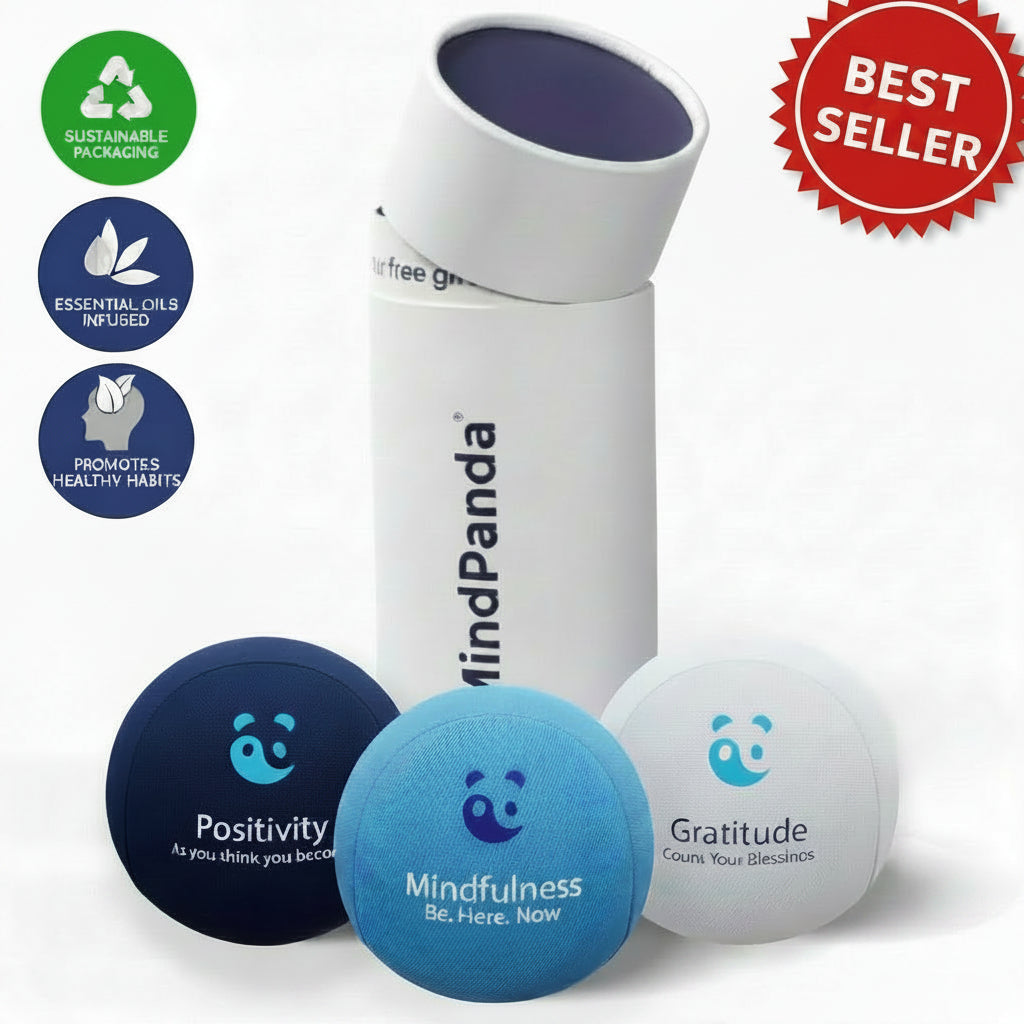
When you shop, run through a short checklist: comfort in your palm, density that resists but doesn’t hurt, a size that fits your hand, durable material that won’t split, and easy-to-clean surfaces. Since harder balls activated the brain’s threat response in the fMRI study rather than a calming one, stick to soft or medium firmness unless a clinician recommends otherwise. Aromatherapy scents or playful themes are optional extras. A multi-density set, like MindPanda’s 3-pack of soft, medium, and hard options, lets you compare firmness levels and figure out what actually feels calming to you.
When a Stress Ball Isn’t Enough
Stress balls work best for situational, in-the-moment stress. They are not a standalone treatment for chronic anxiety disorders or clinical depression.
- Physiological markers like heart rate and blood pressure don’t always shift after a single use, based on lab findings in young adults.
- Most strong clinical evidence comes from a specific population (hemodialysis patients), not the general public.
- Individual response varies widely, and experts recommend treating stress balls as one option among several rather than a fix-all.
Seek professional support if you notice persistent high anxiety, panic attacks, depressive symptoms that interfere with daily life, or hand and wrist pain that doesn’t ease up. A broader stress-management guide can help you figure out what else belongs in your toolkit alongside tactile tools like these.
A Publisher’s Take on Stress Balls as a Coping Tool
Mindpanda recommends soft or medium stress balls as a sensible, low-risk first move for situational stress, one piece of a broader plan rather than the whole plan.
Stress balls work best as a fast, tactile reset for acute stress rather than a cure for chronic anxiety on their own.
| Point | Details |
|---|---|
| Strongest evidence is clinical | A 4-week trial in hemodialysis patients showed significant, lasting drops in anxiety and depression. |
| Firmness changes brain response | fMRI scans show soft and medium balls calm the brain, while hard ones can trigger a threat response. |
| Physiological effects are inconsistent | One lab study found no immediate change in heart rate or blood pressure after a single use. |
| Best for situational stress | Stress balls support in-the-moment tension relief, not a replacement for treating chronic anxiety. |
| Mindpanda offers graded options | Mindpanda’s soft, medium, and hard 3-pack lets you find the firmness that actually feels calming. |
Primary Sources and Further Reading
- Hemodialysis crossover trial: peer-reviewed evidence for anxiety and depression reduction.
- fMRI tactile study: brain imaging on firmness and comfort.
- Physiological null-finding study: acute stress markers unchanged.
- Healthline’s evidence summary: clinician-oriented overview.
Sources were prioritized for peer-reviewed design and direct relevance to stress-ball use specifically.
Try a Stress Ball That’s Actually Worth Squeezing
Most stress balls on the market are an afterthought, thrown in as a promotional freebie rather than designed around comfort or purpose. Mindpanda takes the opposite approach: its stress ball sets come in soft, medium, and aromatherapy-infused options built around the same comfort principle the research points to, giving you room to find the firmness that actually feels calming instead of guessing.
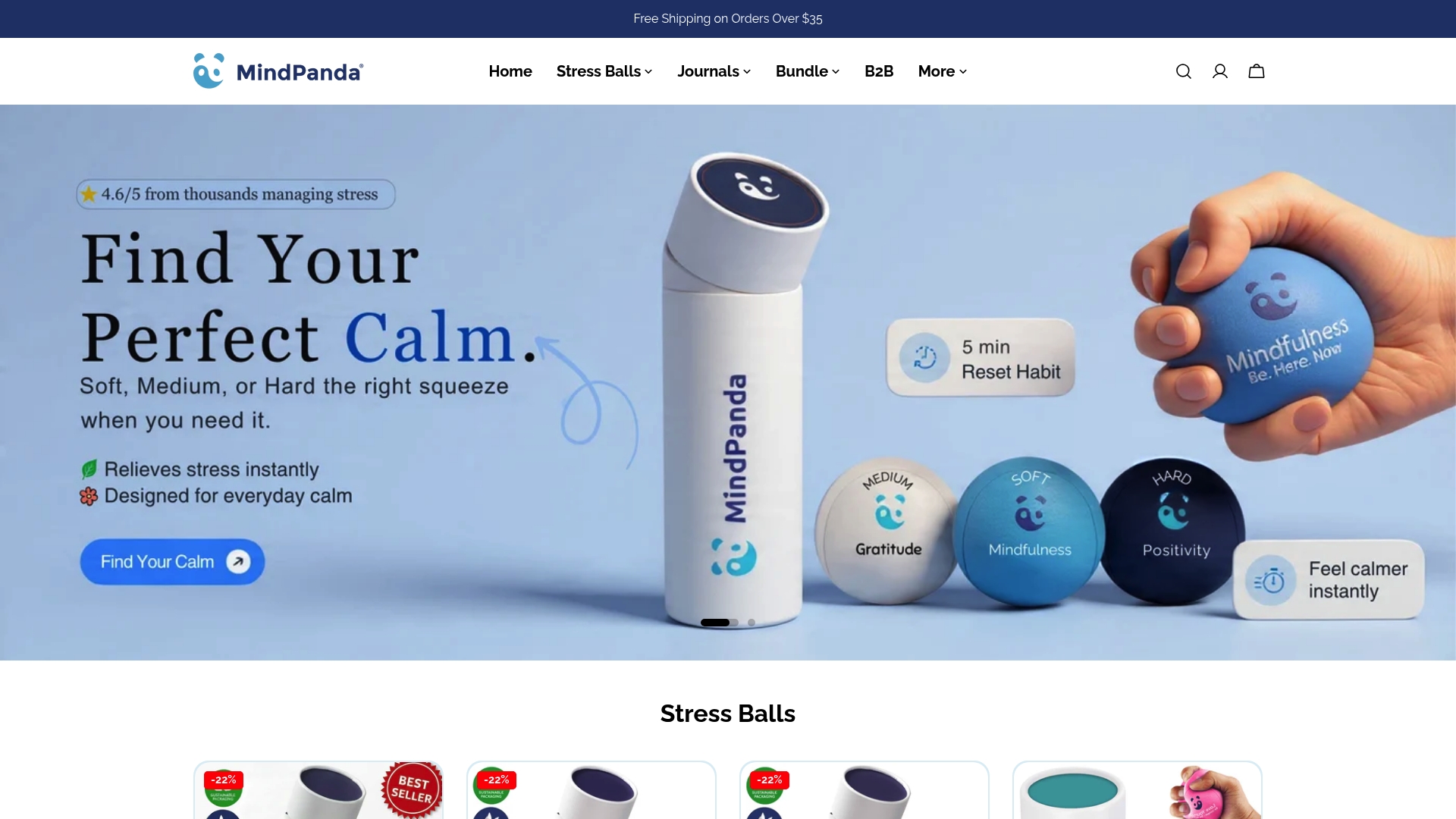
If you’re new to this, the 3-pack of soft, medium, and hard stress balls lets you compare firmness levels side by side, the same variable the fMRI research flagged as changing your brain’s response. Want to build a fuller stress-management habit? The Mindfulness Wellbeing Bundle pairs a stress ball with journals and other grounding tools, or you can create your own custom bundle if you already know what mix works for you. Pick your set, add it to your daily routine, and see how a few minutes of squeezing changes your afternoon.
This article is general information, not a substitute for advice from a qualified doctor. Consult a qualified healthcare professional about your own circumstances before acting on anything here.
Sources
- Effects of using a stress ball on anxiety and depression in patients undergoing hemodialysis: A prospective, balanced, single-blind, crossover study - PubMed
- Identification of Brain Activation Areas in Response to Active Tactile Stimulation by Gripping a Stress Ball - MDPI (Brains)
- Do stress balls reduce physiological markers of acute stress? (University of Wisconsin resource)
- Do stress balls work? — Healthline
FAQ
Do stress balls actually work for anxiety? Yes, for situational anxiety. A clinical trial in hemodialysis patients found significant reductions in anxiety after four weeks of use, with effects lasting a month. They’re less proven as a treatment for chronic anxiety disorders on their own.
How long should I squeeze a stress ball for it to help? Short bursts work best: two to five minutes during a stressful moment, using a slow squeeze-and-release rhythm paired with breathing.
What’s the best stress ball for anxiety, soft or hard? Soft or medium firmness. fMRI research found these densities calm brain regions tied to comfort, while hard balls activated the amygdala and felt uncomfortable to users.
Can stress balls help with hand pain or arthritis? They can support grip strength as part of a therapist-guided rehab program, but people with tendon pain, arthritis flares, or acute injuries should check with a clinician before starting.
Are stress balls a substitute for therapy or medication? No. They’re best used as one tool in a broader stress-management plan, alongside breathing techniques, meditation practices, or professional care when anxiety is persistent or severe.