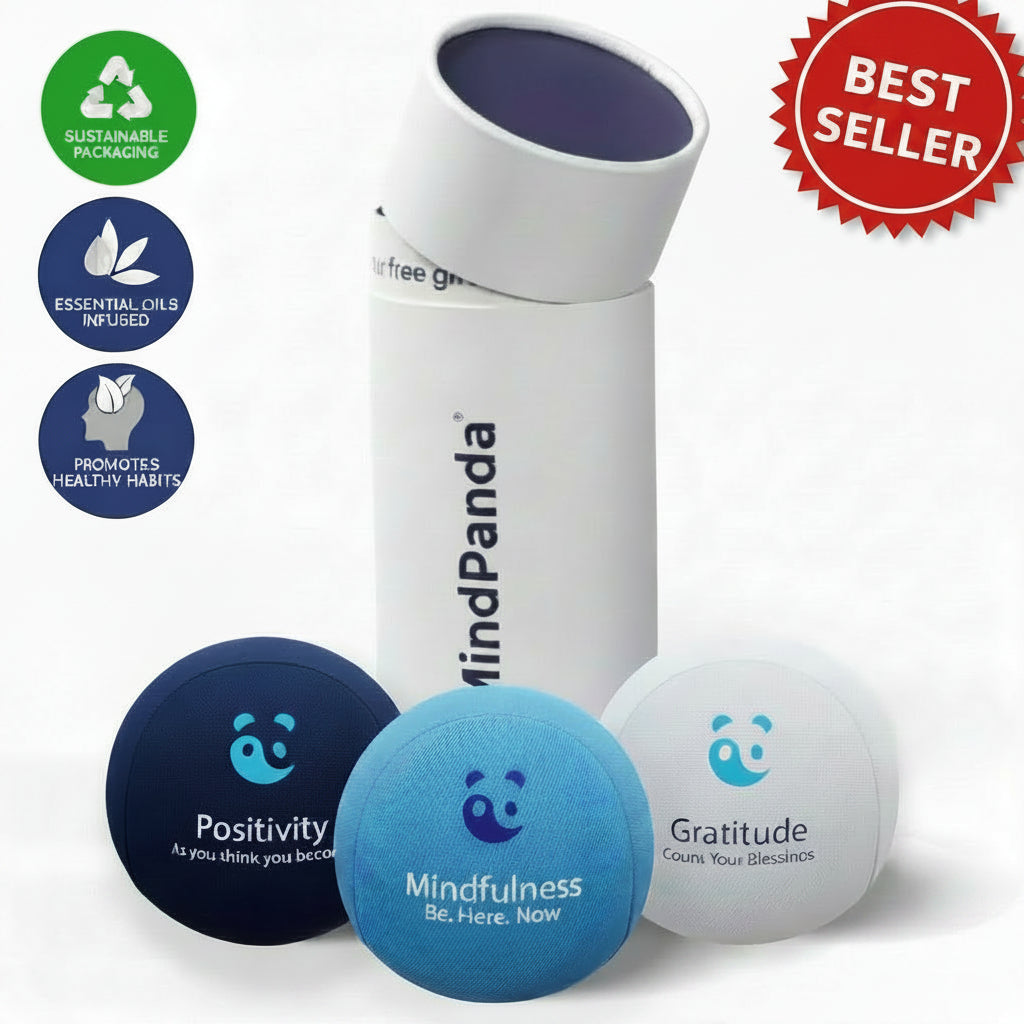
If you need a silent grounding cue for meetings or classrooms, a worry stone is usually the better pick. If you need active tension release for your hands and a physical outlet for restlessness, a stress ball tends to work better. Both are safe, low-cost tools for adults and most kids, but neither replaces therapy for clinical anxiety. Read on for the evidence and a situational breakdown before you buy.
TL;DR:
- Worry stones are more suitable for silent grounding and discreet use in quiet environments than stress balls, which can be noisy and more engaging to the hands.
- Clinical evidence strongly supports stress-ball use for reducing anxiety and pain in medical and procedural settings, whereas worry stones lack rigorous testing.
- Stress balls require regular cleaning and eventual replacement, especially foam or gel versions, while worry stones need only occasional wiping and are more durable.
- The choice depends on the situation: worry stones excel for silent, passive grounding, and stress balls are better for active tension release and hand strengthening.
- Combining both tools can provide personalized relief, with worry stones fitting in pockets for calm moments and stress balls used during active or stressful times.
Table of Contents
- Worry Stones vs Stress Balls: A Quick Comparison
- What Is a Worry Stone, and How Is It Used?
- What Is a Stress Ball, and How Does It Work?
- Worry Stones vs Stress Balls: The Trade-Offs That Matter
- What Does the Research Actually Say?
- How to Choose, Use, and Care for Either Tool
- Which Tool Actually Deserves a Spot in Your Bag?
- A Simple Starting Kit if You Want Both
- Sources
- FAQ
Worry Stones vs Stress Balls: A Quick Comparison
Match the tool to the moment. A worry stone slips into a pocket and makes no sound, which is exactly why it works in a boardroom or a lecture hall. A stress ball demands more room and, depending on the material, a little more attention from the people around you.
- Best for: worry stones suit silent grounding and emotional check-ins; stress balls suit active release, hand strength, and pacing breath.
- Discreteness: worry stones win here, no squeezing sound, no visible motion beyond a thumb.
- Portability: both fit a pocket or bag, but worry stones are flatter and lighter.
- Sensory profile: worry stones offer a smooth, repetitive glide; stress balls offer resistance and squeeze.
- Maintenance: worry stones need an occasional wipe; foam and gel stress balls wear down and need replacing.
For an office worker sitting through back-to-back calls, a worry stone in the pocket does the job without anyone noticing. A student cramming before an exam might do better squeezing a stress ball between practice questions to burn off nervous energy. Someone in the middle of a sudden panic spike often benefits most from the stress ball’s harder resistance, since it gives the hands something forceful to push against. Plenty of people end up owning both and reaching for whichever fits the room they’re in.
What Is a Worry Stone, and How Is It Used?
A worry stone is a small, palm-sized object, usually with a thumb-sized groove or a smooth polished face, designed to be rubbed rather than squeezed. The motion is the point. Clinical and popular sources describe them as grounding tools used for repetitive rubbing, a simple sensory anchor that pulls attention away from a racing thought and back into the body.
Material changes the feel more than most people expect:
- Gemstone (rose quartz, tiger’s eye, obsidian): cool to the touch, heavier, holds a polish for years.
- Glass: very smooth, slightly slippery, tends to warm quickly in the hand.
- Ceramic: lighter, often textured, more prone to chipping if dropped.
Therapists sometimes describe worry stones as micro-transitional objects, something a client can carry out of a session and used to practice a coping skill in real life, without a script or a device — a concept explored in this New Mom Self-Care Checklist: Your Postpartum Guide for practical coping strategies.
Pro Tip: Pick a stone with a defined thumb groove rather than a flat oval. The groove gives your thumb a track to follow, so the rubbing motion stays consistent instead of sliding around and risking a drop.
What Is a Stress Ball, and How Does It Work?
A stress ball is a squeezable object, typically foam, silicone, or gel filled, built to absorb repeated compression from your hand. Unlike a worry stone, the mechanism is active. You’re contracting muscles in your hand and forearm, not just tracing a surface.
That squeeze-and-release cycle can be paired with breathing. Squeeze on the inhale, release slowly on the exhale, and the ball becomes a pacing tool as much as a distraction. It also gives restless hands somewhere to put energy that might otherwise turn into leg-tapping or nail-picking.
- Foam: soft, quiet, good for kids or light use.
- Gel-filled: firmer resistance, better for hand exercise.
- Silicone: durable, easy to wipe clean, holds shape longest.
- Specialty forms: aromatherapy-infused, weighted, and therapy-grade balls used in occupational and physical therapy settings.
Stress balls need more upkeep than stones. Foam degrades with heat and sweat over months of daily use, gel-filled versions can develop pinholes, and shared classroom or office balls should be wiped down regularly.
Worry Stones vs Stress Balls: The Trade-Offs That Matter
Neither tool wins across every situation, and the honest answer depends on what you’re actually trying to do with your hands.
Worry stones:
- Silent and pocket-sized, so they work in meetings, courtrooms, or quiet classrooms.
- Durable. A gemstone or glass stone can last years without wearing down.
- Limited on active release. If you need to physically discharge tension, rubbing a smooth surface doesn’t offer much resistance.
Stress balls:
- Effective for active tension release and hand strengthening, especially firmer gel or therapy-grade versions.
- Can be noisy depending on material, and foam versions absorb sweat and need regular cleaning.
- Wear out. Expect to replace a heavily used foam or gel ball within a year or two.
In a meeting, the worry stone stays invisible in your pocket. In a moment of acute panic, the stress ball’s resistance gives your hands something forceful to fight against, which some people find more grounding than a smooth surface. During meditation, a worry stone’s gentle repetition tends to support a quiet mind better than a squeeze motion that engages more muscle.
The strongest clinical evidence for either tool comes from stress-ball research: a randomized crossover study in hemodialysis patients found four weeks of encouraged stress-ball use significantly reduced anxiety and depression scores compared with control periods (p < 0.001).
What Does the Research Actually Say?
Stress balls have the better paper trail. Beyond the hemodialysis crossover trial, a separate randomized controlled trial found stress-ball use lowered pain and anxiety during needle insertion for dialysis patients, with the effect growing stronger across repeated sessions.
Worry stones haven’t been tested with the same rigor. A systematic review of breathing-guidance devices found that tactile stimuli are often preferred over visual or auditory cues and can improve engagement with stress-reduction routines, but the review’s evidence base is heterogeneous and doesn’t isolate worry stones specifically. Clinical write-ups treat worry stones as low-risk, evidence-informed adjuncts rather than proven interventions.
- Strongest evidence: stress balls in clinical, procedural-anxiety contexts.
- Weakest evidence: worry stones in any controlled trial setting.
- Shared limitation: both tools are adjuncts. Healthline’s review of stress-ball research concludes they help with situational stress but aren’t a standalone treatment for clinical anxiety.
A tactile object rubbed or squeezed for two minutes won’t undo a panic disorder. It can, however, interrupt a spiral long enough for a person to use a breathing technique or reach for actual support.
How to Choose, Use, and Care for Either Tool
Start with the setting, not the object. A tool that works at your desk might feel wrong in a waiting room or a classroom.
- Match the goal to the mechanism. Want silence and portability? Worry stone. Want active release or hand exercise? Stress ball.
- Try a 60 second grounding rub. Hold the stone, trace the groove slowly with your thumb, and name one thing you notice in the room. Repeat for a full minute.
- Try a 3 breath paced squeeze. Inhale while squeezing the ball, hold for one second, exhale while releasing. Repeat three full cycles.
- Clean and replace on schedule. Wipe silicone and gel balls weekly if shared; retire foam balls once they stop rebounding fully. Wash a worry stone with mild soap and water occasionally.
- Watch for red flags. Small stones and squishy balls are choking hazards for toddlers. If anxiety symptoms persist beyond mild, situational stress, Mayo Clinic’s guidance recommends talking to a clinician rather than relying on self-care tools alone.
Pro Tip: Pair either tool with a short breathing script rather than using it on its own. Therapists tend to get better results when tactile input is combined with a cognitive cue, not left to work by itself. You’ll find more grounding sequences in this list of grounding techniques.
Which Tool Actually Deserves a Spot in Your Bag?
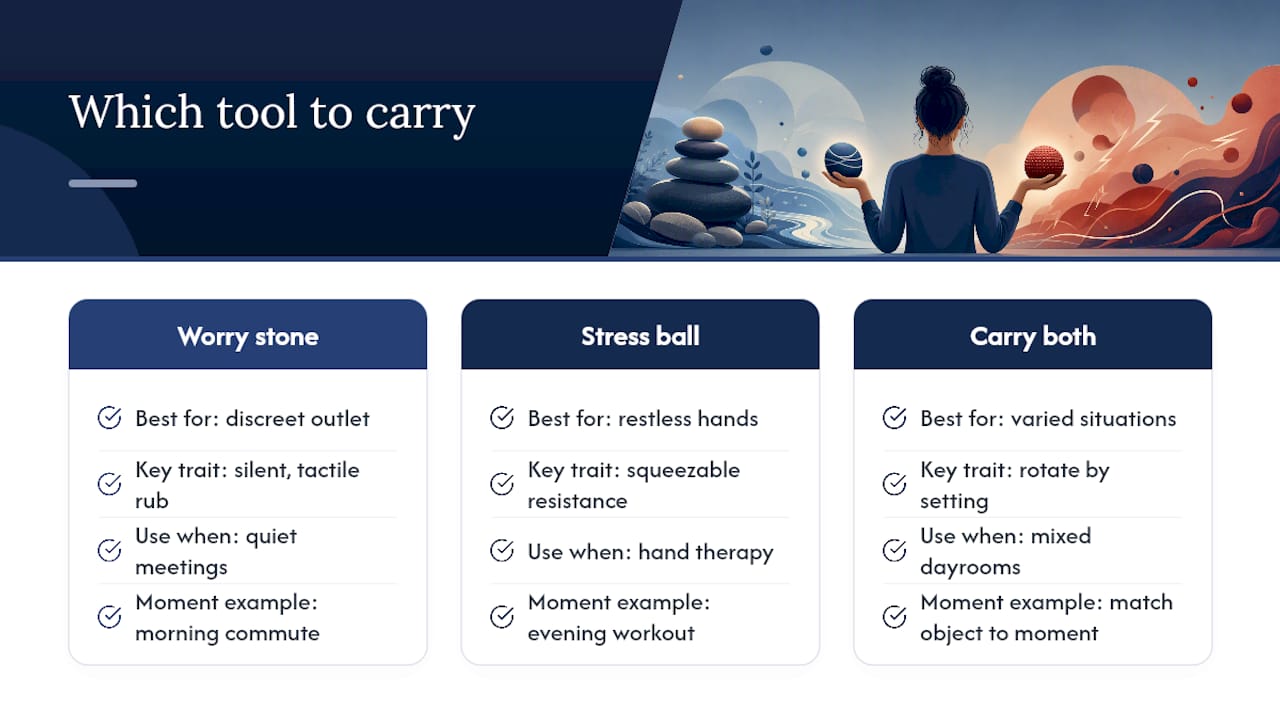
Most people don’t need to pick a permanent winner. Someone who spends their day in meetings and needs a discreet outlet should default to a worry stone. Someone with restless hands, or someone doing hand therapy, gets more out of a stress ball’s resistance. Anyone dealing with both a quiet office and a noisy gym bag might just carry one of each and rotate based on the room.
Combining tools also helps with personalization, since anxiety doesn’t show up the same way twice. A morning commute might call for the stone’s silence, while an evening workout wind down calls for the squeeze. Some catalogs of stress ball routines reflect this same logic: match the object to the moment instead of assuming one tool covers every situation.
— Ravi
A Simple Starting Kit if You Want Both
You don’t have to choose blind. The Mindfulness Wellbeing Bundle pairs a stress ball with complementary grounding and journaling tools, offering an active-release option and a quieter, reflective one in the same order.
It’s built for exactly the split this article describes: some days call for squeezing something firm, other days call for a quiet pocket object and a few lines in a journal. If you already know your preference leans toward hands-on tension release, the bundle includes a stress ball for that. If you want to build your own mix of tactile and reflective tools instead, you can create your own wellbeing bundle and pick pieces accordingly. Either path starts with the same next step: choose the bundle option and check out.
This article is general information, not a substitute for advice from a qualified doctor. Consult a qualified healthcare professional about your own circumstances before acting on anything here.
Sources
- Effects of using a stress ball on anxiety and depression in patients undergoing hemodialysis: A prospective, balanced, single-blind, crossover study - PubMed
- Effect of stress ball use on cannulation-related invasive pain in Hemodialysis patients: a randomized controlled, single-blind study | BMC Nephrology | Springer Nature Link
- Overview of devices supporting breathing guidance and stress reduction — systematic review (PMC)
- Stress Balls: Effectiveness, Benefits, and Limits - Healthline
- Worry stones: background, uses, and practice guidance - HowStuffWorks
FAQ
Do worry stones actually work?
They work as a grounding cue for many people, but direct clinical trials on worry stones specifically are minimal. Clinical sources treat them as low-risk adjuncts that support attention and habit substitution rather than proven standalone treatments.
What are the downsides of using stress balls?
Foam and gel versions wear out and need replacing, shared balls require regular cleaning, and squeezing can be audible or distracting in quiet settings like meetings. They’re also better suited to active release than to quiet grounding.
Does a stress ball help anxiety?
Randomized trials in clinical populations show stress-ball use can reduce state anxiety and procedural pain, though general population effects vary and depend on consistent use as part of a broader stress-relief routine.
What are some common types of worry stones?
Common variants include rose quartz, tiger’s eye, and obsidian gemstone versions, along with polished glass and lightweight ceramic stones, each offering a different texture and weight for the rubbing motion.