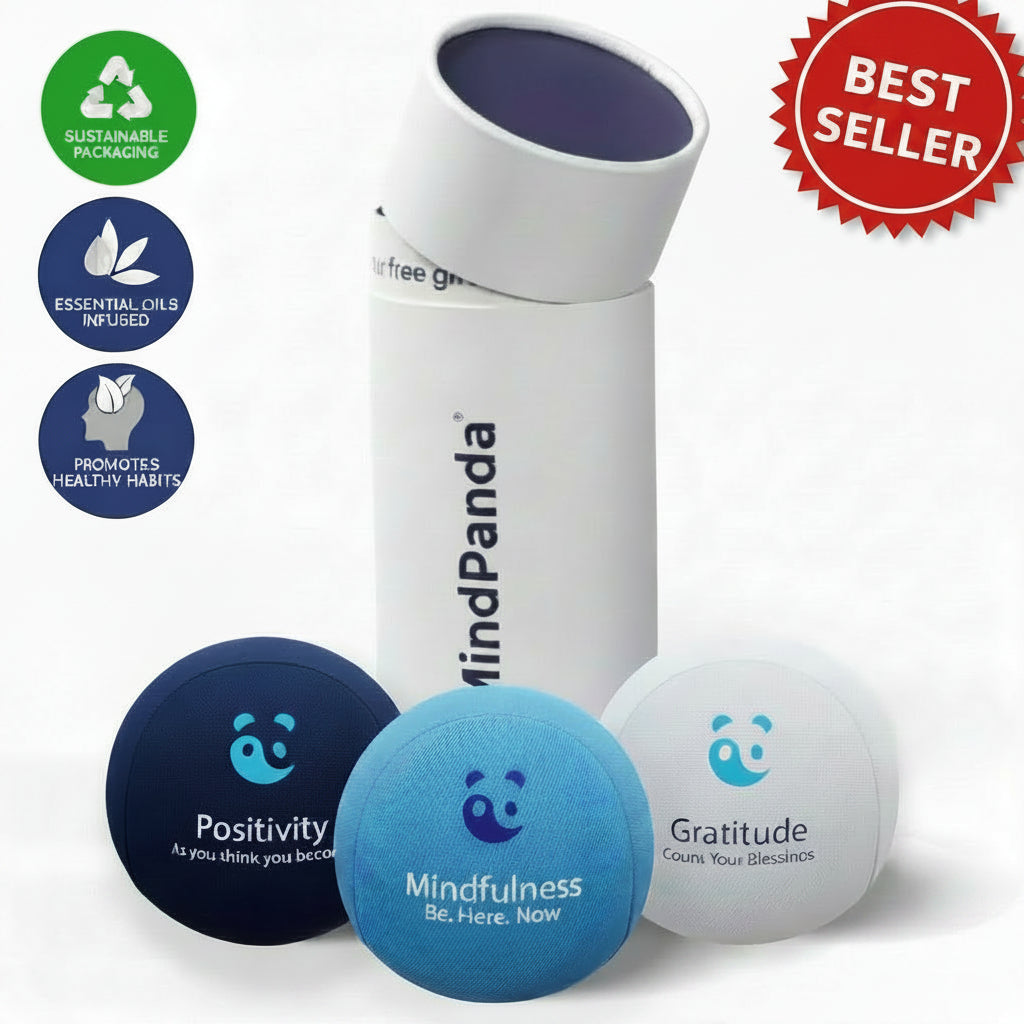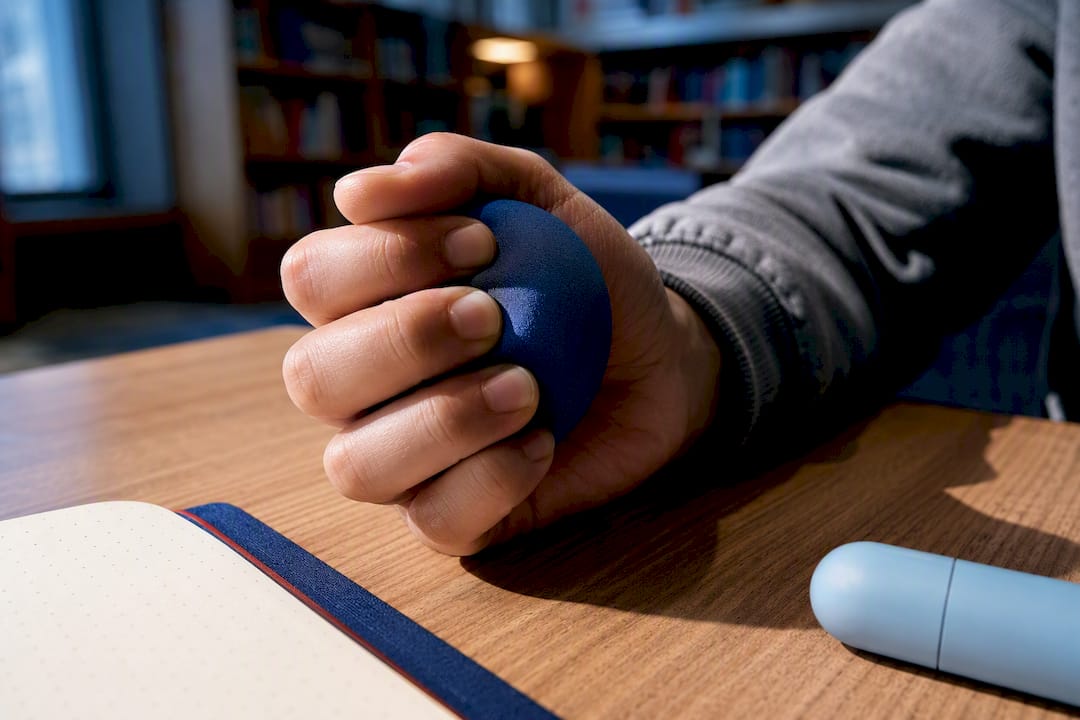
Four categories of physical mindfulness products consistently support study focus: stress balls, journals and planners, aromatherapy items, and wellness bundles that combine several tools. Each works differently. Stress balls lower physical tension fast, journals process the mental noise that steals attention, aromatherapy sets a calming or alerting cue, and bundles let you stack effects. If you only try one thing before your next study block, pick a soft stress ball or write a two-minute journal prompt. Both work in under five minutes and need zero setup.
TL;DR:
- Stress balls are most effective when made from soft foam and fitted comfortably in the hand, preventing discomfort that could increase stress.
- Journals with prompts and high-quality paper help process mental clutter more efficiently than blank notebooks, especially when used every one to three days.
- Aromatherapy scents like lavender calm nerves before studying, while citrus or peppermint boost alertness during energy dips, but they do not directly improve test scores.
- Consistent use of one focus tool, such as a stress ball or journal, over at least a week is more beneficial than intermittently using multiple gadgets.
- Combining physical tools with a structured routine, including brief inhalations and hand gestures, enhances focus without reliance on screens or apps.
Table of Contents
- Which Physical Study Focus Tools Actually Work?
- How Do You Pick the Right Study Focus Tool?
- What Is a Good Pre-Study Focus Routine?
- What Does the Research Actually Say About These Tools?
- MindPanda’s Take on Building Focus With Physical Tools
- Are Essential Oils Safe to Use While Studying?
- How Do You Keep Study Focus Tools Clean and Long-Lasting?
- What Do These Tools Cost Compared to Digital Alternatives?
- How Do Physical Tools Compare to Focus Apps?
- How Do You Combine Multiple Tools Without Overcomplicating It?
- What Should You Actually Prioritize Here?
- Build Your Study Focus Kit With MindPanda
- Sources
- FAQ
Which Physical Study Focus Tools Actually Work?
You don’t need an app subscription to concentrate better. You need something in your hands, on your desk, or in the air around you that tells your nervous system it’s safe to focus. Here’s what that looks like across the four main categories, and what to actually buy.
Stress balls work through simple haptic feedback. Squeezing something rhythmic gives your hands a job, which quiets the fidgeting that pulls attention away from a page. A 2023 crossover study on hemodialysis patients found a 4-week stress ball routine significantly reduced both anxiety and depression, with the anxiety reduction still measurable a month after the intervention stopped. For studying, that translates into fewer racing thoughts before a hard reading session. Look for soft to medium foam density. Research on stress ball hardness and neural response suggests harder balls can be uncomfortable enough to backfire, activating stress regions instead of calming them. Size matters too: something that fits comfortably in one hand beats a bulky option you have to grip with effort.
Journals and planners work on a different channel entirely. They process the mental clutter, deadline anxiety, and racing thoughts that make it hard to sit still with a textbook. A 2023 meta-analysis found expressive writing produces a small but real reduction in stress and anxiety, and the effect gets stronger when sessions happen at short intervals of one to three days rather than sporadically. Handwriting adds another layer: it engages motor, language, and attention systems together, which tends to encode material more deeply than typing does. A dot-grid planner with a prompt section beats a totally blank notebook for most people, since a prompt removes the “what do I even write” hesitation.
Aromatherapy supports what researchers call selective attention, meaning the ability to filter out distraction and focus on one task. A study on blended essential oil inhalation found faster response times on attention tasks and measurable changes in brain activity tied to focus. Lavender leans calming, while citrus and peppermint blends tend to read as more alerting. Use calming scents before a study block to settle nerves, and alerting scents mid-session when energy dips.
Wellness bundles solve the logistics problem. Carrying a stress ball, a journal, and a roller bottle separately means you’ll forget one. A single kit designed for portability keeps the whole routine intact whether you’re studying at a desk, in a library, or on a commute.
Quick comparison:
- Stress balls: fastest physical tension relief, best for pre-exam jitters
- Journals: best for processing racing thoughts and deadline anxiety
- Aromatherapy: best for setting a consistent focus cue
- Bundles: best for people who want one grab-and-go kit
How Do You Pick the Right Study Focus Tool?
Start by asking whether you need calming or alerting support. Someone who studies best under pressure and just needs to settle nerves wants lavender and a soft stress ball. Someone who studies at 9 p.m. after a full day wants a citrus blend and a planner that forces quick decision-making instead of open-ended reflection.
Match the tool to your actual sensitivities and habits:
- Check hardness and material first. A stress ball that’s too firm can feel like more effort than relief, so squeeze-test before buying if you can.
- Confirm scent safety. Look for labeled ingredient lists on any essential oil blend, and skip anything without clear labeling, since unlabeled blends are impossible to check for allergens.
- Match journal format to your personality. If blank pages make you freeze, buy one with prompts. If prompts feel restrictive, buy one with lined or dot-grid blank space instead.
- Test paper quality. Thin paper that lets ink bleed through ruins the writing experience fast, especially with gel pens.
- Read the return policy. Aromatherapy and stress balls are personal-use items, so know the return window before buying in bulk.
Red flags worth skipping entirely: rock-hard stress balls marketed as “therapeutic” with no hardness rating, essential oil blends with vague ingredient lists like “proprietary calming formula,” and journals with paper thin enough to see through.
Pro Tip: If you’re sensitive to scent or share a study space, buy a personal aromatherapy inhaler instead of a diffuser. It gives you the same calming cue without affecting anyone nearby.
What Is a Good Pre-Study Focus Routine?
You don’t need a long ritual. You need a short, repeatable sequence your brain learns to associate with focused work.
- Two minutes before you start: take three slow inhales from a calming aromatherapy blend, then write one honest sentence in your journal about what’s distracting you right now. Naming the distraction on paper tends to loosen its grip.
- Thirty seconds of grounding: squeeze a soft stress ball in a slow, rhythmic pattern, about one squeeze every two seconds, for 20 to 30 seconds. Research on haptic coordination found that short, guided squeezing sequences measurably reduced arousal and self-reported anxiety.
- During the study block: keep the stress ball nearby for micro-breaks between problems or paragraphs, not as a constant fidget. Use handwriting for anything you want to actually remember, since writing by hand tends to encode information more deeply than typing.
- Every 25 to 30 minutes: take a brief aromatic reset. Reopen your inhaler or step near your diffuser for two breaths, then get back to it. This resets attention without breaking your momentum the way a phone check would.
- Between study blocks: do one slow breath cycle (four seconds in, six seconds out, repeated three times), then jot a single line in your planner about what’s next. This closes the loop on the last block and clears space for the next one instead of letting intrusive thoughts pile up.
Pro Tip: Keep your journal entries short on purpose. A rushed, honest sentence beats a polished paragraph, and it’s the writing itself, not the quality of the prose, that produces the calming effect.
What Does the Research Actually Say About These Tools?
The evidence is real but modest, and it’s worth knowing exactly what it does and doesn’t claim.
- The stress ball crossover trial involved 65 hemodialysis patients over four weeks, with anxiety and depression drops reaching statistical significance (p < 0.001). That’s a clinical population under real medical stress, not students, so the effect size in a study setting is likely smaller, though the mechanism (tactile grounding reducing arousal) generalizes reasonably well.
- The expressive writing meta-analysis found a small effect (Hedges’ g = −0.12) on depression, anxiety, and stress. Small doesn’t mean useless, but it does mean journaling won’t replace actual study strategies, only support the mental state that makes studying possible.
- Aromatherapy research is mixed on the outcome that matters most to students. A 2026 meta-analysis covering 33 studies and 2,312 nursing and health sciences students found a moderate reduction in anxiety (SMD = −0.46) and fatigue, but no significant improvement in academic performance itself.
Aromatherapy can measurably calm nerves and reduce fatigue, but it hasn’t been shown to directly raise test scores. Treat it as a mood and focus lever, not a grade guarantee.
The honest takeaway: these tools shift your mental and physical state into one where studying is easier, not one where studying happens automatically. Pair them with real study techniques like spaced repetition or active recall for the best outcome.
MindPanda’s Take on Building Focus With Physical Tools
I’ve spent years thinking about why people abandon wellness routines within a week. Usually it’s because the tool asks for too much effort at the exact moment they have the least willpower to give. That’s the whole design philosophy behind MindPanda: mindfulness and mental wellness products built to lower the barrier to entry, not raise it.
Our stress balls, journals, planners, and wellness bundles exist because a two-minute ritual beats a twenty-minute one nobody sticks with. Eco-friendly packaging and a focus on functional, good-looking design aren’t decoration. They’re part of making the habit feel worth repeating.
A tool only works if you actually pick it up on the hard days, not just the easy ones.
— Ravi
Are Essential Oils Safe to Use While Studying?
Essential oils are generally safe in small, well-ventilated doses, but they’re not risk-free, especially in shared spaces like dorms or offices. Test any new blend on a small skin patch first if you plan to apply it topically, and always check the ingredient label for known allergens like citrus oils, which can trigger sensitivity in some people.
For inhalation, a personal aromatherapy inhaler is safer and more considerate than an open diffuser running for hours in a shared room. Aromatherapy research generally uses brief, controlled exposure windows rather than constant all-day diffusion, so following that pattern (a few minutes before studying, then again at breaks) mirrors how the benefits were actually measured.
Never ingest essential oils meant for topical or inhalation use. Pregnant readers, anyone with asthma, and anyone with a history of migraines triggered by strong smells should check with a doctor before introducing a new blend into a regular routine. Keep oils away from pets, since several common oils, including tea tree and peppermint, are toxic to cats and dogs even in small amounts.
If you study in a shared space, ask roommates or officemates before diffusing anything into shared air. What feels calming to you might trigger a headache in someone else. A roll-on or inhaler avoids that problem entirely by keeping the scent contained to your own space.
How Do You Keep Study Focus Tools Clean and Long-Lasting?
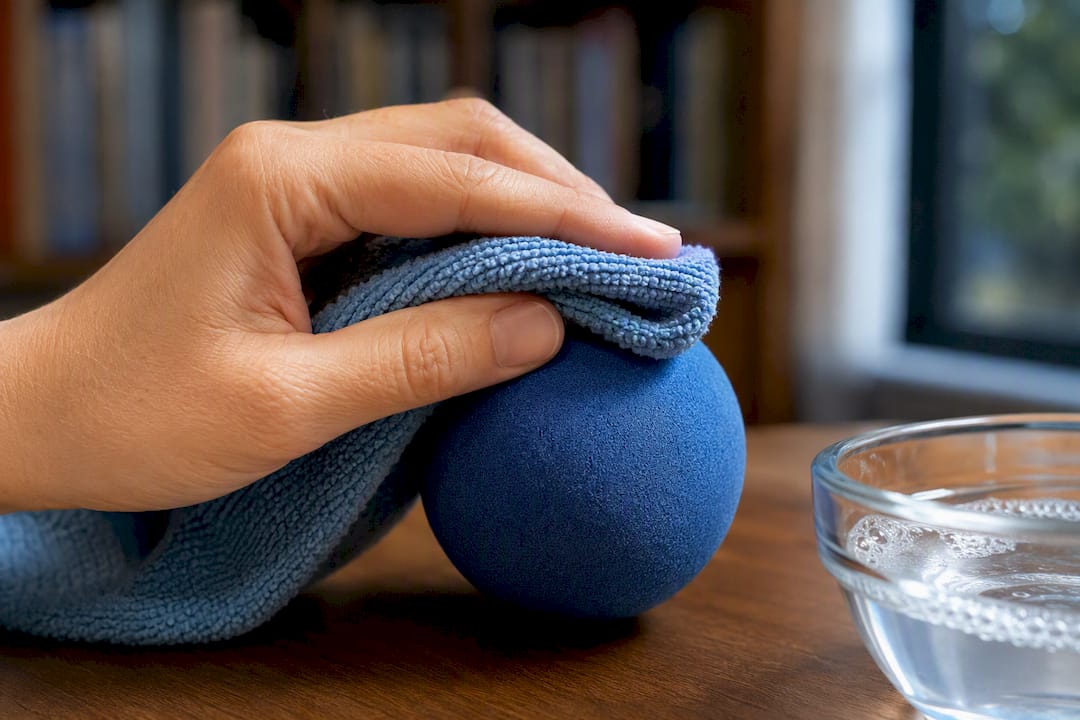
Stress balls take the most physical wear since they’re handled constantly. Wipe them down with a damp cloth and mild soap every week or two, especially if you study in public spaces like libraries or coffee shops where hands pick up germs. Avoid submerging foam-filled balls in water, since trapped moisture can lead to mold inside the material over time.
Journals and planners need less maintenance but benefit from a dry, flat storage spot away from direct sunlight, which can fade ink and yellow paper faster than expected. If you write with gel pens, let each page dry fully before closing the cover to avoid smearing onto the facing page.
Aromatherapy tools have the shortest practical lifespan. Essential oils degrade with heat and light exposure, typically losing potency within one to two years even unopened, and faster once opened. Store bottles in a cool, dark drawer rather than on a sunny windowsill. Personal inhalers should be replaced every few months with fresh cotton wicks, since the wick itself can hold onto old oil and lose scent intensity.
Wellness bundles that combine multiple items need the most thought, since each component has different care needs living in one bag or box. Keep liquids in a separate zip pouch inside the bundle to protect journal paper from accidental spills.
What Do These Tools Cost Compared to Digital Alternatives?
Physical study tools tend to be one-time purchases rather than recurring subscriptions, which changes the math over a semester or a year. A single stress ball, journal, or aromatherapy roller typically costs less than a month of most premium app subscriptions, and it keeps working long after that.
Budget-friendly entry points exist in every category. A basic foam stress ball is the cheapest way to test whether tactile grounding helps you at all before investing in anything fancier. A simple lined or dot-grid notebook works just as well as an expensive designer journal for the actual expressive-writing benefit, since the research effect comes from the writing itself, not the notebook’s price tag.
Aromatherapy has the widest cost range. A basic personal inhaler with one essential oil is inexpensive and lasts months. A full diffuser setup with multiple blend bottles costs more upfront but spreads that cost across daily use over a long period.
Wellness bundles usually offer better per-item value than buying each piece separately, since bundling spreads packaging and shipping costs across multiple products. If you’re outfitting a study group, dorm, or classroom, bulk ordering options can bring the per-person cost down further than buying individually.
The real budget question isn’t which tool is cheapest. It’s which one you’ll actually keep using, since an unused $5 stress ball is a worse investment than a $20 one that becomes part of your daily routine.
How Do Physical Tools Compare to Focus Apps?
Digital tools like timers and distraction blockers work by restricting your environment: they lock you out of certain apps or force work into set intervals. That approach helps some people, but it treats focus as purely a willpower and access problem.
Physical mindfulness tools work on a different mechanism entirely. Instead of restricting access to distraction, they change your internal state so distraction feels less urgent in the first place. A stress ball doesn’t block your phone, it lowers the physical tension that makes you reach for your phone. A journal doesn’t lock any apps, it processes the anxious thought that was going to pull your attention away anyway.
The two approaches aren’t competing, and combining them often works better than either alone. Someone using a distraction-blocking app still benefits from a two-minute journal prompt before the timer starts, since the app can restrict access but can’t calm a racing mind. Someone who journals regularly might still want a timer to structure how long each study block runs.
The main practical difference is dependency. Apps require a charged device and, often, a subscription. A stress ball or journal works with zero battery, zero login, and zero notifications competing for attention. For students who find screens themselves distracting even when the app is meant to help, physical tools remove that entire category of risk.
How Do You Combine Multiple Tools Without Overcomplicating It?
The mistake most people make is trying to use every tool at once on day one. Start with one category, use it consistently for a week, then layer in a second.
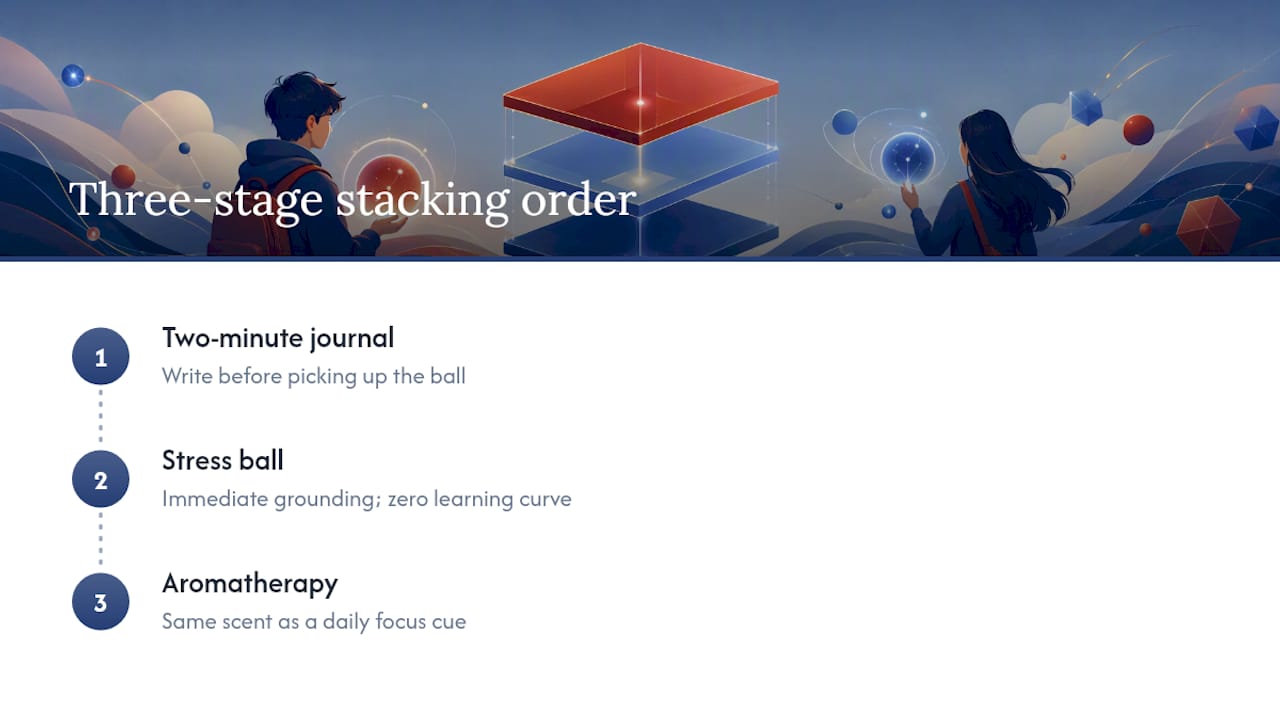
A practical stacking order: begin with a stress ball for immediate physical grounding, since it requires zero learning curve. Once squeezing before a study block feels automatic, add a two-minute journal prompt before you pick up the ball, so the writing happens first and the squeezing settles you right before you start working. Aromatherapy layers in last, as a consistent scent cue tied to the whole ritual, since research on lavender and alpha waves suggests scent works best as a repeated environmental signal rather than a one-time trick.
The order matters less than the consistency. A morning journal routine paired with the same scent every single day trains your brain to associate that combination with focus faster than switching blends or skipping days. Keep the full kit together, whether that’s a drawer, a bag, or a bundled kit, so the friction of “where’s my stress ball” never gets in the way of actually starting.
What Should You Actually Prioritize Here?
The conventional advice on focus tools treats every option as interchangeable, as if any stress ball or any journal or any candle does the same job. That’s wrong, and the research backs up why: hardness matters for stress balls, scheduling matters for journaling, and scent type matters for whether aromatherapy calms you or energizes you. Buying blindly wastes money and, worse, convinces people the whole category doesn’t work when really they just bought the wrong version.
What’s overrated is the idea that these tools need to be elaborate to work. The expressive writing research shows small, real effects from brief, repeated sessions, not from perfectly crafted journal entries. The stress ball trial used a simple squeezing routine, not a complicated protocol.
If you take one thing from this guide, prioritize consistency over variety. One soft stress ball used daily beats five wellness gadgets used once each. Pick a starting point that matches your actual sensitivities, not what looks impressive on a desk.
— Ravi
Build Your Study Focus Kit With MindPanda
MindPanda offers physical mindfulness products like stress balls, journals and planners with prompt formats, and wellness bundles that combine multiple tools.
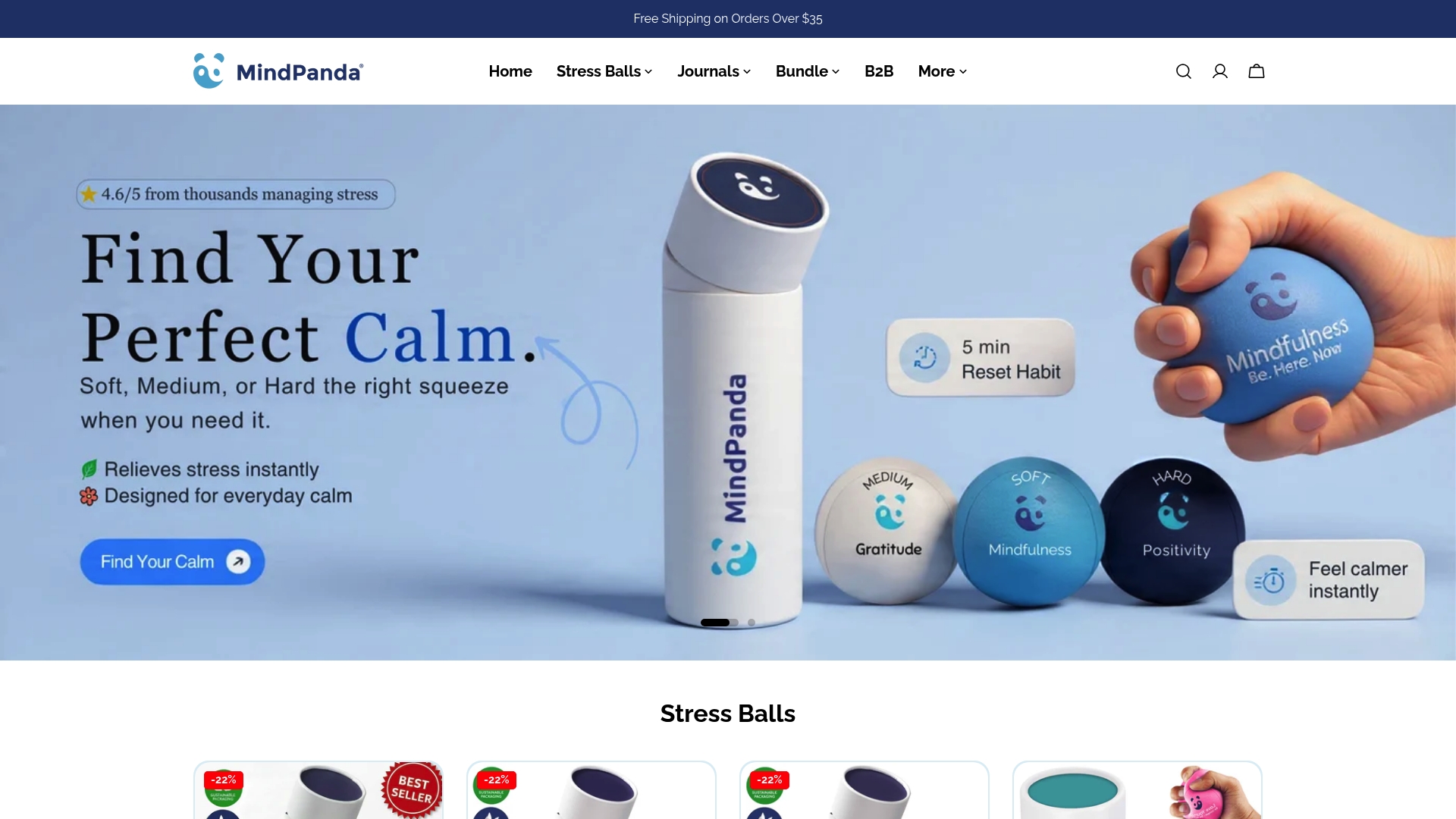
If you’re starting from zero, the simplest path is a single stress ball for immediate tactile grounding before your next study session. If journaling appeals to you more, browse the journals and planners selection for a format with built-in prompts rather than blank pages. Studying in a group, classroom, or office setting? MindPanda’s business and wholesale solutions cover bulk orders and corporate gifting for outfitting more than one person at once.
Pick one item that matches the calming or alerting need you identified earlier in this guide, add it to your desk this week, and give it a real seven days before judging whether it’s working.
Sources
- Effects of using a stress ball on anxiety and depression in patients undergoing hemodialysis: A prospective, balanced, single-blind, crossover study - PubMed
- The effectiveness of aromatherapy interventions on psychological, physiological and academic outcomes in nursing and health sciences students: a meta-analysis
FAQ
Do Stress Balls Actually Help You Focus While Studying?
Yes, stress balls reduce physical tension and arousal, which helps quiet the fidgeting and racing thoughts that pull attention away from studying. A 4-week trial found significant reductions in anxiety and depression, with benefits lasting a month after stopping.
What Scent Is Best for Studying?
Calming scents like lavender work best before a study session to settle nerves, while citrus and peppermint blends tend to feel more alerting during a mid-session energy dip. A blended oil study found measurable improvements in selective attention with inhaled blends.
How Often Should I Journal for Focus Benefits?
Short sessions every one to three days tend to produce stronger effects than sporadic long entries, according to expressive writing research. Two minutes of honest writing before a study block is enough to start.
Are Physical Study Tools Better Than Focus Apps?
They work through different mechanisms, so neither replaces the other outright. Physical tools like stress balls and journals calm your internal state without needing a device, while apps restrict access to distraction, and combining both often works better than relying on just one.
Does MindPanda Sell Study-Specific Wellness Bundles?
MindPanda offers stress balls, journals and planners, and wellness bundles that combine multiple tools into one kit, available through the MindPanda product pages. Current prices and bundle options are listed on the site itself.