
The most useful mood journal is one you can finish in under two minutes: a daily rating from 1 to 10, one line of context, and a monthly visual like a year-in-pixels grid to spot patterns later. That combination gives you enough data for a therapy conversation without turning journaling into a chore. The rest of this guide breaks down the specific templates, prompts, and habit tricks that make it stick.
TL;DR:
- Using a quick daily rating of 1 to 10 and a single line of context can provide enough data for therapy without requiring much time.
- Visual trackers like year-in-pixels or monthly grids are low-effort and effective for spotting mood patterns over time.
- Scaling formats up or down based on energy level helps maintain consistency and reduces the risk of abandonment.
- Incorporating prompts and different tracker styles can improve engagement and allow better insight into triggers and mood swings.
- Reviewing patterns weekly and monthly helps identify ongoing issues, with sustained low scores signaling the need for professional support.
Table of Contents
- Mood Journal Ideas: Quick Trackers You Can Start Today
- Copy-Ready Layouts for Bullet Journals and Notebooks
- Prompts and Rating Scales Worth Copying
- Matching the Method to Your Goals and Making It Stick
- Using Your Mood Journal in Therapy
- Keeping Up the Habit When Motivation Fades
- Common Roadblocks and How to Work Around Them
- Why Simple Tools Matter More Than Fancy Ones
- Mood Journals and Starter Kits Worth Considering
- Sources
- FAQ
Mood Journal Ideas: Quick Trackers You Can Start Today
Not every mood tracker asks the same amount of you. Some take fifteen seconds. Others take fifteen minutes. Picking the wrong one for your energy level is the top reason mood journals get abandoned by February.
Here’s a working list of formats, what each one captures, and how fast you can set it up.
- Year-in-pixels grid. A 12-by-31 box grid where each day gets one color-coded square. Takes 10 seconds a day. Draw it once in the back of a notebook and it lasts all year. Low-effort version: use only three colors (good, neutral, hard) instead of a five-color scale.
- Monthly mood grid. A single-month calendar with a small colored dot or number per day. Faster to build than the year version and easier for beginners to commit to. Skip the color key and just write a number 1 to 5 in each box.
- Weekly mood strip. Seven boxes in a row, one per day, each holding a mood word plus a tiny icon. Good for people who want a weekly overview without a monthly commitment. Low-effort variant: sticky notes on a wall, moved to a jar at week’s end.
- Mandala mood fill. A pre-drawn circle divided into daily segments, colored in as the month goes. More visually satisfying than a grid, and popular in bullet journal circles for exactly that reason. For a low-art version, use a printed template and only color, don’t draw.
- Aspect-based tracker. Separate rows for mood, energy, sleep, and stress, each rated daily. Useful if you suspect your mood swings are tied to a specific factor. Takes about a minute once the rows are set up.
- Numeric rating plus one-line note. Just a number 1 to 10 and a single sentence of context (“presentation went fine, slept badly”). This is the format clinicians most often recommend because it’s fast enough to sustain and specific enough to be useful months later.
- Gratitude overlay. Add one line of something positive alongside your mood score. This blends a mood log with positive affect journaling, a method with research behind it for lowering distress over time.
- Stamp or sticker log. Instead of writing anything, you stamp a mood face or place a colored sticker on today’s date. Best low-effort option for anyone who finds writing itself a barrier. Works well taped to a fridge or nightstand.
- Emoji or symbol key strip. A row of small symbols (sun, cloud, storm) placed daily along a strip of washi tape. Almost zero writing involved, which makes it a strong option during low-energy weeks.
- Two-word check-in. Just two words per day: one emotion, one cause. “Anxious, deadline.” “Calm, walk.” Faster than a full sentence but more specific than a single number.
Every one of these can be scaled up or down. If a five-color pixel grid feels like too much on a bad week, drop to three colors. The point is consistency, not artistry.
Copy-Ready Layouts for Bullet Journals and Notebooks
You don’t need drawing skill to build any of these. Graph paper and a ruler do most of the work for you.
- Year-in-pixels grid. Draw or print a table with 12 rows (months) and 31 columns (days). Label the left edge with month abbreviations and the top with day numbers 1 through 31. Color each box daily using a key of your choosing, five shades from great to terrible works well. Tape or draw your key in the corner so you don’t forget it by week three.
- Monthly calendar grid. Draw a standard 7-column, 5-row calendar block, same as any wall calendar. In each date box, write a single digit 1 to 5 for mood and, if there’s room, a two-letter code for a trigger (“WK” for work, “SL” for sleep). This layout works especially well for spotting weekday-versus-weekend patterns.
- Weekly strip. Rule seven equal boxes across a page, one per day. In each box, write the date, a mood word, and one cause word. Leave a thin margin at the bottom for a weekly summary line you fill in on Sunday.
- Mandala fill. Draw a large circle and divide it into wedges, one per day of the month (28 to 31 wedges depending on the month). Color one wedge daily using your mood key. If freehand circles aren’t your thing, trace a jar lid or download a printable template and just fill it in.
- Bedside micro-template. For nights when even three lines feels like too much, keep a sticky-note pad by your bed with a pre-printed template: a mood number, a one-word cause, and a checkbox for “took meds” or “exercised.” Peel it off and stick it into your main journal later if you want a permanent record.
- The 3-line daily template. Write this same skeleton every day: line one is a mood number, line two is one sentence about what happened, line three is one word for what helped or didn’t. This is close to the format Cedar Hill Behavioral Health suggests for logs meant to support a therapy conversation.
- The 1-minute check-in box. Draw a small rectangle, about two inches square, and divide it into four quadrants: mood, energy, one trigger, one coping action. Fill all four in under a minute. This works as a standalone entry or as a companion to a longer weekly reflection.
If drawing grids by hand isn’t appealing, printable templates from sites like Positivepsychology give you tested mood-chart layouts you can print and drop straight into a binder or notebook. A cheap notebook works fine for any of these. Grid or dot paper makes drawing straight lines easier than lined paper, but a ruler and a plain notebook will get you there too.
Prompts and Rating Scales Worth Copying
A number alone tells you that you felt bad. A prompt tells you why, which is the part that actually helps in a therapy session or a pattern review six weeks later.
Short present-tense prompts work best for quick entries because they anchor you in the moment instead of sending you down a rabbit hole of analysis. Try:
- “What does my body feel like right now?”
- “What’s one thing I’m noticing outside myself?”
- “What’s the loudest thought in my head this second?”
These mirror the kind of mindfulness-based prompts that research suggests reduce rumination, which makes them a better fit for anxious moments than an open-ended “how was your day.”
Longer reflective prompts suit end-of-day or weekend entries when you have more than sixty seconds:
- “What pattern have I noticed in my mood this week?”
- “What did I avoid today, and why?”
- “What would I tell a friend who felt the way I feel right now?”
For rating systems, you have three solid options. A simple 1 to 10 scale is fastest and works for almost anyone. A valence by energy two-axis grid (imagine a graph with “pleasant to unpleasant” on one axis and “high energy to low energy” on the other) captures the difference between anxious-and-wired versus sad-and-flat, two states a single number flattens into one. A quick checkbox set (“slept well,” “exercised,” “socialized,” “took medication”) pairs well with either scale and gives you correlational data without extra writing.
If you want a faster shortcut than describing your feeling in your own words, an emotion wheel routine helps you land on a more precise word than “fine” or “bad” in under two minutes.
For entries closer to ten or fifteen minutes, borrow from positive affect journaling (PAJ): write about one positive event from the day and how it made you feel, in detail. A 12-week trial of this method found participants reported less mental distress and more well-being compared to their starting point, and PAJ tends to have better follow-through than traditional expressive writing because it’s less emotionally taxing to sit with.
For entries under three minutes, a micro-prompt list works better than any scale:
- One word for the feeling.
- One word for the cause.
- One word for what would help.
Pro Tip: Keep a printed emotion-word list (happy, content, restless, drained, irritable, hopeful) taped inside your journal’s front cover. Scanning a list is faster than hunting for the right word from memory, especially on days when your vocabulary feels as tired as you do.
Matching the Method to Your Goals and Making It Stick
The format that works depends entirely on what you’re trying to catch. If you’re watching for mood swings tied to a bipolar or borderline pattern, a brief structured daily log, score, sleep, one word, is what clinicians tend to recommend, because swings show up faster in a clean number series than in prose. If rumination is the problem, a structured prompt (closer to a CBT thought record) beats a free-write, since open-ended reflection can spiral. If you just want general daily awareness, almost any consistent format works, the value comes from doing it, not from which template you pick.
Making it stick comes down to friction, not willpower:
- Time-box it. Set a two-minute timer and stop when it rings, even mid-sentence.
- Pair it with an existing routine, brushing your teeth, making coffee, plugging in your phone at night.
- Keep a low-effort fallback ready. A sticker or a single number counts as a completed entry on hard days.
- Put the journal somewhere you’ll physically see it, not in a drawer.
Consistency beats length for building a useful record over time, according to practical journaling guides, and a five-second entry every day gives you more usable data than a beautiful page you write once a month.
Reviewing your entries is where the real payoff shows up. Once a week, scan for repeated triggers, sleep and mood links, and what coping strategies you actually used versus what you meant to use. Once a month, zoom out on your pixel grid or calendar and look for stretches of low mood rather than single bad days. One recent analysis of digital journaling data found that sustained low pleasantness across several entries predicted next-entry distress more reliably than any single low score, which is a good reason to review trends, not days.
On storage: paper journals are private by default but can be lost or damaged. Digital entries are searchable and backed up automatically but live on a device someone else could access. Pick whichever tradeoff bothers you less, and if privacy is the priority, a locked drawer or a password-protected note app both work fine.
Using Your Mood Journal in Therapy
Clinicians generally don’t want your full journal. They want a short, structured summary: mood score, sleep, medication taken, and one context word per day. If your logs already follow the 1-to-10-plus-one-line format described earlier, you’re already halfway to something a therapist can use in a fifteen-minute check-in.
To prepare a summary before an appointment, pull out your week or month and note: the highest and lowest scores, any repeated triggers, sleep patterns tied to mood dips, and what coping tools you reached for. That’s a five-minute task if your daily entries are already short and structured.

Watch for a few red flags that mean it’s time to reach out for support sooner than your next scheduled session: mood staying low for two weeks or more without a lift, losing interest in things you normally enjoy, or explore natural remedies for anxiety as supportive non-pharmacologic coping strategies. If self-harm thoughts show up, contact a provider immediately or call or text 988 in the US for the Suicide and Crisis Lifeline. A journal is a tracking tool, not a treatment, and it should never replace reaching out when things get serious.
The evidence on journaling’s therapeutic value is real but bounded. A randomized trial of positive affect journaling found reduced distress over 12 weeks, and public health guidance from the NIH lists journaling among useful resilience-building habits alongside sleep and exercise. But expressive writing studies show mixed results depending on guidance, adherence, and duration, so a journal supplements care. It doesn’t substitute for it.
Keeping Up the Habit When Motivation Fades
Motivation drops off around week three for almost everyone. That’s not a personal failure, it’s just how habits work before they’re automatic. A few things actually help.
Lower the bar on hard days instead of skipping entirely. A single number with no note still counts and keeps the streak alive, which matters more for momentum than you’d think. Attach journaling to something you already do without thinking, right after your alarm, right before you brush your teeth at night. Standalone habits are far easier to forget than ones riding along with an existing routine.
Give yourself a visual payoff. A filled-in pixel grid or a colorful weekly strip is satisfying to look at after a month, and that small reward does more for long-term follow-through than any amount of self-discipline. If you journal digitally, an app streak or reminder can serve the same purpose.

Rotate your format if boredom sets in. Switching from a numeric log to a mandala fill for a month, then back, keeps the task feeling fresh instead of like a chore you’re grinding through. And don’t aim for a perfect streak. Missing three days and picking back up beats quitting entirely because the chain broke once.
Common Roadblocks and How to Work Around Them
Most mood journals fail for one of four predictable reasons, and each has a fairly simple fix.
“I don’t have time.” This usually means the format is too heavy for the day you’re having. Switch to a two-word check-in or a single sticker instead of forcing a full written entry.
“I forget to do it.” Attach the habit to something automatic, like your morning coffee or your nightly phone charge, rather than relying on remembering cold.
“I don’t know what to write.” Keep a prompt list or an emotion-word list taped inside the cover so you’re never starting from a blank page. Pulling from a list is far easier than generating a feeling word from scratch on a tired night.
“I feel worse rereading old entries.” This is common during low stretches. Skip review weeks when you’re not up for it, there’s no rule that says you have to look back every single week. Review when you have the bandwidth, not on a fixed schedule that ignores how you’re actually doing.
“My entries feel repetitive.” That’s often a sign the format has gotten too easy to skim past without engaging. Swap in a new prompt or a different tracker style for a few weeks to reset your attention.
None of these roadblocks mean the journal isn’t working. They usually just mean the format needs to flex with your week instead of staying rigid.
Why Simple Tools Matter More Than Fancy Ones
Most people don’t quit mood journaling because they run out of ideas. They quit because the setup asked too much of them on an already hard day. That’s the thinking behind favoring a physical journal with clean, pre-structured pages over a blank notebook that demands you design your own system before you’ve written a single mood entry.
A small, fixed toolkit, one journal, one pen, maybe a handful of colored markers, removes the decision fatigue that kills most habits in week two. You’re not choosing a format every morning. You’re just filling in the one you already picked. Some journals and planners lean into that: functional layouts paired with design that doesn’t feel clinical, packaged in a way that is mindful of environmental impact. Fewer choices at 7 a.m. means a better shot at still writing on day 90.
Mood Journals and Starter Kits Worth Considering
If you’ve read this far and you’re thinking about building your own year-in-pixels grid from scratch tonight, that’s a completely valid path. But if the idea of ruling out 372 boxes by hand sounds like the exact kind of friction that kills a new habit, a ready-made option solves that problem before it starts.
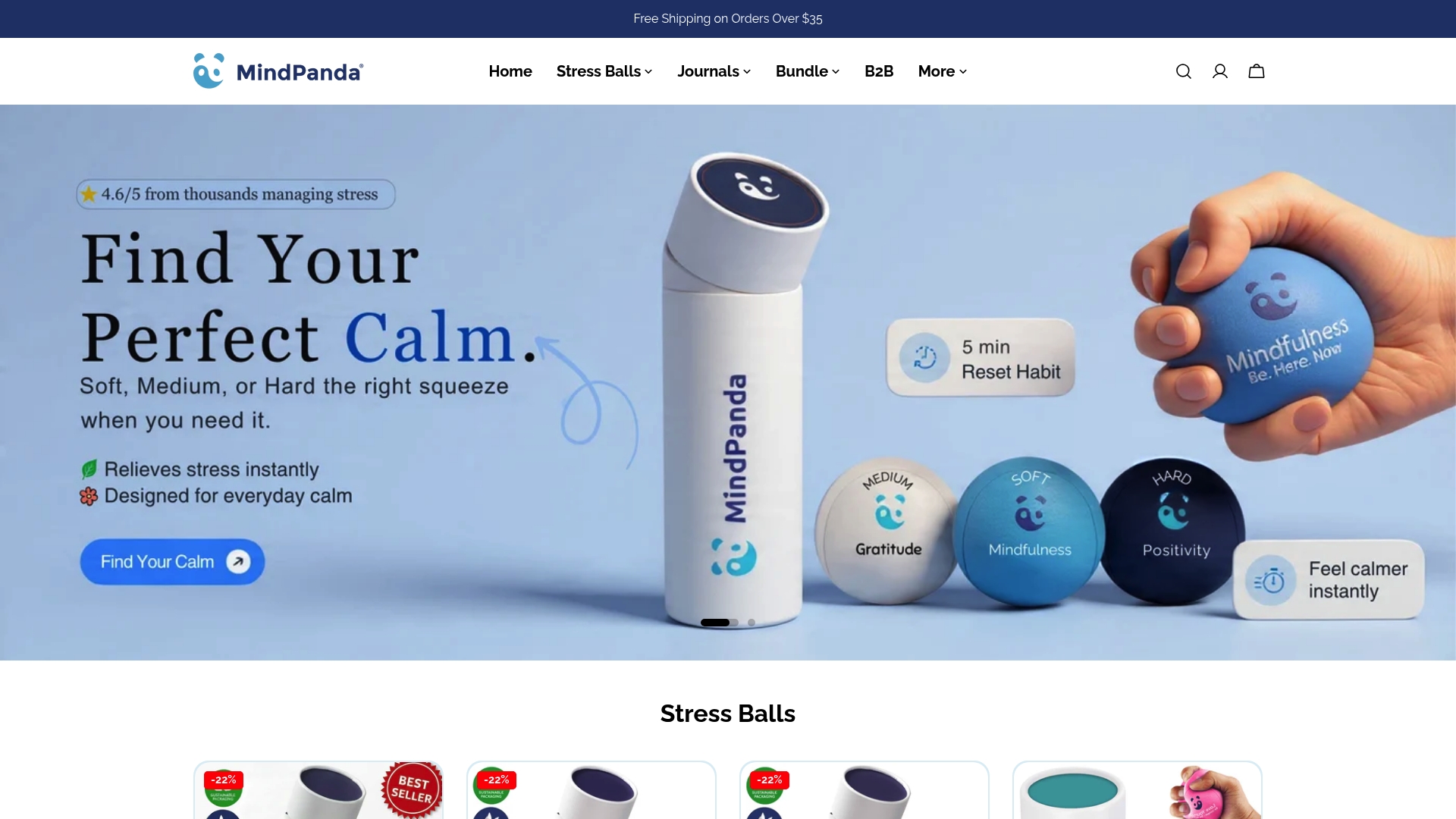
Mindpanda’s Journals & Planners collection includes layouts built around exactly the formats covered here, daily rating rows, monthly grids, and prompt space, so you’re not designing a system before you’ve written a single entry. That matters most in the first two weeks, when the barrier to entry decides whether the habit survives at all. A DIY notebook works fine if you enjoy the design process itself; a pre-structured journal works better if you just want to start tracking tonight without a ruler.
For a low-effort entry point, pair a ready-made journal with a five-minute daily check-in: mood score, one line of context, done. If you’re setting up something similar for a team or client gifting program, Mindpanda’s corporate gifting and bulk order options cover branded and bespoke journal orders at volume. Browse the current journal and planner lineup and pick the layout that matches how much time you actually have most days, not how much time you wish you had.
This article is general information, not a substitute for advice from a qualified doctor. Consult a qualified healthcare professional about your own circumstances before acting on anything here.
Sources
- Emotional wellness toolkit | NIH
- Journaling for mental health: Practical guide | Cedar Hill Behavioral Health
- Positive affect journaling (PAJ) randomized trial | JMIR Mental Health
- Online expressive writing feasibility and efficacy study | PLOS Mental Health
- Randomized trial and behavioral-phenotyping analysis of digital journaling (preprint)
FAQ
What Should I Put in a Mood Journal?
At minimum, a daily mood rating (1 to 10) and one line of context about what shaped that mood. Add sleep, medication, or trigger notes if you want data useful for a therapy conversation, and a monthly visual tracker like a pixel grid if you want to spot patterns at a glance.
What Is the Best Format for a Mood Journal?
There’s no single best format, the right one depends on your goal. A brief structured log works best for tracking mood swings, while positive affect prompts suit people focused on general well-being, and Mindpanda’s structured journals and planners work well if you’d rather start with a ready-made layout than design your own.
What Are Some Creative Ideas for Mood Trackers?
Beyond a basic grid, try a mandala fill you color in daily, a washi-tape symbol strip, a two-axis valence and energy chart, or a sticker log for low-energy weeks. Rotating formats every few months also helps keep the habit from feeling stale.
What Are Some Unique Journal Ideas Beyond Mood Tracking?
Gratitude overlays, where you pair a mood score with one positive note, blend two habits into one entry and draw on positive affect journaling research showing reduced distress over time. An emotion-wheel check-in or a morning five-minute template are two other low-effort ways to add depth without adding much time.
How Often Should I Review My Mood Journal Entries?
Scan for triggers and sleep links weekly, and look at the bigger picture monthly using your visual tracker. Sustained low mood across several entries is a more reliable signal to watch for than any single bad day.