
Take a device-free break of one to ten minutes and pair it with one simple practice, either slow breathing or mindful eating, and you get fast stress relief along with sharper focus for the rest of your day. Below you will find timed scripts, mindful eating tactics, and habit tricks that fit even a rushed thirty-minute lunch.
TL;DR:
- Spending just one to ten minutes on a mindful practice can significantly reduce stress and improve focus, especially if paired with a regular habit.
- Short mindfulness exercises, such as three-breath resets or mindful walking, can be done anywhere without equipment and fit into even a busy lunch break.
- Removing devices during meals enhances digestion and satisfaction, as attention shifts more fully into rest-and-digest mode.
- Consistent practice of five to nine minutes daily yields the greatest stress reduction, with progress improving even when starting with just a few minutes.
- Small tools like stress balls or journals can reinforce mindfulness routines and make habit formation easier.
Table of Contents
- 1. Quick Lunchtime Mindfulness Practices You Can Try Today
- 2. Mindful Eating: Use Your Lunch Itself as a Restorative Practice
- 3. Guided Meditation Scripts for 3, 5, and 10 Minutes
- 4. How to Fit Mindfulness Into a Tight Lunch Window
- 5. What the Research Says About Short Breaks and Focus
- 6. Why Starting Small Actually Works
- Small Tools That Support a Lunchtime Habit
- Sources
- FAQ
1. Quick Lunchtime Mindfulness Practices You Can Try Today
You do not need a meditation cushion or a quiet room to reset your mind at midday. These exercises work at your desk, in a stairwell, or on a short walk, and most take less time than it takes to reheat leftovers.
- Three-breath reset: Inhale for four counts, hold for four, exhale for six, and repeat three times to slow your heart rate.
- Box breathing: Inhale four counts, hold four, exhale four, hold four, and cycle for two minutes; MindPanda’s box breathing technique guide walks through the full sequence.
- Micro body scan: Spend ninety seconds noticing tension from your jaw to your shoulders to your hands, releasing each spot as you go.
- Five things grounding: Name five things you can see, four you can hear, three you can touch, two you can smell, and one you can taste to clear mental clutter.
- Mindful walking loop: Walk a short hallway or courtyard loop at half your normal pace, feeling each footstep instead of scrolling your phone.
- Mid-meal pause: Stop halfway through lunch, put your fork down, and check in on hunger and mood before continuing.
- Perspective-shift visualization: Close your eyes for two minutes and picture a calm, specific place in detail, which can loosen stuck thinking before an afternoon task.
- Gratitude pause: Name one specific thing that went well this morning, then leave your phone in a bag or drawer for the rest of the break.
- Pick one practice, not all eight, and repeat it daily for a week before adding a second.
- Keep a visible timer running so you are not tempted to check the time on your phone.
- Pair a practice with an existing habit, like doing the three-breath reset right after you sit down with your food.
Pro Tip: Stick a small note on your monitor that says “phone away, three breaths first” as a physical cue until the habit sticks.
2. Mindful Eating: Use Your Lunch Itself as a Restorative Practice
Your meal can double as the mindfulness practice instead of competing with it. The habit is simple: put the phone out of reach, eat your first one or two bites in silence, and pay attention to what you are actually tasting.
- Notice the temperature, texture, and flavor of your first bite before you speak or read anything.
- Pause halfway through the meal and ask yourself how full you feel on a simple scale of low, medium, or high.
- If you must eat at your desk, close unrelated tabs and turn your chair away from the screen for at least five minutes.
Dietitian-informed reporting on device-free lunches found that removing phones for twenty to thirty minutes eased stress, improved digestion, and increased satisfaction with the meal, likely because the body shifts more fully into rest-and-digest mode when attention is not split. A visible phone alone can dull that restorative effect, even if you never pick it up.
Pro Tip: If your team eats together, agree on a shared “phones in the middle of the table” rule for the first ten minutes.

3. Guided Meditation Scripts for 3, 5, and 10 Minutes
Set a silent timer or use a guided app, then follow whichever script matches your available time.
- Three-minute reset: Sit tall, feet flat on the floor, and breathe slowly for the full three minutes, silently counting each inhale and exhale.
- Five-minute attention and acceptance practice: Spend the first two minutes on breath counting, then when your mind wanders, name it silently (“thinking”) without judgment and return to the breath for the remaining time.
- Ten-minute grounding and visualization: Begin with two minutes of box breathing, move into three minutes of a body scan, then spend five minutes picturing a calm scene in as much sensory detail as you can hold.
Repeating the same script most days builds familiarity faster than switching techniques constantly, and a nonjudgmental, accepting attitude toward distraction matters more than forcing a blank mind: research on attention monitoring and acceptance found that combining the two produced bigger drops in mind-wandering than monitoring alone.
4. How to Fit Mindfulness Into a Tight Lunch Window
A five-minute lunch still has room for a three-breath reset before you eat. A ten-minute lunch fits the five-minute script plus a couple of mindful bites, and a twenty to thirty minute lunch has space for the full ten-minute script or a mindful walking loop plus a relaxed, device-free meal.
- Block “lunch reset” on your calendar the same way you would block a meeting, so it does not get swallowed by back-to-back tasks.
- Attach the practice to an existing cue, such as closing your laptop lid, then reward yourself with the meal itself.
- Ask a coworker to join for five minutes; a lunch buddy makes the habit stickier than trying to remember alone.
- Rate your mood, focus, and energy on a simple one-to-ten scale after each session to see what is actually working.
Pro Tip: Try the same micro-practice for two straight weeks before judging whether it helps, since the cue-behavior link takes time to form.
5. What the Research Says About Short Breaks and Focus

A randomized clinical trial of 1,458 employees found that a digital mindfulness program reduced perceived stress and job strain after eight weeks compared with a waiting-list group, with benefits still holding at four months. People who engaged five to nine point nine minutes a day saw the largest drops in stress scores, which lines up with the short, timed scripts above.
A randomized trial found daily engagement of 5 to 9.9 minutes was linked to the largest reductions in perceived stress, suggesting that consistency matters more than session length.
- Acceptance-based attention training reduces mind-wandering more than passive monitoring alone, supporting the “notice and let go” instruction in the scripts above.
- Structured micro-breaks under ten minutes can restore attention and energy, though duration and activity choice both affect how much they help.
6. Why Starting Small Actually Works
Most people overestimate how much time mindfulness requires and underestimate how much a single, honest minute of attention can do for the rest of the afternoon. Start with one to three minutes a day and let the habit grow on its own terms rather than forcing a longer session you will eventually skip. The approach is built around the idea of small, approachable tools that make stress relief feel doable rather than aspirational.
— Ravi
Small Tools That Support a Lunchtime Habit
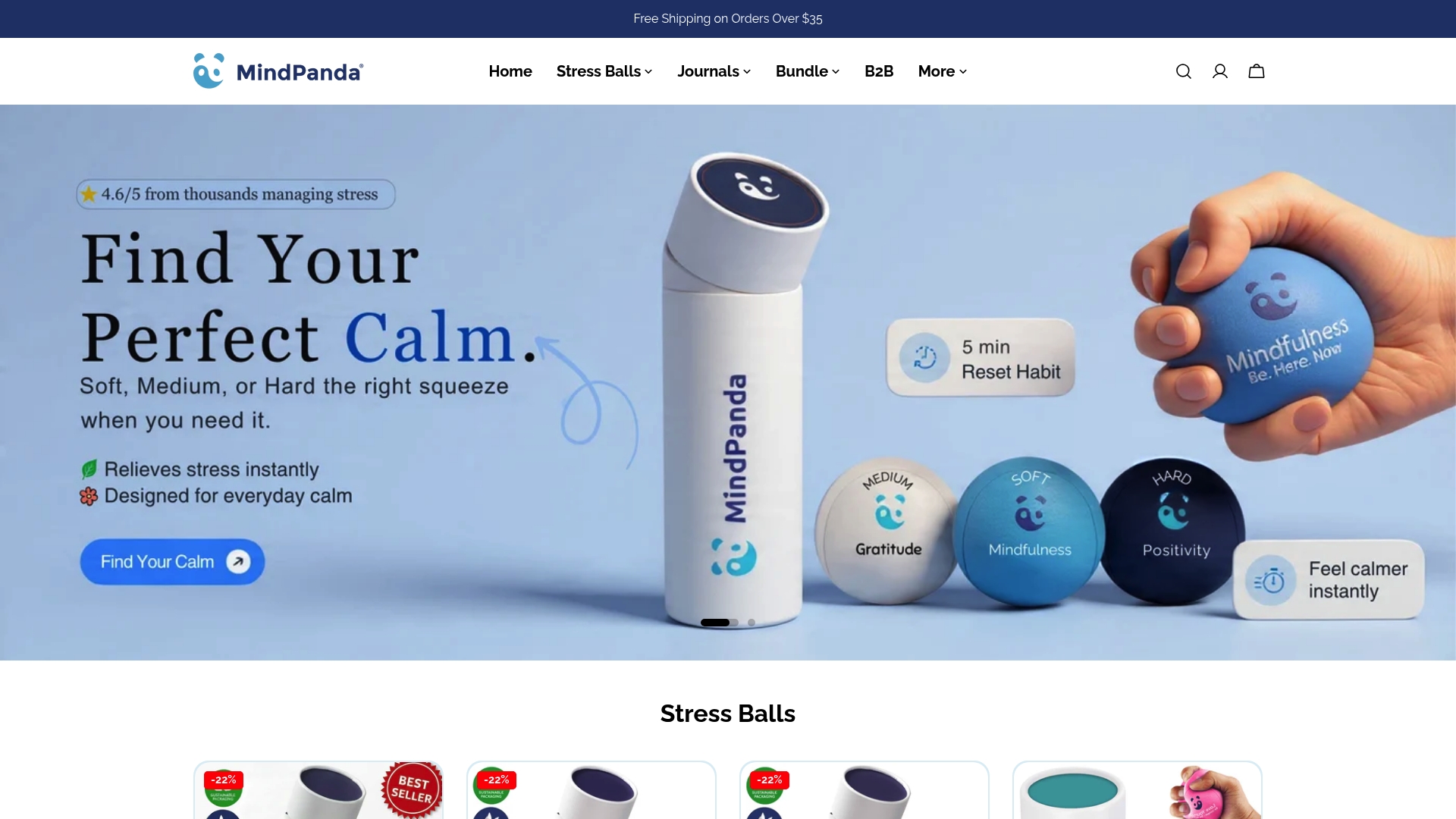
A stress ball on your desk or a pocket journal in your bag will not meditate for you, but they can make the habit easier to remember and easier to enjoy. MindPanda’s Stress Balls work well as a tactile cue during a breathing reset, and its journals and planners give you a simple place to log your daily mood, focus, and energy check.
| Product | Best used for |
|---|---|
| Stress Balls | Tactile anchor during breathing resets |
| Journals & Planners | Tracking mood, focus, and energy after each practice |
Sources
- Digital Meditation to Target Employee Stress: A Randomized Clinical Trial (JAMA Network Open / PMC)
- Acceptance training as a critical component for reducing mind-wandering (APA manuscript)
- I had a device-free lunch every day for 2 weeks (EatingWell)
FAQ
Can you give me some examples of mindfulness breaks?
Simple examples include a three-breath reset, a five-senses grounding exercise, a short mindful walk, or eating your first few bites of lunch in silence. Each takes between one and five minutes and needs no equipment beyond a timer.
Is 30 minutes a good lunch break?
A thirty-minute lunch gives enough room for a full meal plus a short mindfulness practice, and device-free lunches of 20 to 30 minutes have been linked to better digestion and lower stress. Shorter breaks still help if you use the time well, but thirty minutes gives more room for both eating and resetting.
What are some mindfulness exercises I can do with food?
Try eating your first one or two bites without talking or looking at a screen, paying close attention to taste and texture. Pausing halfway through the meal to check your fullness level is another simple way to turn lunch into a mindfulness practice.
Why are lunch breaks important?
Lunch breaks give your brain a chance to step away from work tasks and recover attention and energy, and structured short breaks can help restore both if the activity and length are well-chosen. A randomized trial also found that brief daily mindfulness practice during the workday reduced perceived stress over eight weeks.