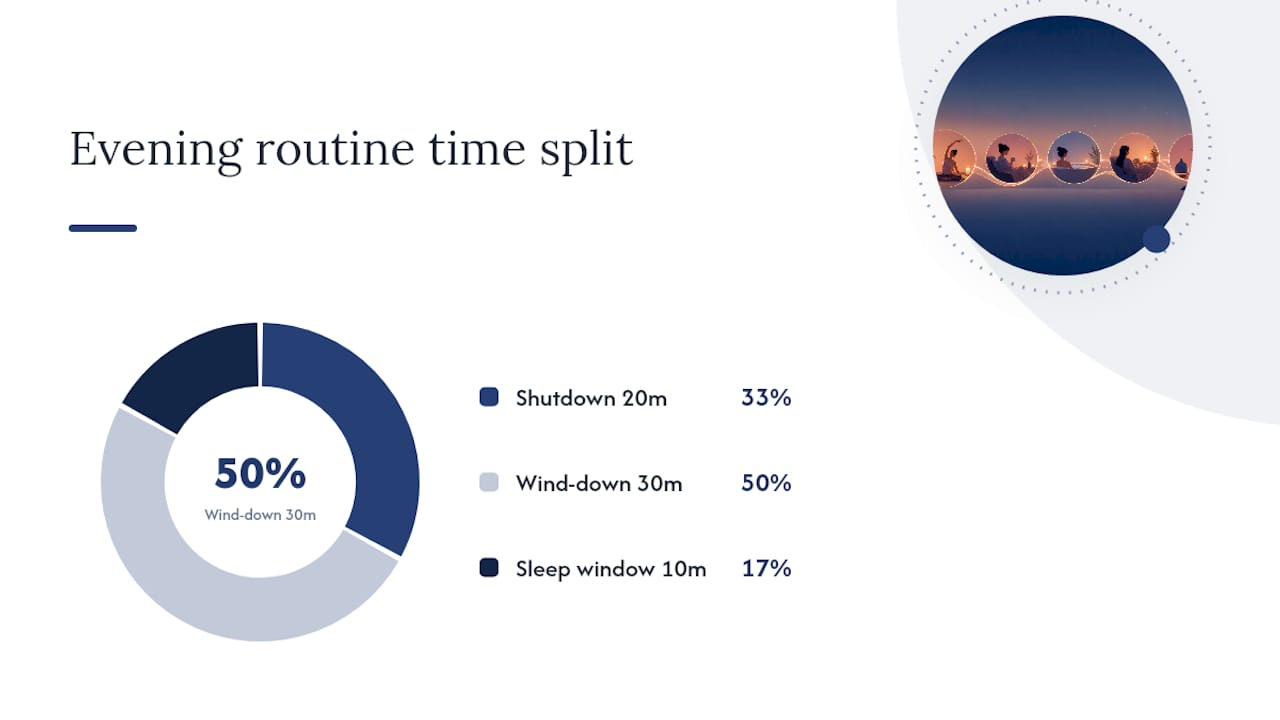
Start a phased wind-down routine 30 to 60 minutes before bed: 20 minutes to shut down work and tasks, 30 minutes of low-stimulation activities like reading or stretching, and a 10-minute sleep window where the phone leaves the room and the lights go dark. Set an alarm right now for tonight’s start time. That single step matters more than any product or technique you add later.
TL;DR:
- A consistent 30 to 60-minute wind-down routine with clear phases significantly improves sleep onset by reducing mental and physical stimulation.
- Dimming lights and avoiding screens in the hour before bed support melatonin production, making it easier to fall asleep faster and more restorative.
- A three-phase routine—including mental unloading, calming activities, and a sleep window—maximizes effectiveness and minimizes decision fatigue.
- Keeping the bedroom cool, dark, and quiet, and avoiding caffeine, heavy meals, and late exercise, promotes optimal sleep conditions.
- Using simple tools like journals, stress balls, or aromatherapy can help establish and reinforce the routine until it becomes automatic.
Table of Contents
- Why an Evening Wind Down Routine Actually Works
- How Long Should Your Wind Down Be?
- A Copyable 60-Minute Wind Down Routine
- Relaxation Techniques That Actually Calm You Down
- Sleep Environment Setup and Habits to Avoid
- Making the Routine Stick When Life Gets in the Way
- Products and Guides That Support Your Nightly Ritual
- What I’ve Learned About Realistic Wind Down Routines
- Wind Down With Products That Fit the Routine, Not Fight It
- Sources
- FAQ
Why an Evening Wind Down Routine Actually Works
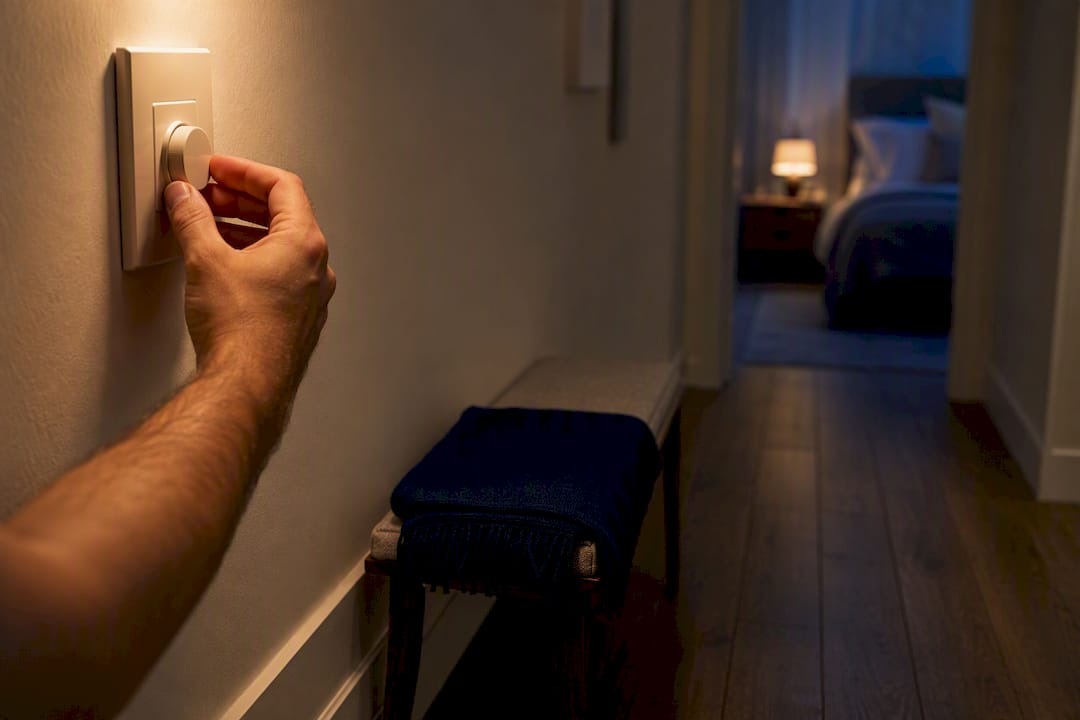
Your brain doesn’t switch from “answering emails” to “asleep” like flipping a light switch. It’s more like a dimmer. Bright light, screens, and mental stimulation keep the dimmer cranked up, telling your body it’s still daytime. A wind-down routine turns that dimmer down gradually, giving your nervous system the runway it needs to land.
The biology behind this is straightforward. Dimming household lights in the evening supports the body’s natural release of melatonin, the hormone that signals it’s time to sleep, according to the GW Cancer Center. Bright overhead lighting and phone screens do the opposite. They suppress that release and keep your brain acting like it’s noon.
This isn’t just about falling asleep faster, either. Consistent, restorative sleep affects immune function, mood regulation, and physical recovery. Skimp on it for a few nights and you’ll notice the difference in your patience, your focus, and how sore your body feels after a normal workout.
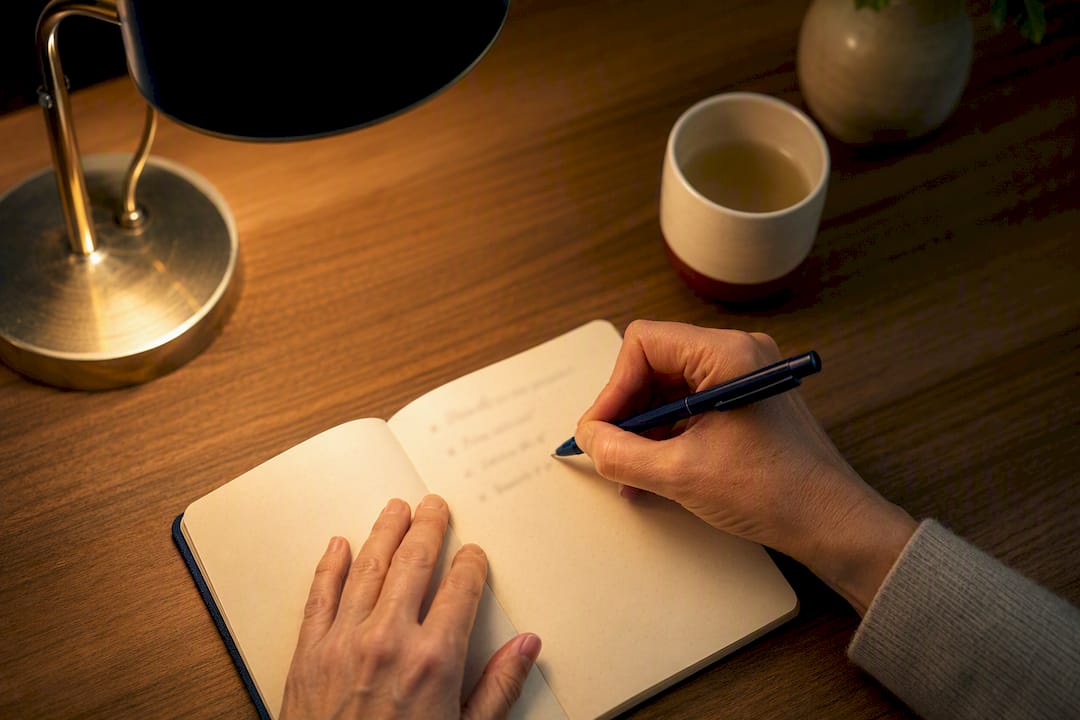
Here’s the number that stands out: a five-minute pre-sleep habit, like writing a quick to-do list, has been shown to speed up sleep onset for people who tend to lie awake replaying their day, based on a study cited by the Sleep Foundation. That’s not a fringe hack. It’s one of the cheapest, fastest interventions in sleep science, and it costs you a notebook and five minutes.
Consistency compounds the effect. Going to bed and waking up within the same window each day trains your brain to expect sleep at a certain time, which shortens the time it takes to actually fall asleep once you’re under the covers. A wind-down routine isn’t a bedtime luxury. It’s the mechanism that makes that consistency possible night after night.
How Long Should Your Wind Down Be?
Thirty to sixty minutes is the range most sleep guidance converges on, and the Sleep Foundation backs a routine built around a consistent bedtime and wake time inside that window. Some guidance stretches the starting point earlier, suggesting you begin winding down anywhere from 30 minutes to two hours before your intended bedtime, according to Headspace. The right length depends on how wound up you typically are by the evening and how much time you realistically have.
A few timing structures work well depending on your schedule:
- Full 60-minute phased routine: 20 minutes to close out the day’s tasks, 30 minutes of calming activity, 10 minutes for the final sleep window. This is the architecture recommended by HabitBox and it removes a lot of nightly decision fatigue because each phase has a clear job.
- Condensed 30-minute version: 10 minutes to shut down devices and tidy loose ends, 15 minutes of one calming activity (not three), 5 minutes to dim the room and get into bed.
- Micro 10 to 15-minute routine: for nights that got away from you. Phone away, lights down, four or five minutes of breathing, done. Better than nothing, and far better than scrolling until you pass out.
If your current bedtime is wildly inconsistent, don’t try to fix it in one night. Shift your target bedtime by 15 to 30 minutes each week until you land where you want. Jumping two hours earlier overnight usually backfires because your body isn’t tired yet, and lying awake frustrated undoes the whole point of the exercise.
A Copyable 60-Minute Wind Down Routine
This is the version to screenshot. It’s built on the shutdown, wind-down, sleep-window structure that shows up across sleep guidance because it works: each phase has one job, so you’re not making decisions when you’re already tired.
Phase 1: The 20-minute shutdown (mental unload)
- Write tomorrow’s top three priorities on paper or in a journal. This is the “five-minute to-do list” effect in action, and it’s one of the simplest ways to quiet a racing mind before you’ve even started the calming part of the routine.
- Close out work apps, tabs, and any lingering notifications. Physically put your laptop away, not just to sleep mode.
- Do one small task you’ve been avoiding, like loading the dishwasher or setting out clothes for tomorrow. Clearing visual clutter reduces the low-grade mental noise that follows you to bed.
- Set your phone to do-not-disturb and place it somewhere outside arm’s reach of your bed.
Phase 2: The 30-minute wind-down (pick one or two, not all four)
- Read a physical book. Not your phone, not a tablet with the brightness cranked up. Paper only, or an e-reader with a warm, dim display.
- Light stretching or restorative yoga. Five to ten slow movements focused on your hips, shoulders, and neck, the places that hold tension from sitting all day.
- Journal for five to ten minutes. Beyond tomorrow’s task list, this is where you process anything unresolved from the day. A few evening journaling prompts worth trying: “What’s still on my mind?”, “What went well today, even something small?”, or “What am I dreading about tomorrow, and is it actually that bad?”
- Take a warm bath or shower. The drop in body temperature afterward mimics the natural temperature dip that happens before sleep, which nudges your body toward drowsiness.
Phase 3: The 10-minute sleep window
- Confirm your phone is out of the bedroom, or at minimum face down and silenced across the room.
- Check the room: cool, dark, quiet. If light leaks in from a hallway or a charging cable’s LED, block or cover it.
- Do one short breathing practice while lying in bed (more on exact techniques below).
- Lights off. No “just checking one thing” on your phone. That’s the rule that undoes everything else in this routine.
If 60 minutes feels like a stretch most nights, cut Phase 2 down to one activity instead of two and you’ve got a solid 30-minute version. On genuinely rough nights, Phase 3 alone, done properly, beats skipping the routine entirely.
Pro Tip: Automate the parts you’ll forget when you’re tired. Set a recurring phone alarm labeled “wind-down starts now” and, if you have smart bulbs, schedule them to dim automatically at the same time every night. Removing the decision of when to start is half the battle.
Relaxation Techniques That Actually Calm You Down
Not every calming technique fits every kind of restlessness. A racing mind and a tense body need different approaches, and figuring out which one you’re dealing with saves you from wasting ten minutes on the wrong tool.
Progressive muscle relaxation works best when your body feels physically wound up, tight shoulders, a clenched jaw, restless legs. It’s a drug-free method with real backing: tensing and then releasing muscle groups helps reduce physical tension and supports falling asleep, according to Harvard Health. Here’s the sequence:
- Lie down and start with your feet. Tense the muscles hard for five seconds, then release completely for ten seconds.
- Move upward through calves, thighs, glutes, abdomen, hands, arms, shoulders, and face, tensing and releasing each group in turn.
- Notice the contrast each time between tension and release. That contrast is the point, not the tensing itself.
- The full sequence takes about ten to fifteen minutes the first few times, faster once it’s familiar.
4-7-8 breathing and box breathing are better suited to a racing mind, the kind of restlessness where your body’s fine but your thoughts won’t stop looping.
- 4-7-8 breathing: Inhale through your nose for 4 counts, hold for 7 counts, exhale slowly through your mouth for 8 counts. Repeat four to six cycles.
- Box breathing: Inhale for 4 counts, hold for 4, exhale for 4, hold for 4. Repeat for two to three minutes. This one’s easier to sustain for longer stretches since the pattern is even on all sides.
Both are simple enough to self-administer with no equipment and minimal practice, which is part of why they show up in so much clinical sleep guidance. If your mind is looping on a specific worry rather than general noise, pair either breathing pattern with a short body scan: mentally sweep from your toes to your scalp, just noticing sensation without trying to change anything. It gives your attention somewhere to land besides the worry loop. For step-by-step variations on these patterns, A guide to breathing exercises and a dedicated box breathing walkthrough both go deeper than the summary here.
Sleep Environment Setup and Habits to Avoid
Your bedroom is doing half the work in this routine, whether you’ve noticed or not. A room set up wrong can undercut a perfect 60 minutes of wind-down in about thirty seconds once you climb into bed.
The setup that helps:
- Keep the room between 65 and 68°F. That range shows up consistently in sleep guidance because it matches the natural drop in core body temperature your body wants at night, according to the Sleep Foundation.
- Block or cover LED light leaks from chargers, smoke detectors, or streetlight gaps around curtains. Small lights matter more than people assume; darkness for sleep is a principle that applies at every age, including infants and newborns, whose sleep is even more sensitive to ambient light.
- Add white noise or a fan if outside noise is unpredictable.
- Move your phone charger outside the bedroom, or at minimum across the room, out of reach.
The habits actively working against you:
- Caffeine after early afternoon, even decaf coffee’s trace amounts if you’re sensitive.
- A heavy, rich meal within two to three hours of bed.
- Intense exercise late in the evening, which raises core temperature and heart rate right when they need to be dropping.
- Alcohol as a sleep aid. It may knock you out faster but fragments sleep later in the night.
- Checking work email or scrolling social media once the wind-down has started. This is the single habit worth eliminating first if you only fix one thing, since a phone combines bright light with emotionally charged content, a combination that undoes almost everything else in the routine, per the GW Cancer Center.
Mindpanda’s sleep hygiene checklist covers additional environmental tweaks if you want a fuller audit of your bedroom setup.
Making the Routine Stick When Life Gets in the Way
Habits take real time to become automatic, often weeks, and trying to overhaul your entire evening on night one is the fastest way to quit by night three, according to the GW Cancer Center. Start with one phase, not all three.
- Anchor the routine to something you already do every night, like brushing your teeth, so it has a built-in trigger.
- Track just two things: what time you actually started winding down, and how you felt falling asleep. A simple notes app entry works fine.
- Shift workers: build a portable micro-version (breathing plus dim light) you can run regardless of what time your “bedtime” lands.
- Parents and caregivers: protect the last 15 minutes even if the full hour isn’t realistic most nights.
- Travel nights: pack one anchor object, an eye mask or a journal, so part of the routine travels with you.
Pro Tip: If you’ve tried a consistent wind-down for several weeks and you’re still lying awake most nights, that’s a signal to talk with a doctor rather than add more techniques. Persistent insomnia sometimes needs more than lifestyle adjustments.
Products and Guides That Support Your Nightly Ritual
A wind-down routine doesn’t need new gear to work. But a few tools can make specific phases easier to stick with, especially in the first few weeks when the habit isn’t automatic yet.
A journal gives Phase 1’s mental unload somewhere to go beyond a mental note you’ll forget by morning. A stress ball, particularly a weighted or textured one, gives your hands something to do during Phase 2 if you’re the type who fidgets when trying to sit still with a book. Aromatherapy elements, like a scented stress ball or a bundled candle, can reinforce Phase 3’s sleep-window transition by giving your brain a consistent sensory cue that bedtime has arrived.
If you want to go deeper on any single piece of this routine, A guide to a 10 to 30-minute calming night routine and a piece on mindfulness for sleep both expand on the techniques covered here. Think of these as options to try, not requirements. The routine works with a $10 notebook and nothing else.
What I’ve Learned About Realistic Wind Down Routines
Most people quit their wind-down routine within a week because they tried to perfect it instead of just running it. Track two things, adjust slowly, and give it three or four weeks before deciding it doesn’t work. Consistency beats a flawless routine every single time.
— Ravi
Wind Down With Products That Fit the Routine, Not Fight It
Stress balls and journals aren’t a replacement for the routine above. They’re designed to slot into the phases that people struggle to stick with on their own, providing tactile grounding for restless hands during Phase 2, and a dedicated page for the nightly unload instead of a random notes app. If you’ve tried journaling before and abandoned it because a blank page felt like homework, a customizable wellbeing bundle pairs a guided journal with aromatherapy tools so the sensory cue and the mental unload happen together.

Start with one piece rather than the whole bundle if you’re not sure what you need yet. Mindpanda’s mindfulness stress balls are a low-commitment way to test whether a tactile tool actually helps your particular kind of restlessness before you invest in more. Pick one, add it to tonight’s wind-down, and see how it feels by the end of the week.
Sources
- Evening Routine: 60-Min Wind-Down That Works (2026) | HabitBox Blog
- How to Build a Sleep Routine That Actually Works | GW Cancer Center
- Progressive relaxation techniques for insomnia | Harvard Health
- Bedtime Routines for Adults | Sleep Foundation
This article is general information, not a substitute for advice from a qualified doctor. Consult a qualified healthcare professional about your own circumstances before acting on anything here.
FAQ
What Is the 3/2/1 Bedtime Rule?
It’s a rough timing guide: stop eating three hours before bed, stop working two hours before bed, and stop screens one hour before bed. It’s not a clinically standardized rule, but it lines up well with the habits-to-avoid guidance covered above.
How Long Should a Bedtime Wind-Down Be?
Most sleep guidance recommends 30 to 60 minutes, with a phased 20/30/10 structure being one effective way to organize that hour, according to HabitBox.
What Is the 3-3-3 Rule for Sleep?
Definitions of this rule vary across sources and it isn’t part of established clinical sleep guidance, so treat any specific version you encounter with caution rather than as a proven standard.
What Is the “Forbidden Hour” Before Sleep?
This generally refers to the hour right before bed when screens, work email, and bright light do the most damage to your ability to fall asleep quickly, since that combination of blue light and mental stimulation actively delays melatonin release, per the GW Cancer Center.