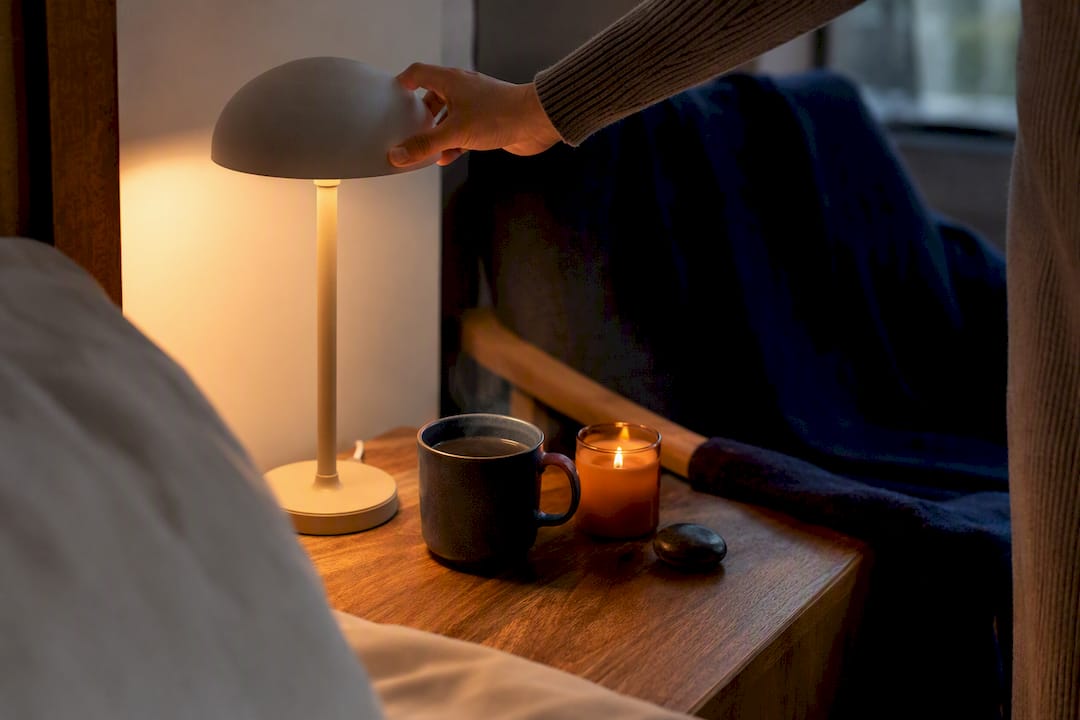
Fix your wake time, cut screens 30 to 60 minutes before bed, and keep the bedroom dark and between 60°F and 68°F. Those three moves account for most of what a solid sleep hygiene checklist can do for you, and you can start tonight. The CDC reports that more than a third of American adults regularly fall short on sleep, so if you’re reading this at midnight wondering why you’re still awake, you’re in a very large club.
Here’s the checklist, in priority order:
- Pick one wake time and use it every day, weekends included.
- Get bright light within 30 minutes of waking.
- Cut caffeine after early afternoon.
- Stop eating heavy meals within three hours of bed.
- Start a device-free wind-down 30 to 60 minutes before lights out.
- Keep the bedroom dark, quiet, and comfortably cool.
- Use the bed only for sleep and intimacy, nothing else.
- Cap naps at 20 to 30 minutes and skip them after 3:00 PM.
- If you’re not asleep in about 20 minutes, get up and do something calm.
- Track your nights for two weeks if progress stalls.
Temperature check: Most sleep researchers put the ideal bedroom range at 60°F to 68°F. Anything warmer tends to fragment sleep, even if you don’t remember waking up.
Pro Tip: Don’t try to fix everything at once. Lock in your wake time first, for at least a week, before touching anything else on this list. Everything downstream gets easier once that anchor is set.
Tonight’s job is small: pick tomorrow’s wake time and commit to a 30 to 60 minute wind-down before bed. That’s it.
Key Takeaways
A consistent wake time, a device-free wind-down, and a cool dark bedroom form the foundation that makes every other sleep hygiene habit work.
| Point | Details |
|---|---|
| Anchor your wake time | Hold one wake time daily, even on weekends, since it drives your circadian rhythm more than bedtime does. |
| Build a device-free wind-down | Give yourself 30 to 60 minutes screen-free before bed to let melatonin release naturally. |
| Optimize the bedroom | Keep the room dark, quiet, and between 60°F and 68°F for fewer nighttime wakings. |
| Track before escalating | Log two weeks of sleep data before assuming you need clinical intervention. |
| Know the limit | Sleep hygiene supports good sleep but isn’t a substitute for CBT-I in chronic insomnia. |
| Use supportive tools | Mindpanda’s journaling and mindfulness bundles can make a nightly wind-down routine easier to stick with. |
Table of Contents
- What a Sleep Hygiene Checklist Actually Covers
- How Should a Device-Free Wind-Down Routine Work?
- What Should Your Bedroom Environment Checklist Include?
- Which Daytime Habits Actually Move the Needle?
- Should You Keep a Sleep Diary?
- How Do You Fix Common Sleep Barriers?
- When Should You See a Clinician About Sleep?
- A 7-Day Plan to Put This Checklist Into Practice
- Why Your Wake Time Matters More Than Your Bedtime
- Small Tools That Make a Wind-Down Routine Stick
- Frequently Asked Questions
- Sources
What a Sleep Hygiene Checklist Actually Covers
Sleep hygiene is the set of daily habits and environmental conditions that make good sleep more likely. It’s not a single trick. It’s schedule consistency, a wind-down routine, a bedroom built for rest, and daytime choices that don’t sabotage you at 11 p.m.
The core pieces break down like this:
- Schedule: same wake time daily, which anchors your circadian rhythm more than bedtime does.
- Environment: dark, quiet, cool, and reserved for sleep.
- Daytime habits: light exposure, caffeine timing, exercise, naps.
- Wind-down: a device-free buffer that signals your brain to downshift.
Here’s the limit you need to know upfront: sleep hygiene helps almost everyone sleep a little better, but it’s rarely enough on its own for chronic insomnia. The Sleep Education branch of the American Academy of Sleep Medicine is direct about this. Good habits are necessary, but for insomnia lasting more than a few months, cognitive behavioral therapy for insomnia, known as CBT-I, is the recommended first-line treatment, not sleep hygiene alone. Think of this checklist as the foundation. If the foundation is solid and you’re still struggling, that’s a signal to bring in a clinician, not a reason to add more supplements.
How Should a Device-Free Wind-Down Routine Work?
Give yourself 30 to 60 minutes before bed, screen-free. That buffer gives your brain time to shift out of alert mode, and cutting screens matters because blue light and stimulating content both delay the release of melatonin.
A sample 60-minute version looks like this:
- 60 minutes before bed: dim the lights, put your phone in another room or on a charging dock away from the bed.
- 45 minutes before: warm shower or bath, which helps your core body temperature drop afterward, a cue tied to sleep onset.
- 30 minutes before: light stretching, journaling, or a few pages of a physical book.
- 10 minutes before: get into bed and do a short breathing or body-scan exercise.
If 60 minutes feels unrealistic, a compressed 30-minute version still works: dim lights, five minutes of stretching, ten minutes of journaling, then bed. Parents with young kids often need this shorter version out of necessity. If your mind races more than your body tenses, skip the physical stuff and lean into a mindfulness practice or a short body-scan instead of stretching. Cleveland Clinic points to warm baths, gentle stretching, and progressive muscle relaxation as reliable calming tools for this window.
Pro Tip: If you’re still awake after about 20 minutes in bed, get up. Go to another room, keep the lights low, and do something boring and calm, like reading a paperback. Lying there fighting for sleep trains your brain to associate the bed with frustration, which makes the next night harder, not easier.
What Should Your Bedroom Environment Checklist Include?
Three things matter most: dark, quiet, and cool. Get those right and you’ve solved most of the environmental barriers to good sleep. Harvard Health frames this as building a “sleep sanctuary,” and the fixes are cheap.
- Dark: blackout curtains or an eye mask; cover any glowing electronics.
- Quiet: a white noise machine, a fan, or earplugs; a rug can dampen echo in a hard-floored room.
- Cool: aim for 60°F to 68°F, lighter bedding if you run warm.
- Bed-only rule: no laptop, no TV, no work in bed, so your brain learns the bed means sleep.
- Pets and kids: if a pet wakes you or a child needs a night routine, define a separate space or a clear handoff so one person isn’t chronically interrupted.
That 60°F to 68°F range isn’t arbitrary. Your body temperature naturally drops as you fall asleep, and a room that’s too warm fights that process, which shows up as more nighttime waking even when you don’t consciously notice it.
Which Daytime Habits Actually Move the Needle?
Your wake time matters more than anything else on this list. A fixed wake time anchors your circadian rhythm even when bedtime drifts, which is why sleep researchers treat it as the single strongest lever in the entire routine.
Once that’s locked, these daytime rules do the rest of the work:
- Get bright light within 30 minutes of waking, ideally outdoors; it tells your internal clock the day has started.
- Dim household lights in the evening to support the same clock in reverse.
- Cut caffeine by early-to-mid afternoon since it has a long half-life and lingers longer than most people assume.
- Avoid heavy meals within roughly three hours of bed to limit reflux and discomfort.
- Cap naps at 20 to 30 minutes and skip them after 3:00 PM.
- Exercise earlier in the day when possible; vigorous workouts too close to bedtime can be stimulating for some people.
Shift workers face a harder version of this puzzle. If your schedule rotates, treat your “wake time” as whenever your workday effectively starts, keep that consistent across your version of a week, and use blackout curtains aggressively during daytime sleep since ambient daylight is the biggest disruptor for that group.
Should You Keep a Sleep Diary?
Two weeks of tracking is usually enough to reveal the pattern that’s actually sabotaging your sleep. Most people guess wrong about what’s hurting them until they see it written down.

Log five things daily: bedtime, wake time, any naps, caffeine or alcohol timing, and a simple sleep quality rating from 1 to 5.
| Field | Sample Entry |
|---|---|
| Bedtime | 11:15 PM |
| Wake time | 6:45 AM |
| Naps | 30 minutes at 3:00 PM |
| Caffeine/alcohol | Coffee early morning, wine in the evening |
| Sleep quality (1 to 5) | 3 |
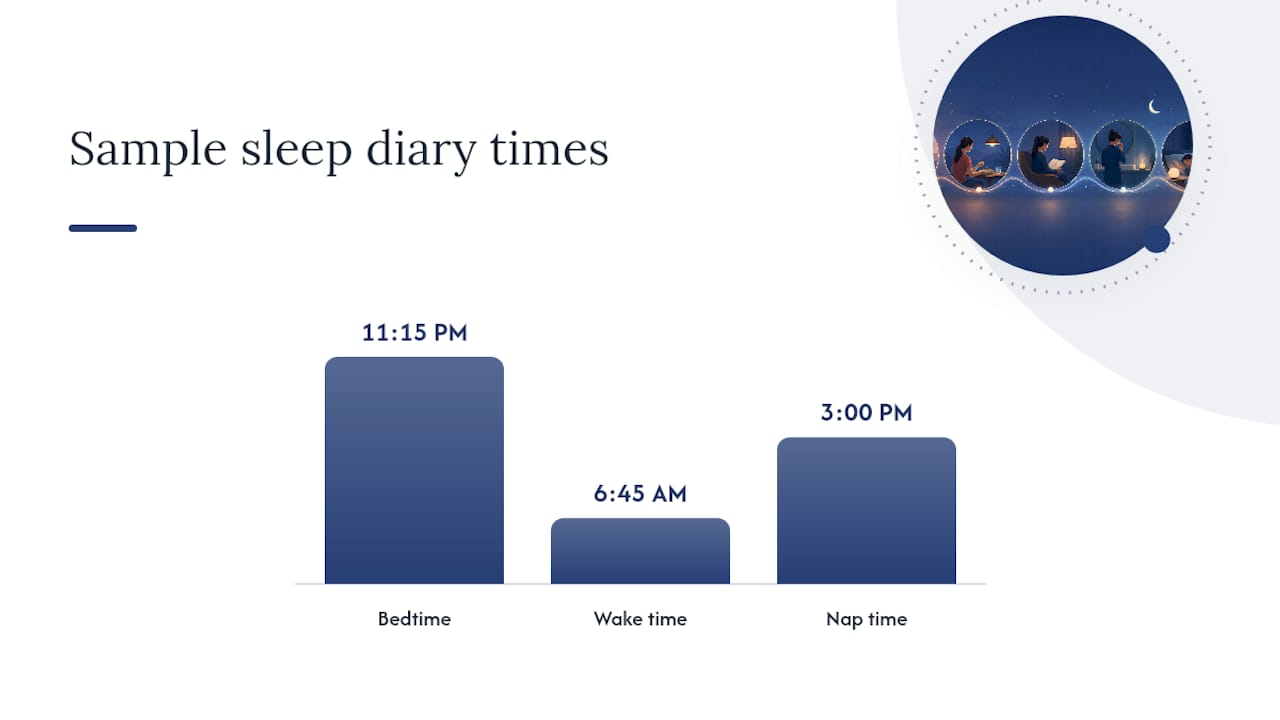
After a week or two, scan for patterns: wake times that drift by more than an hour, naps creeping later in the day, or caffeine sneaking closer to evening. If you’ve made consistent changes and two weeks still show no improvement, that’s a real signal to talk to a clinician rather than keep adjusting on your own.
How Do You Fix Common Sleep Barriers?
Most sleep complaints trace back to a handful of repeat offenders. Here’s a fast fix for each:
- Racing thoughts at bedtime: keep a worry journal by the bed. Write down the issue and one specific next step for tomorrow, then close the notebook. Don’t try to solve the problem in bed since problem-solving is mentally activating, the opposite of what you want.
- Noisy environment: earplugs or a white noise machine, plus moving phones and other buzzing devices out of the bedroom entirely.
- Irregular schedule from shift work: anchor one consistent “wake” point relative to your work shift, even if it isn’t a traditional morning.
- Shared parenting duties disrupting sleep: split night-wake windows with a partner so neither person absorbs every interruption.
- Physical discomfort or pain: a supportive pillow and mattress check first; persistent pain that disrupts sleep nightly deserves a conversation with a doctor, not just better bedding.
Pro Tip: If your mind won’t quiet down, try cognitive shuffling: picture a random, neutral object (a ladder, a spoon, a cloud) for a few seconds, then switch to another unrelated object, repeating this chain. It occupies the part of your brain that would otherwise spiral into worry, without the mental effort of solving anything.
When Should You See a Clinician About Sleep?
A handful of signs mean it’s time to move past self-guided fixes. Watch for daily fatigue that interferes with work or driving, insomnia lasting more than three months despite consistent habit changes, loud snoring paired with gasping or choking sounds, excessive daytime sleepiness even after a full night in bed, or any safety concern like falling asleep while driving.
If chronic insomnia is the issue, CBT-I is the treatment sleep specialists reach for first, and it’s structured, short-term, and more durable than most people expect. If snoring and gasping are part of the picture, a sleep study can check for sleep apnea, a distinct condition that sleep hygiene alone won’t fix. If any of this sounds like your situation, your primary care provider or a sleep specialist is the right next step, not another app or supplement.
A 7-Day Plan to Put This Checklist Into Practice
Stabilize your wake time first. Everything else on this list works better once that single anchor is in place, and trying to overhaul your whole routine on day one usually collapses by day three.
- Days 1 to 3: Pick one wake time and hold it, even on weekends. Simplify your evening, no major routine changes yet, just protect that wake time.
- Days 4 to 5: Add a 30 to 60 minute device-free wind-down. Keep it simple: dim lights, one calming activity, into bed.
- Days 6 to 7: Start a sleep diary and adjust one environmental factor, whether that’s temperature, blackout curtains, or noise.
Morning reminder: get outside or near a window within 30 minutes of waking. Evening reminder: lights down, phone away, same time every night. By day seven, success looks like a wake time that hasn’t drifted by more than 15 to 20 minutes and a subjective sense that falling asleep takes less effort than it did on day one.
Why Your Wake Time Matters More Than Your Bedtime
Most people obsess over what time they go to bed and barely think about when they wake up, which is backward. Your wake time is what your circadian system actually tracks, and holding it steady, even after a rough night, keeps your internal clock from drifting the way an inconsistent bedtime allows.
This is why weekend “catch-up” sleep often backfires. Sleeping in until 10 a.m. on Saturday after a 6:30 a.m. weekday wake time creates something close to jet lag, minus the flight. Your body has to re-sync come Monday, and that re-sync costs you a rough night or two exactly when you can least afford it.
The fix isn’t complicated, just consistent. Set an alarm for the same time every day, weekends included, and give yourself two to three weeks before judging whether it’s working. Your body needs repetition to trust the new signal. If you’re someone who’s tried “going to bed earlier” a dozen times without much luck, this is likely why: you were adjusting the wrong end of the schedule. Fix the wake time, and bedtime tends to settle into place on its own within a couple of weeks, because your body starts feeling tired at a more predictable hour.
Author perspective: a concise practitioner note
Every version of this checklist I’ve studied comes back to the same uncomfortable truth: consistency beats intensity, and most people quit right before the two-week mark when the wake-time anchor finally starts paying off. Sleep hygiene is real, foundational work, but it was never designed to replace clinical treatment for insomnia or sleep apnea, and treating it that way just delays the help some people actually need.
Small Tools That Make a Wind-Down Routine Stick
A checklist works better with something physical to anchor it, and that’s usually where a simple journal earns its place in a nightly routine. Writing down tomorrow’s one task, the way a worry journal works, is a lot easier when the format is already built for you instead of a blank notebook page staring back.

Mindpanda’s Thrive & Reflect journaling bundle is built around exactly that kind of structured reflection, prompts that help you offload the day’s clutter before your head hits the pillow instead of replaying it at 1 a.m. For a broader wind-down setup, the Mindfulness Wellbeing Bundle pairs journaling with mindfulness tools designed for exactly the kind of calming, low-stimulation activity a good pre-bed routine calls for. If you’d rather build your own combination, you can also create your own wellbeing bundle around whatever your wind-down actually needs. For guided relaxation audio to pair with your routine, Orchestral Meditations offers techniques worth exploring too. Pick one tool, add it to tonight’s wind-down, and see how it feels after a week.
Frequently Asked Questions
What is the most important item on a sleep hygiene checklist? A fixed wake time. It anchors your circadian rhythm more reliably than any other single habit, including bedtime consistency.
How long does it take to see results from a sleep hygiene checklist? Most people notice a difference within two to three weeks, especially once wake time stabilizes and the wind-down routine becomes automatic.
Can sleep hygiene alone fix insomnia? Often not for chronic cases. Sleep hygiene helps most people, but insomnia lasting more than three months typically needs CBT-I as the first-line treatment.
What temperature is best for sleep? Most guidance points to 60°F to 68°F as the range that supports the natural drop in body temperature tied to sleep onset.
When should I stop napping to protect nighttime sleep? Cap naps at 20 to 30 minutes and avoid napping after 3:00 PM, since later or longer naps tend to reduce nighttime sleep pressure.
This article is general information, not a substitute for advice from a qualified doctor. Consult a qualified healthcare professional about your own circumstances before acting on anything here.
Sources
- Sleep hygiene: Simple practices for better rest — Harvard Health
- Healthy sleep habits — NHLBI
- Healthy sleep habits — Sleep Education (AASM)