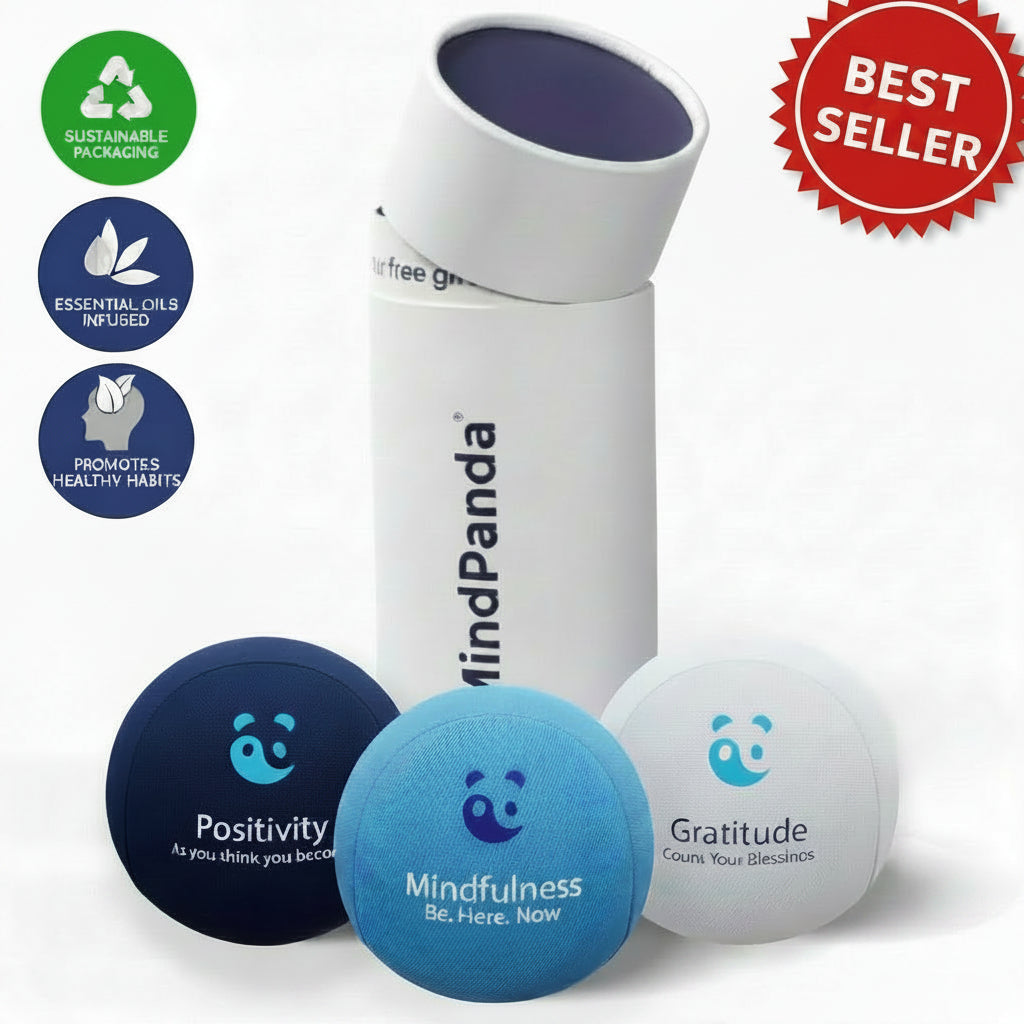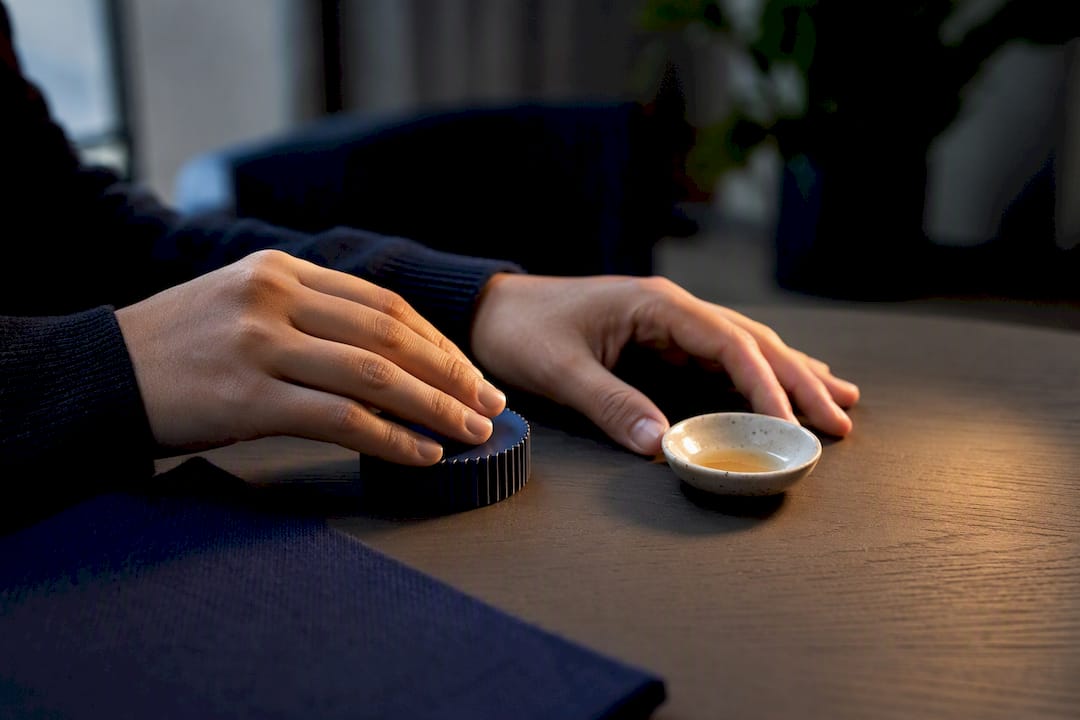
Yes, sensory play works for anxiety. A stress ball, a textured stone, or a diluted scent roller can measurably calm your body within minutes when you use them the right way. The fastest combination is tactile plus scent: squeeze a stress ball or putty while inhaling a calming roll-on for 60 seconds, breathing slower than you squeeze. It won’t fix chronic anxiety, but for the racing-heart, can’t-focus moments, it’s one of the quickest tools you have.
TL;DR:
- Using sensory tools like stress balls, worry stones, and aromatherapy in quick routines helps manage situational anxiety in less than two minutes.
- Choose portable, silent, and hypoallergenic products with proper dilution to ensure safety and effectiveness during daily use.
- Sensory tools are effective for immediate stress relief but are not substitutes for clinical treatment in cases of severe or chronic anxiety.
- Building consistent routines and using curated wellbeing bundles can improve the long-term calming effects of sensory play.
Table of Contents
- Sensory play for anxiety: building a quick toolkit you can actually use
- Five short sensory activities you can do right now
- What the research shows about touch and scent together
- How to choose sensory products that actually help
- Where sensory tools stop working, and when to get help
- Building a starter kit with Mindpanda
- A note on making this stick
- Sources
Sensory play for anxiety: building a quick toolkit you can actually use
Before you buy anything, know what you’re solving for. Sensory play for anxiety works because it gives your nervous system something concrete to do instead of spinning on a worry loop. Different products solve different moments, so match the tool to the situation rather than grabbing whatever’s cheapest.
- Stress balls and putty: best for a desk or car, where squeezing and releasing gives your hands a repetitive job. Look for non-toxic silicone or natural rubber, since cheaper foam breaks down and sheds particles over time.
- Discreet fidgets (sliders, spinner rings, clicky tools): built for meetings, classrooms, or dates, where you need calm without anyone noticing.
- Textured worry stones: smooth on one side, ridged on the other, so your thumb has a physical path to trace when your mind won’t settle.
- Small weighted items (palm weights, lap pads): add gentle, even pressure that mimics the “held” feeling some people find grounding, without the bulk of a full weighted blanket.
- Inhaler or roll-on aromatherapy: pairs a scent cue with breath control, portable enough for a purse or pocket.
When you’re comparing products, run them against four questions: is it portable enough to carry daily, is it silent enough for an office or classroom, will it hold up to months of handling, and do you want it scented or completely neutral? Hypoallergenic fabrics and fragrance-free options matter if you’re sensitive to smell or have skin allergies.
Five short sensory activities you can do right now
These take between 60 seconds and two minutes. Practice them when you’re calm so they’re automatic when you’re not.
- The 60-second squeeze-and-breathe. Hold a stress ball in your dominant hand. Squeeze for four seconds while inhaling, hold for two, release for six while exhaling. Repeat for ten cycles. The slower exhale is what shifts your body toward calm.
- Textured-stone 3-point grounding. Hold a worry stone and trace its ridged side. Name one thing you feel (temperature, texture), one thing you hear, and one thing you see. Breathe out longer than you breathe in the whole time.
- Putty mindful loop. Press putty flat, roll it into a ball, stretch it thin, repeat. Give your full attention to the shape changing under your fingers; when your mind wanders back to the worry, just return to the putty.
- Two-minute scent-and-touch reset. Inhale a diluted roll-on twice, slowly, then pick up a fidget or stone and run through the grounding sequence above. Scent first, touch second, seems to extend the calming window longer than either alone.
- Discreet wearable fidget routine. For meetings or dates, wear a fidget ring or bracelet. Rotate or click it under the table while running a short internal script: “This is uncomfortable, not dangerous. It will pass.”
Pro Tip: Practice each routine for a week when you’re only mildly stressed. A tool you’ve never used before peak anxiety usually feels clumsy in the moment it matters most.
For longer sequences to build into a full break, MindPanda’s stress ball exercises walk through extended routines you can layer onto the quick version above.
What the research shows about touch and scent together
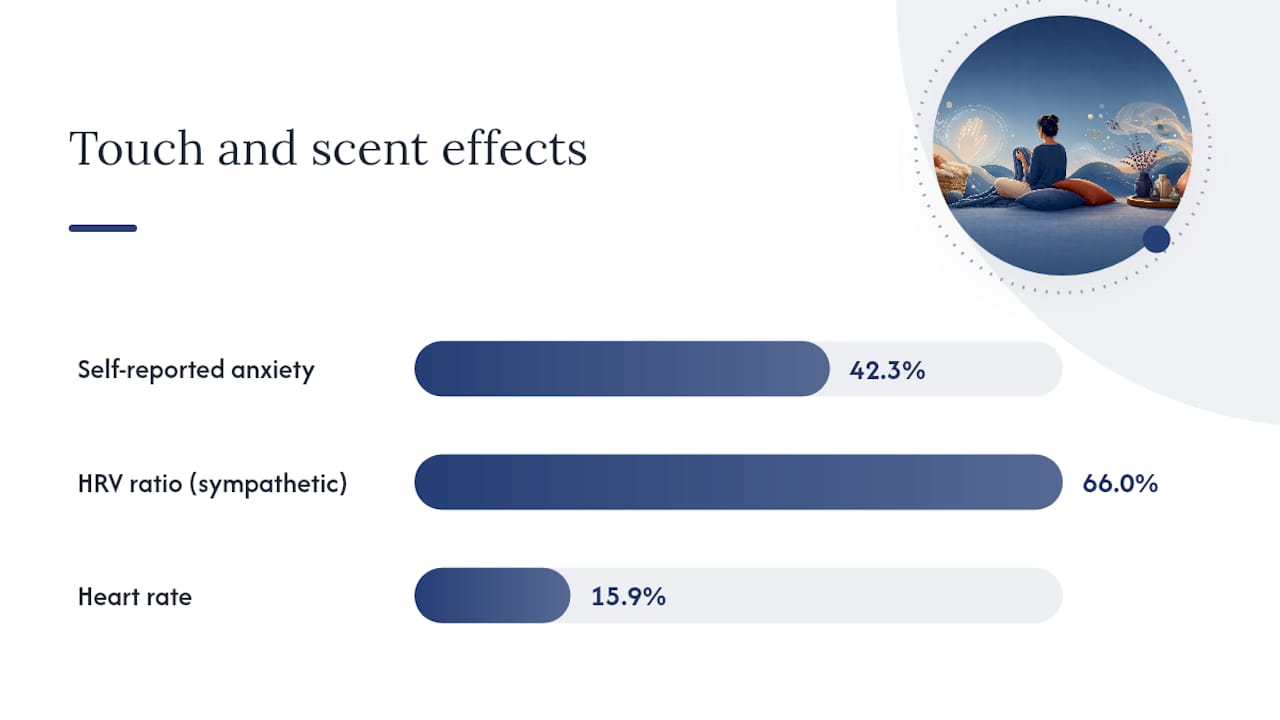
A 2025 clinical study found that combining tactile and olfactory stimulation produced a 42.3% reduction in self-reported anxiety scores, along with a 66.0% drop in the heart-rate-variability ratio linked to sympathetic stress and a 15.9% reduction in heart rate compared with controls. That’s a meaningfully larger effect than most single-sense interventions produce on their own.
The mechanism isn’t mysterious. Rhythmic tactile input like squeezing redirects nervous energy and pulls attention into the present moment, which interrupts the thought spirals that keep anxiety running. Scent works through a separate but complementary pathway.
- A 2026 EEG study found blended essential oils restored stress-related brain activity patterns more effectively than lavender alone, strengthening theta-band connectivity tied to stress recovery.
- A systematic review reported that more than 70% of inhalation aromatherapy studies found a positive effect on stress or anxiety versus control, though dosing and delivery methods still vary widely across trials.
Together, touch and scent seem to nudge the body toward parasympathetic activation, the “rest and digest” state that counters the fight-or-flight response driving anxiety symptoms.
How to choose sensory products that actually help
Not every stress ball or scented roller on the market is worth buying. A few filters will save you money and irritation, literally.
- Check for hypoallergenic, phthalate-free, non-toxic materials, especially on anything that touches skin repeatedly.
- Favor items small enough for a pocket or bag, and quiet enough to use in a shared space without drawing attention.
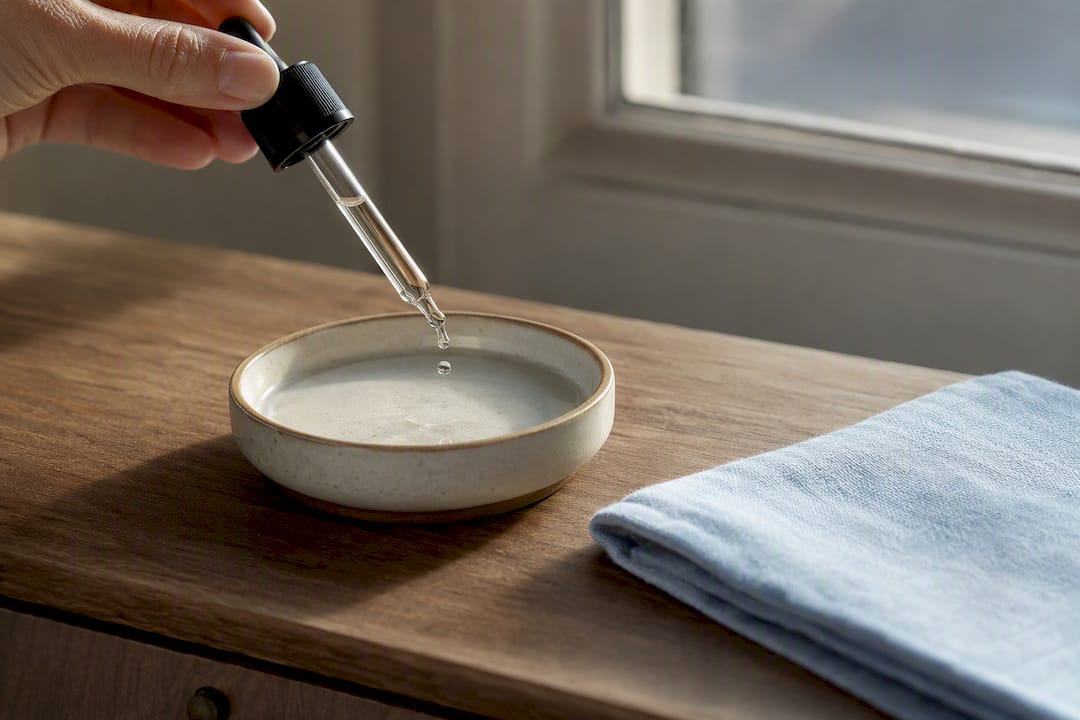
- With scent products, dilution matters. An inhaler or roll-on with a carrier oil is gentler than an undiluted essential oil, and safer for daily use than a diffuser in a shared room.
- Sustainable packaging and refillable formats are a reasonable tiebreaker between two otherwise similar products.
Pro Tip: Test any new scent on the inside of your wrist and wait 24 hours before using it near your face. Skin sensitivity to essential oils is more common than most people expect.
Where sensory tools stop working, and when to get help
Sensory play for anxiety is built for situational stress: the presentation, the flight, the argument you’re still shaking from. It is not a substitute for clinical care when anxiety is chronic or severe. Treat these tools as anchors within a bigger routine, not a cure.
Watch for real safety issues too: small parts and stones are choking hazards around young children, essential oils can trigger skin reactions or, for people with asthma, breathing irritation, and any inhalant should stay diluted. If you notice increasing avoidance of normal activities, panic that isn’t easing with practiced routines, or anxiety that’s interfering with work, sleep, or relationships, that’s the signal to talk to a therapist or doctor rather than reaching for another product.
Building a starter kit with Mindpanda
Mindpanda’s wellbeing bundles give you a shortcut past the trial-and-error of buying tactile and scent items one at a time and hoping they work together. Each bundle pairs curated stress-relief tools with reflective journaling, packed in eco-friendly materials that skip the plastic waste most impulse-buy fidgets come wrapped in.
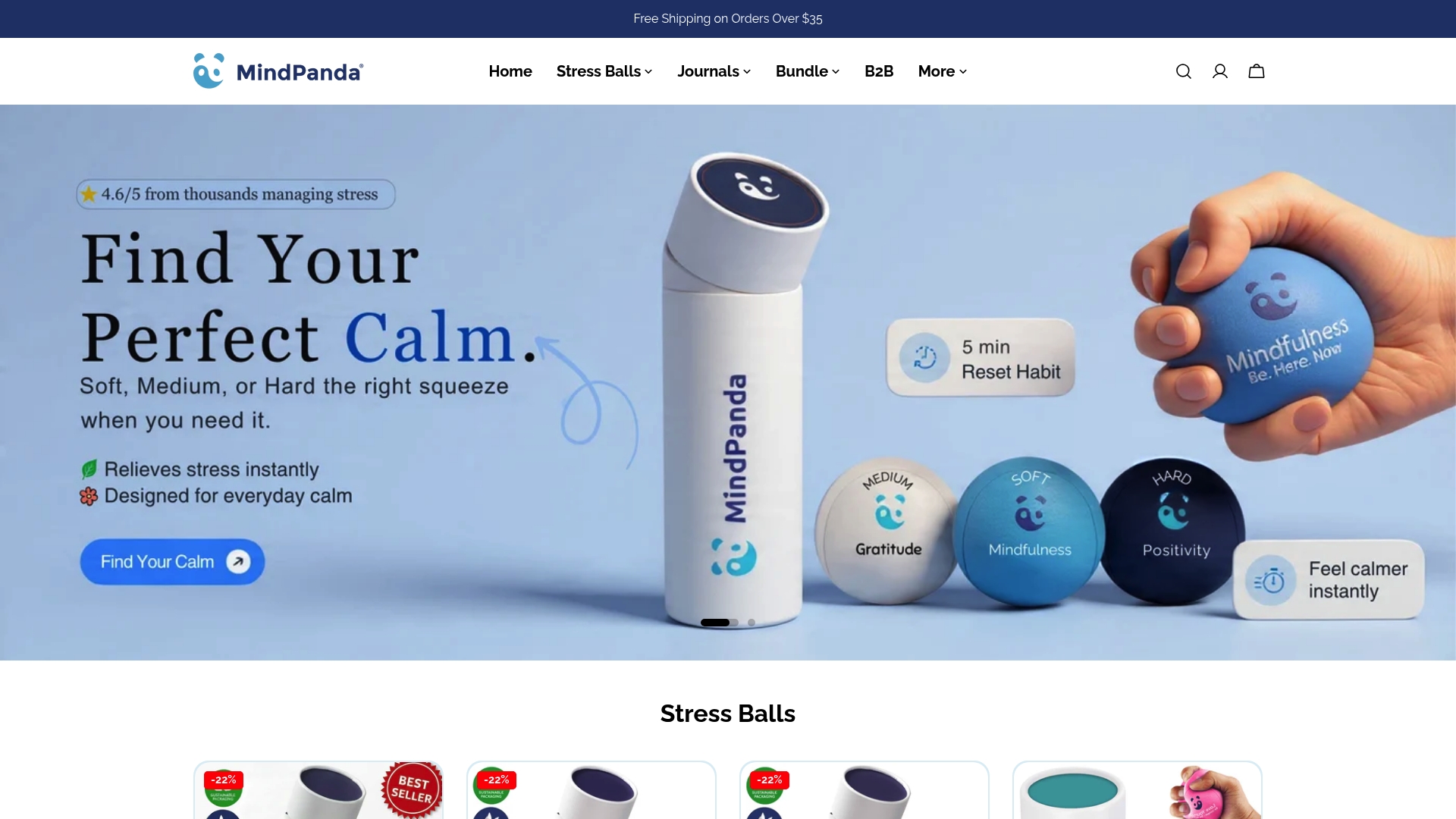
If you’re just starting out and want to test a few textures and formats before committing, the Create Your Own Wellbeing Bundle lets you pick your own combination. If journaling alongside your sensory routine appeals to you, the Thrive & Reflect Bundle pairs tactile tools with guided reflection pages. For a broader introduction to mindfulness practice alongside your stress-relief items, the Mindfulness Wellbeing Bundle rounds out the set. Pick the one that matches how you actually process stress, then start your 60 second routine tonight.
A note on making this stick
Treat sensory tools as anchors, not miracle cures. Track what actually calms you for a week or two before assuming a product doesn’t work. Small, repeatable routines beat any single dramatic fix, and modest, consistent use builds the habit that eventually makes the tool automatic instead of forced.
— Ravi
Sources
- Combined tactile and olfactory stimulation reduces anxiety and physiological stress markers (PMC article)
- Aroma olfactory intervention: enhancing stress recovery via brain neural activity modulation (MDPI)
- Benefit of inhalation aromatherapy as a complementary treatment for stress and anxiety – systematic review (ScienceDirect)
- Do stress balls work? (Healthline)