Lavender is the better choice for sleep, anxiety, and winding down at night, thanks to its calming linalool content. Eucalyptus wins for clearing your head, opening airways, and staying alert during the day. They blend well for a balanced spa effect, but pick whichever one matches your main goal and dilute properly, especially around kids or pets.
TL;DR:
- Lavender is best for sleep and anxiety relief due to its calming compounds like linalool, with more research supporting its sedative effects than eucalyptus.
- Eucalyptus is more suited for daytime alertness, congestion relief, and focus because of its eucalyptol content which promotes airway opening and mental clarity.
- Using diffuser blends, typically 3 to 5 drops in a bedroom, enhances relaxation without needing continuous diffusion overnight, but avoid adding undiluted oils directly to skin.
- Proper dilution, patch testing, and keeping oils away from children and pets are essential safety precautions when using essential oils.
- Incorporating scent into structured routines and pairing with mindful practices amplifies benefits, ensuring oils support specific goals like sleep or focus effectively.
Table of Contents
- Lavender vs Eucalyptus: Scent Profiles and What’s Behind Them
- What the Research Actually Says About Lavender and Eucalyptus Benefits
- When Should You Choose Lavender, Eucalyptus, or Both?
- How to Actually Use Lavender and Eucalyptus Oil
- Simple Lavender and Eucalyptus Recipes to Try Tonight
- Safety Rules You Shouldn’t Skip
- How Mindpanda Thinks About Scent in a Mindfulness Routine
- An Editorial Take on the Lavender vs Eucalyptus Debate
- Build a Complete Wind-Down Ritual With Mindpanda
- Sources
Lavender vs Eucalyptus: Scent Profiles and What’s Behind Them
Lavender smells floral, herbal, and slightly sweet, almost like walking through a field after rain. Eucalyptus smells sharp, cool, and medicinal, closer to a menthol cough drop than a garden. That contrast isn’t just a sensory quirk. It comes down to the specific molecules each plant produces, and those molecules do very different things once they hit your nose or skin.
Lavender’s calming reputation traces back mostly to linalool and linalyl acetate, two compounds that make up the bulk of its essential oil. Research on inhaled linalool suggests it interacts with the nervous system in ways that promote relaxation, which is a big part of why lavender shows up in nearly every “sleep aid” product on shelves right now.
Eucalyptus works through a completely different mechanism. Its dominant compound, eucalyptol (also called 1,8-cineole), is what gives it that sharp, breathe-deep sensation. Eucalyptol has a cooling effect on nasal passages and is commonly used in chest rubs and steam treatments for that reason.
Here’s the quick breakdown:
- Lavender: floral, herbal, sweet. Main constituents: linalool, linalyl acetate. Associated with calming the nervous system.
- Eucalyptus: fresh, camphor-like, minty. Main constituent: eucalyptol (1,8-cineole). Associated with airway sensation and alertness.
Neither oil is “better” in a general sense. They’re built for different jobs, one is for slowing down, the other is for waking up.
What the Research Actually Says About Lavender and Eucalyptus Benefits
Most people assume “essential oil benefits” means the same vague thing across every scent. It doesn’t. The evidence for lavender and eucalyptus suggests they have different effects, and it’s worth knowing where the science is solid versus where it’s still catching up.
On the sleep side, the Sleep Foundation identifies lavender as the best-researched scent for relaxation and sleep support. Smell can influence sleep indirectly, largely by helping the body associate a scent with winding down, similar to how a bedtime playlist trains your brain to expect rest. That said, the Sleep Foundation is careful to note that individual responses vary and that scent works as a supportive cue, not a guaranteed fix.
What the lab data shows: A peer-reviewed study using bladder cell cultures found that both lavender and eucalyptus essential oils reduced pro-inflammatory cytokine expression, with lavender oils often producing stronger reductions in certain assays depending on the treatment schedule used.
That study measured specific inflammatory markers (IL-1β, IL-6, IL-8) in cells exposed to both oils. Eucalyptol also reduced cytokine activity under certain conditions, just less consistently than lavender in that particular model. This is lab research, not a clinical trial on humans breathing the oils, so it tells you the chemistry has real anti-inflammatory potential, not that inhaling either oil will treat a medical condition.
A few things worth keeping in mind about the evidence overall:
- Inhalation studies (smelling the oil) are more common and better supported than topical or ingestion studies.
- Lavender has more sleep-specific research behind it than eucalyptus does.
- Eucalyptus’s respiratory reputation is grounded in eucalyptol’s known effects on nasal passages, though rigorous human trials are limited.
- None of this research positions either oil as a substitute for medical treatment of sleep disorders, anxiety, or respiratory illness.
If you’re dealing with chronic insomnia or a persistent cough, an oil diffuser is a nice addition to your routine. It isn’t a replacement for a conversation with a doctor.
When Should You Choose Lavender, Eucalyptus, or Both?
Picking between the two comes down to one question: what result are you actually after right now?
- Trying to fall asleep or calm anxiety? Choose lavender. It’s the more studied option for this exact use case, and it pairs naturally with a wind-down routine like the one outlined in this nightly calming routine.
- Dealing with congestion, needing to focus, or cleaning the house? Choose eucalyptus. The eucalyptol content makes it a natural fit for stuffy noses and for cutting through mental fog during a work session.
- Want a spa-like atmosphere for general relaxation without feeling drowsy? Blend them. The combination softens lavender’s heaviness with eucalyptus’s brightness, which is why so many commercial reed diffusers pair the two.
- Building a full bedtime wind-down? Stick with lavender alone. Adding eucalyptus at night can be counterproductive since its invigorating effect works against the goal of falling asleep, and it’s not recommended for overnight use around very young children.
Quick reference for common goals:
- Sleep or anxiety relief → lavender only
- Chest congestion or sinus relief → eucalyptus only
- Focus or mental clarity during the day → eucalyptus only
- General relaxation with a “fresh” undertone → lavender and eucalyptus blended
- Deep sleep support paired with a wind-down ritual → lavender, ideally alongside a mindfulness-for-sleep practice
The blend isn’t magic, it’s just two different signals sent at once. If your body needs one clear signal (sleep), don’t muddy it with the other.
How to Actually Use Lavender and Eucalyptus Oil
Buying the oil is the easy part. Using it correctly is where most people either waste product or set themselves up for a mild skin reaction.
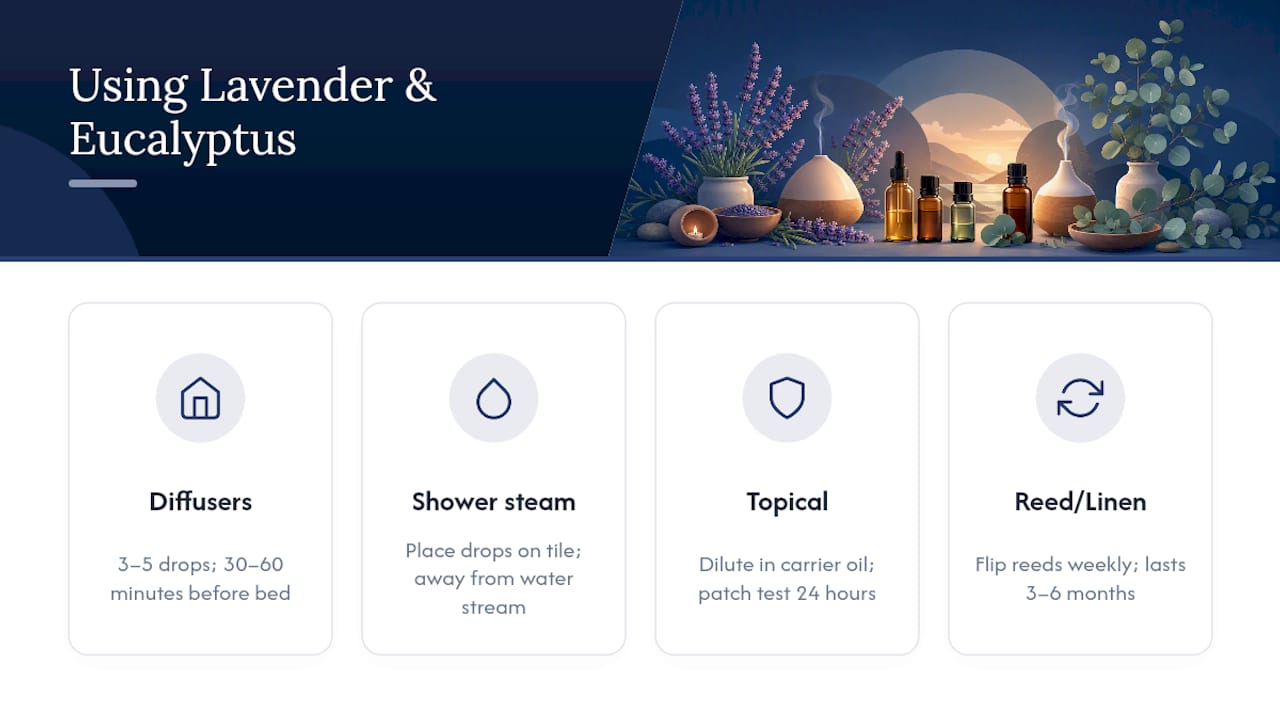
Diffusers. For a standard bedroom (100 to 200 square feet), 3 to 5 drops total is plenty. Run it for 30 to 60 minutes before bed rather than all night. Continuous overnight diffusion isn’t necessary for the scent-association effect to work, and it burns through oil faster than it needs to.
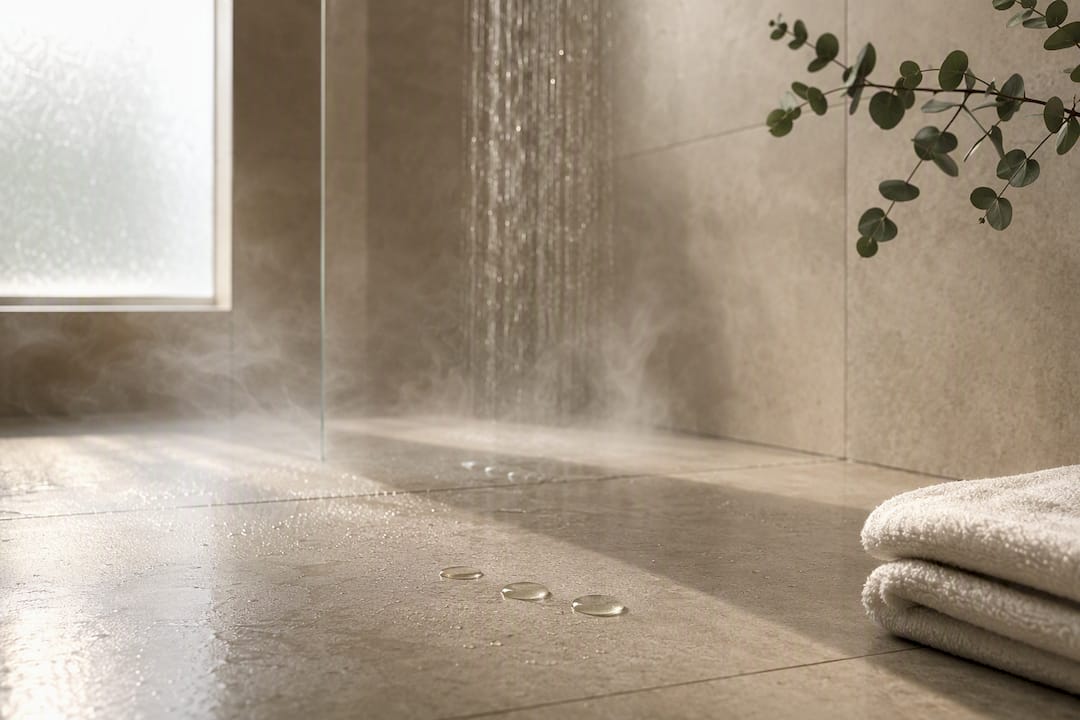
Shower steam. Skip pouring oil directly onto your skin in the shower. Instead, place a few drops on a tiled area or the shower floor, away from the direct water stream and drainage. The rising steam carries the scent through the bathroom without wasting oil or risking a slippery, oil-slicked surface underfoot.
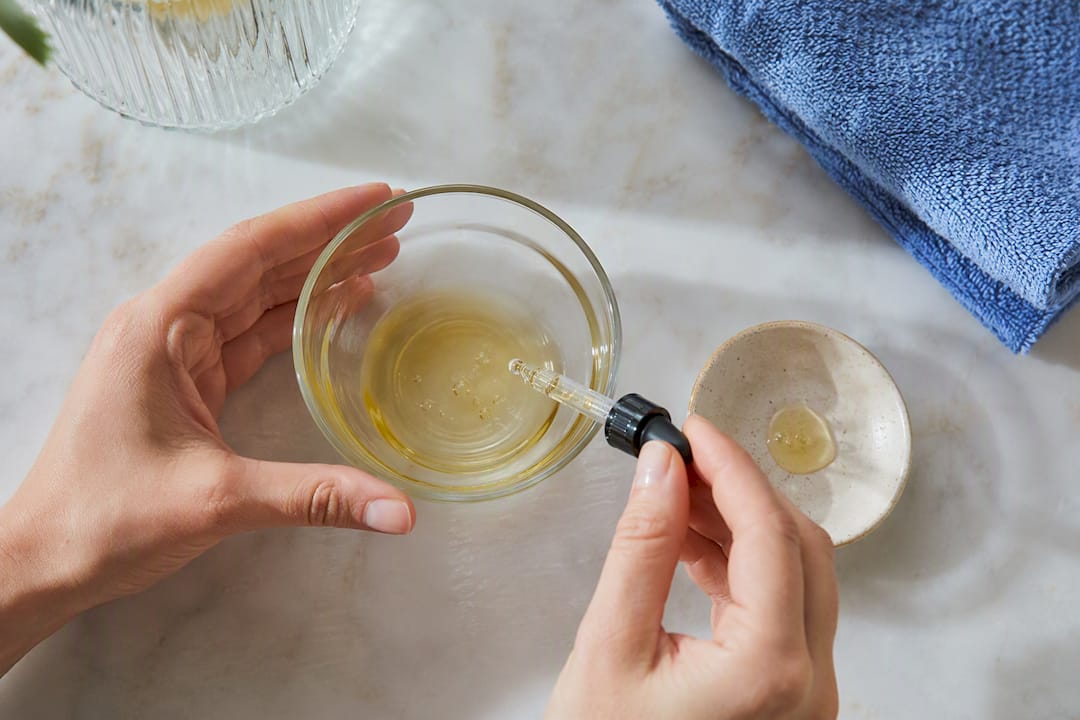
Topical application. Never apply either oil undiluted to skin. Mix with a carrier oil like jojoba or sweet almond oil, and always patch test on your inner forearm first, waiting 24 hours before wider use. Avoid the eyes, inner nose, and broken skin entirely.
Reed diffusers and linen sprays. Reed diffusers need their reeds flipped every week or so to refresh the scent as the oil evaporates unevenly from one side, a maintenance tip echoed in product guidance from retailers like Crate & Barrel. Most reed diffusers last three to six months before the oil runs out. Linen sprays should be shaken before each use since the oil separates from the water base over time.
Pro Tip: If a room smells “off” rather than fresh after diffusing, you’ve probably used too much oil, not too little. Cut your drop count in half before adding more.
Simple Lavender and Eucalyptus Recipes to Try Tonight
You don’t need to guess at ratios. Here are five combinations that work for the most common goals, ready to copy.
- Bedtime diffuser blend: 4 drops lavender, 1 drop eucalyptus, in a standard 100 to 200 square foot bedroom diffuser. Run 30 to 45 minutes before lights out.
- Morning clarity blend: 3 drops eucalyptus, 1 drop lavender, diffused for 20 to 30 minutes while getting ready. The eucalyptus dominance keeps you alert without feeling jittery.
- Spa balance blend: Equal parts, 3 drops lavender and 3 drops eucalyptus, for a general relaxation session that doesn’t induce drowsiness.
- Adult topical roller: In a 10 mL roller bottle filled with carrier oil, add about 4 drops of essential oil total for a roughly 2% dilution, a common adult topical range. Apply to wrists or the back of the neck, never near the eyes.
- Congestion-focused steam: 2 drops eucalyptus only on the shower floor, away from the water stream, for sinus relief during a cold.
If any of these smell too strong once diffusing, don’t add water to “dilute” the air, just cut the drop count by half next time and rebuild from there. Sensitivity to scent varies a lot person to person, and there’s no prize for using more oil than your nose actually wants.
Safety Rules You Shouldn’t Skip
Essential oils are concentrated plant extracts, not gentle background scents, and treating them casually is where most bad experiences start.
- Adult topical dilution generally stays in the 1% to 5% range depending on the product and your skin sensitivity; start at the lower end.
- Children, pregnant people, and older adults need lower concentrations across the board, and a pediatrician or doctor should weigh in before regular use.
- Eucalyptus in particular warrants caution around infants and toddlers. Strong overnight diffusion isn’t recommended for very young children due to airway sensitivity.
- Always patch test on the inner forearm and wait 24 hours before broader topical use.
- Keep oils away from eyes, inner nose, and broken skin.
- Both oils are flammable. Store bottles away from open flames, direct sunlight, and heat sources like radiators.
- Keep diffusers and bottles out of reach of pets, since concentrated oils can be harmful if ingested or absorbed through paws.
Worth remembering: Diluted correctly, both oils are considered low-risk for most healthy adults. Undiluted or overused, either one can trigger skin irritation or respiratory discomfort, especially eucalyptus in enclosed spaces.
How Mindpanda Thinks About Scent in a Mindfulness Routine
Scent works best when it’s paired with a ritual, not used as a standalone fix. A lavender diffuser running while you write in a journal or wind down with a structured sleep and mindfulness routine does more for your nervous system than the oil alone ever could. The scent becomes a cue, and the cue becomes a habit.
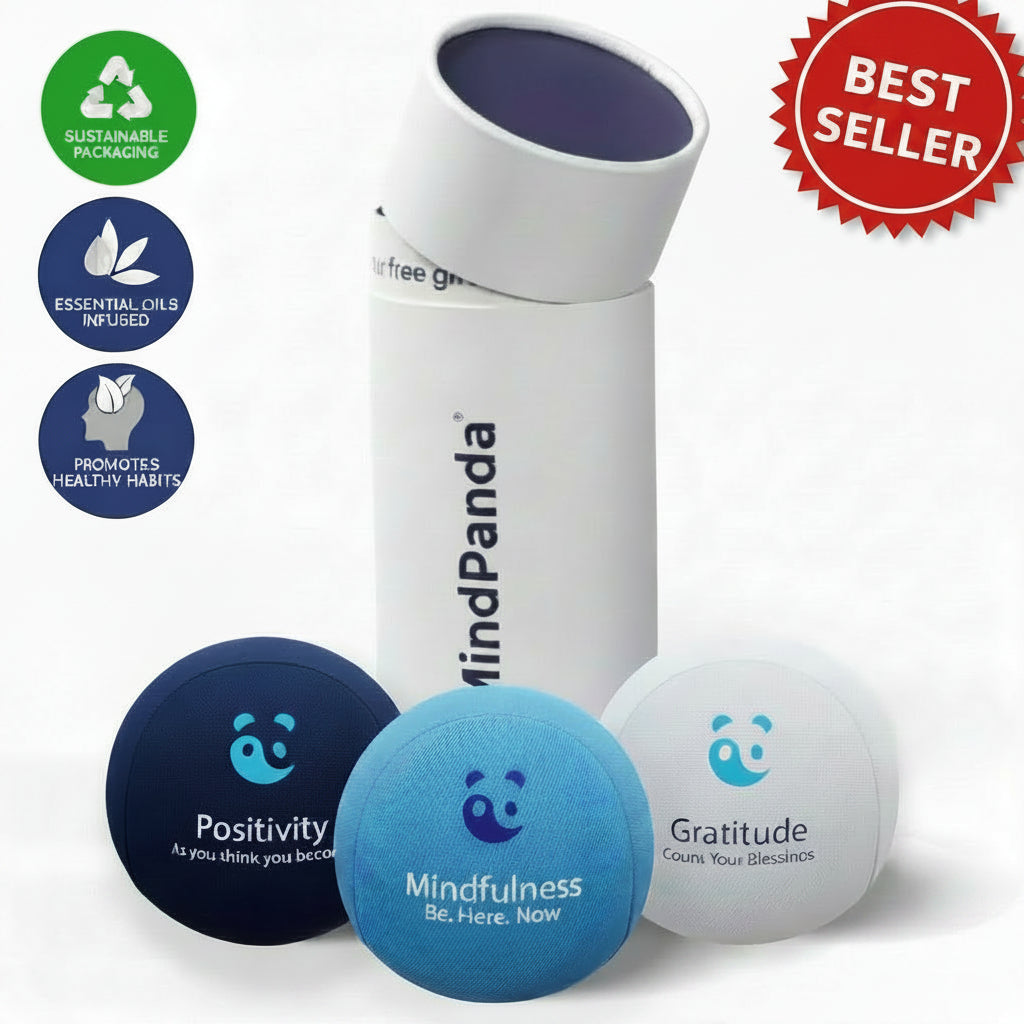
That’s the thinking behind how Mindpanda approaches self-care products generally: pairing sensory tools with structured practice rather than treating either one as a magic bullet. A lavender-scented stress ball used during a wind-down session, for instance, layers touch and smell into the same calming ritual, reinforcing the same signal your brain is already learning to associate with rest.
Daytime mindfulness works the same way in reverse. Eucalyptus during a focused work block, paired with a short breathing exercise or a few minutes with a stress ball, builds a clarity ritual instead of just masking fatigue with a strong smell.
An Editorial Take on the Lavender vs Eucalyptus Debate
Most articles on this topic treat lavender and eucalyptus like rival products competing for the same shelf space. That framing misses the point entirely. They’re not competitors, they’re tools with different jobs, and the real mistake people make is using eucalyptus when they actually need lavender’s calming effect, then wondering why they still can’t sleep.
The conventional advice tends to oversell the blend as universally better, “why choose one when you can have both?” But a blend dilutes the signal you’re sending your nervous system. If sleep is the actual goal, lavender alone works harder than a lavender-eucalyptus mix ever will, because eucalyptus’s invigorating effect quietly works against the exact thing you’re trying to do.
My honest read: pick your primary goal first, sleep, focus, or general relaxation, and let that decide the oil. Save the blend for moments when you genuinely want a balanced, alert-but-calm mood, not as a default because it seems like the “safe” choice. Specificity beats compromise here.
— Ravi
Build a Complete Wind-Down Ritual With Mindpanda
Scent alone won’t fix a sleep routine that’s missing structure, and that’s exactly where a lot of aromatherapy advice stops short. Mindpanda’s Wellbeing Bundle pairs a themed aromatherapy stress ball with a guided journal and planner, so the scent you diffuse at night has a physical ritual to anchor it to, not just a room that smells nice.
If you’d rather build your own combination around a specific goal, sleep, focus, or stress relief, the custom bundle page lets you pick the pieces yourself. Either way, start with the goal, then choose the tools that reinforce it. Check out the bundle options and put together a routine that actually sticks.
Sources
- How smell affects your sleep — Sleep Foundation
- Anti-inflammatory effects of lavender and eucalyptus essential oils — PMC
- Lavender + Eucalyptus Diffuser — Crate & Barrel