The two fastest ways to stop anger from escalating are a breathing pattern that lengthens your exhale and a quick sensory grounding sequence, both of which calm physiological arousal within minutes. Guidance from the SAMHSA anger-management manual and the Cleveland Clinic backs both approaches. Pick one and practice it for five minutes today, before you need it.
TL;DR:
- Rehearse one fixed sequence while calm, such as four breathing rounds, sensory grounding, and brief muscle release, so it remains accessible during conflict.
- A 2022 trial of 234 participants found emotion awareness paired with cognitive reappraisal reduced anger expression and aggression at three months, with 88% retention.
- A timeout works best when household members agree beforehand on a signal and a commitment to return afterward; an abrupt walkout can seem avoidant.
- Repeated aggression, threats, or anger tied to substance use call for professional help; immediate danger requires leaving and contacting emergency services.
Table of Contents
- In-the-moment exercises to stop anger escalating
- Short practice routines that make calm automatic
- Preventive habits that lower your baseline anger
- Cognitive strategies and journaling that build lasting change
- When self-help isn’t enough
- What actually separates effective anger work from advice that sounds good
- Simple tools that support your home practice
- FAQ
- Sources
In-the-moment exercises to stop anger escalating
Anger speeds up your breathing before you even notice you’re angry. That shift is exactly why slowing your exhale works so well as a brake.
- Box breathing or 4-7-8: Inhale for 4 counts, hold for 4, exhale for 7 or 8, and hold briefly before repeating. A longer exhale than inhale signals your nervous system to downshift, a mechanism the SAMHSA manual attributes to how anger speeds breathing and how a deliberately slower exhale counteracts it.
- 5-4-3-2-1 grounding: Name 5 things you see, 4 you can touch, 3 you hear, 2 you smell, and 1 you taste. This pulls attention out of the angry thought loop and into the present room, which is especially useful when rumination keeps looping the same provocation.
- Short progressive muscle relaxation (PMR): Tense your shoulders for 5 seconds, release, then do the same with your fists, jaw, and stomach. Thirty seconds of this sequence drains physical tension that anger otherwise stores in your muscles.
- A pre-agreed timeout: Decide in advance on a signal (“I need ten minutes”) and a return commitment. Mayo Clinic notes that timeouts work best for adults when household members agree on the signal and the return-to-discussion rule beforehand, since an unannounced walkout can read as avoidance rather than de-escalation.
- Safe physical release: Punch a pillow, take a brisk walk, or run cold water over your wrists. These discharge adrenaline without directing it at a person or object, but skip anything that risks injury or property damage, and never use physical release as a substitute for removing yourself from a dangerous situation.
The SAMHSA manual frames these as a “toolbox” you rehearse during calm moments so the sequence runs automatically once you’re triggered, rather than something you have to think through mid-argument. A short written walkthrough of breathing exercises or a longer grounding techniques list can help you rehearse the steps until they stick.
Pro Tip: Rehearse one fixed sequence, such as 4 breaths, a 30-second ground, and 20 seconds of muscle release, until you can run it without thinking. That automaticity is what makes it usable mid-conflict.
Short practice routines that make calm automatic
A single technique helps in a crisis, but a repeated routine is what changes your baseline reaction. Three timed versions cover most situations.
- 5-minute emergency routine: Four rounds of box breathing, one pass through the 5-4-3-2-1 sequence, then one sentence written down (“I felt angry because…”). Use this the moment you notice your jaw tightening or your voice rising.
- 10-15 minute daily routine: Five minutes of box breathing, a five-minute body scan from head to feet noticing tension, then three journaling prompts (see the cognitive strategies section below). This is the version to build into a daily habit, not just a crisis response.
- 20-30 minute session: A full PMR pass through every major muscle group, five to ten minutes of guided imagery (picture a calm, specific place in detail), and a longer reflective journal entry. Reserve this for evenings after a difficult day rather than mid-conflict.
Scheduling matters more than intensity. A few ways to anchor the habit:
- Pair the 10-minute routine with something you already do daily, like morning coffee or brushing your teeth.
- Set a recurring calendar reminder rather than relying on willpower to remember.
- Keep a visible cue, such as a journal on your nightstand or a stress ball on your desk, so the routine has a physical trigger.
- Track streaks on a simple calendar with an X for each day practiced, which builds momentum through visible progress.
Short mindfulness practices you can rotate into the 10-15 minute slot are collected in this mindfulness activities guide, useful if box breathing starts to feel repetitive.
Preventive habits that lower your baseline anger
The exercises above work faster when your baseline reactivity is already lower, and daily habits do most of that work.
- Aerobic exercise: Regular movement, walking, running, or cycling, reduces general stress reactivity, which means smaller triggers produce smaller spikes.
- Sleep hygiene: Poor sleep directly undermines emotional regulation, so a consistent bedtime and a wind-down routine make the next day’s triggers easier to handle.
- Caffeine and alcohol: Both affect irritability and impulse control, caffeine by raising baseline arousal and alcohol by lowering inhibition, so moderating either can shrink your reactive window.
- Scheduled quiet time: A fixed daily block with no obligations gives your nervous system a chance to reset before it’s forced to.
- Pre-agreed conflict rules: Decide with household members, before any argument, what a timeout signal looks like and what topics get tabled when anyone is escalated.
- Practice your toolbox while calm: Rehearsing breathing or grounding steps on an ordinary Tuesday, not just mid-argument, is what the SAMHSA manual identifies as the difference between a technique you know about and one you can actually use.
If your household includes a neurodivergent family member, caregivers sometimes need adapted strategies for aggression; resources on autism and aggression cover crisis approaches specific to that context.
Cognitive strategies and journaling that build lasting change
Breathing and grounding manage the moment. Cognitive restructuring changes what triggers the moment in the first place, which is why pairing the two produces better results than either alone.
A simple three-step version: notice the automatic thought (“He’s disrespecting me on purpose”), test it (“Is there another explanation?”), and reframe it (“He’s stressed and didn’t think before he spoke”). This takes under a minute once practiced.

Three journaling prompts work well as a nightly two-minute routine: what happened, what I felt, and one alternative way I could have read the situation. Expressive writing about upsetting experiences can ease stress and help process difficult emotions, according to Harvard Health.
A 2022 randomized controlled trial found that combining mindful emotion awareness with cognitive reappraisal significantly reduced anger expression (effect size 0.66) and aggression (effect size 0.90) at three-month follow-up, in a study of 234 participants with 88% retention. The practical takeaway: noticing the feeling before trying to reframe it outperforms jumping straight to “just think differently.”
Do the cognitive work right after a physical calmer, not instead of one. Sequencing a breathing exercise immediately before a reframing exercise appears to improve how well the new thought pattern sticks, per the SAMHSA manual’s guidance on pairing physical and cognitive practice.
When self-help isn’t enough
Home exercises help with everyday frustration, not every form of anger. Some signs mean it’s time to look beyond self-help:
- Repeated physical aggression toward people, animals, or property.
- Threats of harm to yourself or someone else.
- Anger that consistently escalates alongside alcohol or drug use.
- A pattern of being unable to stop once triggered, regardless of the technique used.
If you or someone else is in immediate danger, remove yourself from the situation and call emergency services. For recurring but non-dangerous anger, a structured CBT-based program is a reasonable next step: a randomized trial of a 12-week CBT anger-reduction program found it significantly reduced negative-affect reactivity to daily stressors compared with a wait-list control group, among 158 participants.
Intimate partner violence is a distinct category. Self-help breathing and journaling are not a safety plan, and the CDC’s IPV prevention guidance is clear that situations involving partner violence need specialized legal, medical, and social support services instead.
What actually separates effective anger work from advice that sounds good

Most anger advice treats the in-the-moment technique as the whole solution, which is backward.
I’d also push back on the idea that anger management means becoming someone who never gets angry. The goal isn’t suppression, it’s a shorter gap between the spike and the recovery. A technique that only works when you’re already calm enough to remember it isn’t a technique, it’s a coincidence. Judge any exercise by whether you can still access it at a seven out of ten anger level, not a three.
— Ravi
Simple tools that support your home practice
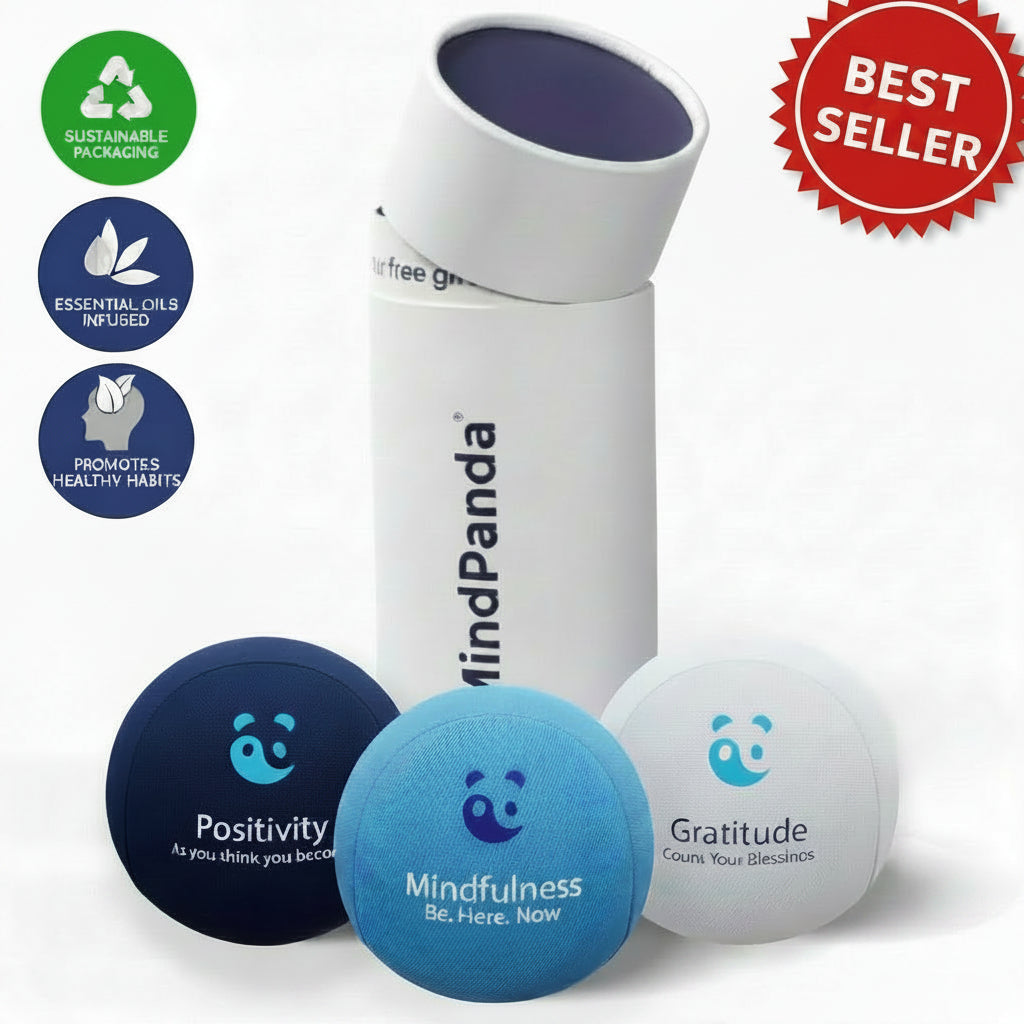
A stress ball gives your hands something to do during the 30-second grounding pause, which can make the sequence easier to stay with when sitting still feels impossible. For the journaling side, we built the Thrive & Reflect Bundle around exactly the kind of short nightly prompts described above.
- Keep a stress ball at your desk or nightstand as a physical cue for your grounding routine.
- Use the Thrive & Reflect journal for the three-prompt nightly entry so the habit has a fixed home.
- If you’re stocking a workplace wellness program, our business and wholesale solutions page covers bulk orders and corporate gifting.
Start with one tool and five minutes tonight.
This article is general information, not a substitute for advice from a qualified doctor. Consult a qualified healthcare professional about your own circumstances before acting on anything here.
FAQ
What is the best exercise to get rid of anger?
The most immediately effective exercise combines a breathing pattern with a longer exhale, such as 4-7-8 breathing, with a grounding technique like 5-4-3-2-1. The SAMHSA manual recommends both as first-line, in-the-moment tools.
How can I stop getting bothered by other people?
No technique eliminates irritation entirely, and claiming otherwise oversells what’s possible. What helps is lowering your baseline reactivity through regular exercise, consistent sleep, and daily cognitive-reframing practice, so smaller provocations produce smaller reactions over time.
What are the 4 C’s of anger management?
Different programs define the “4 C’s” differently, so there isn’t one universally agreed version. A common framing covers catch (notice the anger early), calm (use a breathing or grounding technique), communicate (express the need clearly once calm), and change (adjust the underlying pattern through cognitive work).
What are some grounding techniques for anger?
The 5-4-3-2-1 method, naming five things you see, four you touch, three you hear, two you smell, and one you taste, is a widely used grounding sequence for anger and anxiety. Pairing it with a slow exhale increases its calming effect.
Is journaling actually backed by research for anger?
Expressive writing about upsetting experiences can reduce stress and support emotional processing, according to Harvard Health. A 2022 randomized trial also found that combining emotional awareness practices with cognitive reappraisal, which journaling supports, significantly reduced anger expression and aggression at three months.
Sources
- PubMed: RCT of MEA + cognitive reappraisal (2022)
- SAMHSA anger management manual
- PMC: CBT anger-reduction trial (2018)