Minimalist self-care means using small, repeatable habits, not elaborate routines, to restore your energy and protect your attention. The point is subtraction, not addition: fewer steps, fewer products, fewer decisions standing between you and feeling okay. Start with one anchor habit, like three minutes of morning breathing or writing a single sentence in a journal, and let everything else grow from there.
TL;DR:
- Minimalist self-care relies on one or two quick, consistent habits like mindful breathing or a gratitude micro-journal that can be integrated into daily routines.
- Building a routine around anchoring habits attached to existing behaviors improves sustainability and reduces decision fatigue.
- Short practices, such as a five-minute declutter or a single-drawer tidy-up, reinforce a sense of control and foster psychological benefits.
- During times of low energy or when traveling, focus solely on the core habit to maintain the routine without adding pressure.
- Using a curated wellbeing bundle or specific trigger scripts can help reduce decision paralysis and increase the likelihood of habit adherence.
Table of Contents
- What Is Minimalist Self-Care, Really?
- 9 Minimalist Self-Care Practices That Actually Stick
- How to Build a Routine That Actually Lasts
- Micro Self-Care: What You Can Do in 5 Minutes
- The Evidence Behind Minimalism and Mental Health
- Adapting Minimalist Self-Care When Life Changes
- A Small Routine I’ve Actually Kept
- Start With a Kit That Removes the Guesswork
- Sources
What Is Minimalist Self-Care, Really?
The wellness industry sells self-care as a shopping list: ten-step skincare, elaborate morning routines, journals with fifty prompts. Minimalist self-care rejects that model. It asks a simpler question: what is the smallest action that actually makes you feel more like yourself?
This isn’t about doing less for its own sake. It’s about removing the friction that keeps people from doing anything at all. A ten-minute meditation you skip every day helps you less than a ninety-second breathing exercise you actually do. Minimalist wellness treats consistency as the real metric of success, not intensity.
9 Minimalist Self-Care Practices That Actually Stick
These are the practices worth building a simple self care routine around. Each one takes minutes, not hours, and none require special equipment.
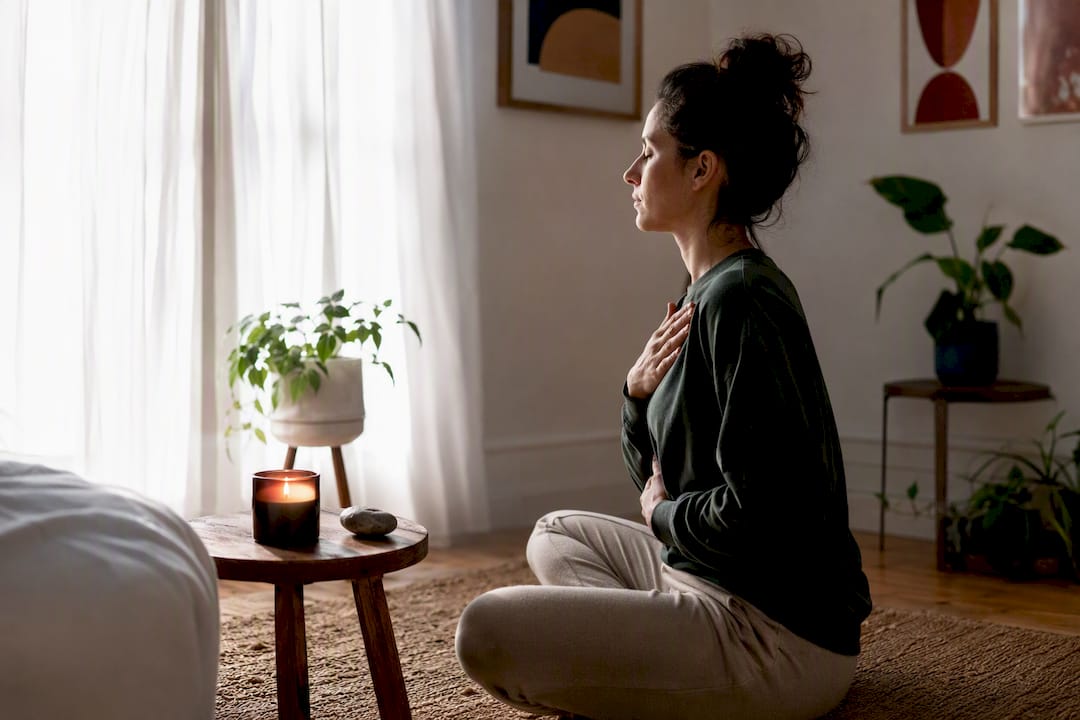
- Mindful breathing. Three slow breaths, in for four counts, out for six, resets a spiked nervous system faster than scrolling ever will. Do it before you get out of bed. Variation: pair it with one hand on your chest to feel the pace change.
- A one-anchor morning ritual. Pick a single fixed action, like drinking water before coffee, rather than a full morning stack. It gives your day a starting line without demanding willpower.
- A short digital detox. Thirty screen-free minutes after waking protects your attention before the day claims it. Variation: leave your phone in another room overnight so the detox happens automatically.
- A five-minute declutter. Clear one drawer, one shelf, one corner of a desk. Minimalism favors removing items outright over buying more storage to hide them, since storage solutions just delay the same clutter.
- Simple, nourishing snacks. A piece of fruit and a handful of nuts beats a processed bar and takes the same ten seconds to grab.
- Ten minutes of movement. A walk around the block or a few stretches counts. The goal is circulation and a change of scenery, not a workout.
- A gratitude micro-journal. One sentence, not a page. “Today I’m glad for ___” takes fifteen seconds and still shifts mood over time.
- A soft boundary. Saying “I can’t take this on right now” once a week protects the rest of your simple self care ideas from getting crowded out.
- A simplified schedule. Block one buffer hour between meetings or errands so your day has breathing room built in, not squeezed in.
Minimal skincare deserves a mention too: a gentle cleanser and one moisturizer beat a nine-step regimen that becomes another chore you resent.
How to Build a Routine That Actually Lasts
A sustainable minimalist self-care routine works in three layers, not one long list.
- Daily micro-care: the ninety-second habits, like breathing or gratitude, that happen every day regardless of how busy you are.
- Supportive habits: things you do most days but can skip without guilt, like a walk or a tidy-up session.
- Reset moments: less frequent resets, like a Sunday declutter or a screen-free evening, that catch what daily habits miss.
Pick one anchor habit and attach it to something you already do. Health guidance consistently points to habit attachment, doing the new thing right after an existing one, as the most reliable way to make it stick, since starting small and anchoring to existing routines beats starting with a big overhaul. “After I brush my teeth, I take three breaths” works better than “I’ll meditate more.”
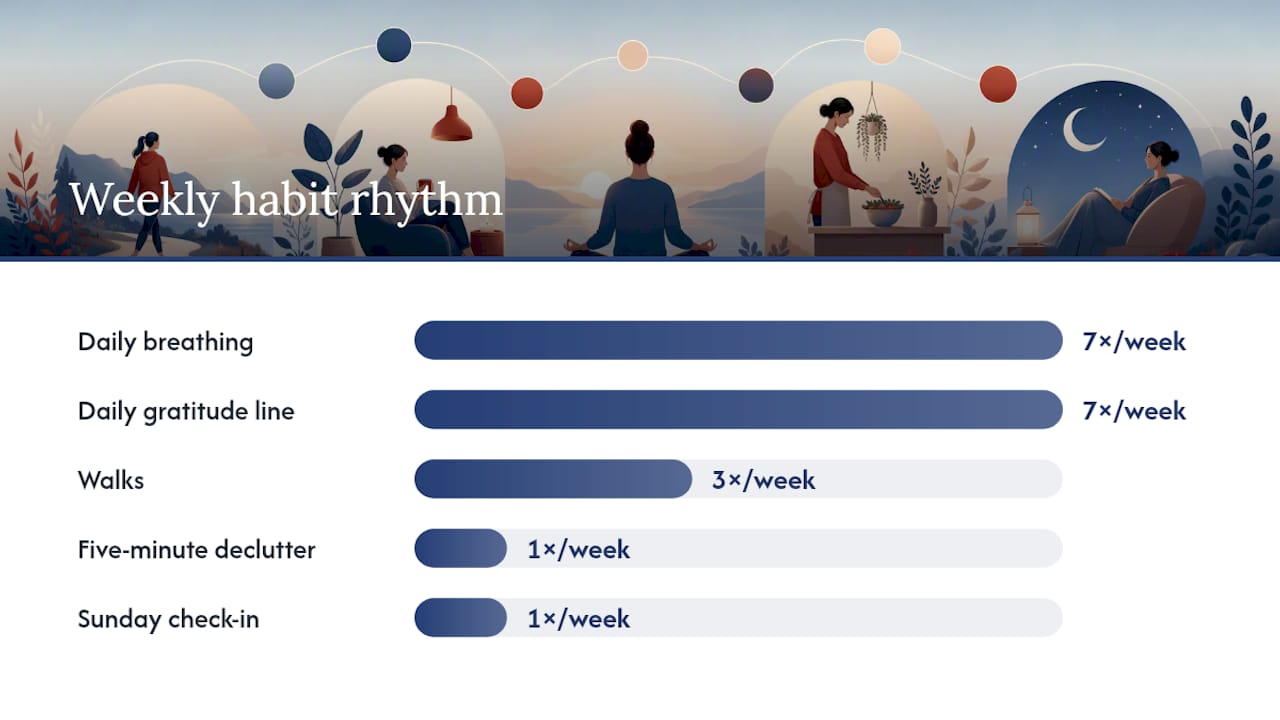
A simple weekly rhythm might look like: daily breathing and one gratitude line, three walks, one five-minute declutter, and a Sunday check-in on what felt good versus what felt forced. Track it on a single sticky note or a basic habit app; anything more complex becomes its own chore.

Pro Tip: Write your anchor habit as a literal script: “When I finish X, I will do Y for 30 seconds.” Vague intentions fail; specific triggers don’t.
Micro Self-Care: What You Can Do in 5 Minutes
Some days, five minutes is genuinely all you have. These practices earn their place because they work anywhere, require nothing, and don’t demand a mood you don’t have.
- Box breathing at a red light or before a meeting
- A single-drawer declutter while dinner heats up
- Stepping outside for fresh air, no phone
- Writing one line about how you actually feel
- Stretching your neck and shoulders at your desk
- Drinking a full glass of water slowly, without multitasking
- Naming three things you can currently see, hear, and feel (a quick grounding technique)
- Texting one person you like, just to say hello
On a genuinely brutal day, a mini-routine might be: box breathing on the drive in, water at your desk, and one line in your journal before bed. That’s it. Reliability beats a perfect routine you abandon by Wednesday.
The Evidence Behind Minimalism and Mental Health
The connection between minimalism and mental health isn’t just a feeling. Homes with less visible clutter are associated with lower levels of depressed mood during the day, and even short micro-declutter sessions on a single drawer or shelf appear to produce psychological gains similar to a longer overhaul, likely because they repeatedly reinforce a sense of competence and control.
Broader theory backs this up. Researchers studying minimalism and wellbeing point to five overlapping mechanisms: autonomy, competence, mental space, awareness, and positive emotion. Fewer possessions and fewer commitments mean fewer decisions, and fewer decisions mean more mental space for everything else.
Self-care works best as an adaptable, trial-and-error practice, not a fixed prescription. Choose habits that reliably regulate you over routines that just look good on paper.
That framing, echoed in guidance from Everyday Health, matters more than any single tip on this list.
Adapting Minimalist Self-Care When Life Changes
Your routine should shrink and expand with your capacity, not stay fixed. During low-energy stretches, travel, or a brutal work week, keep only the minimum viable habit: the one anchor practice you never skip.
- Sick or exhausted: keep breathing only, skip everything else
- Traveling: swap the walk for stretching in your hotel room
- Overloaded at work: shorten the journal line to one word
Red flag: if your “simple” routine starts feeling like another obligation, cut it in half immediately.
Pro Tip: If you miss three days in a row, don’t restart the whole routine. Restart with the anchor habit alone.
A Small Routine I’ve Actually Kept
My anchor habit is boring: three breaths before checking my phone in the morning. Some weeks I add a five-minute drawer declutter; other weeks I don’t, and that’s fine. I’ve relapsed into scrolling first thing plenty of times. The habit survives because it asks almost nothing of me, and readers building their own kit often start with the ideas in Mindpanda’s guide to mindfulness activities.
— Ravi
Start With a Kit That Removes the Guesswork
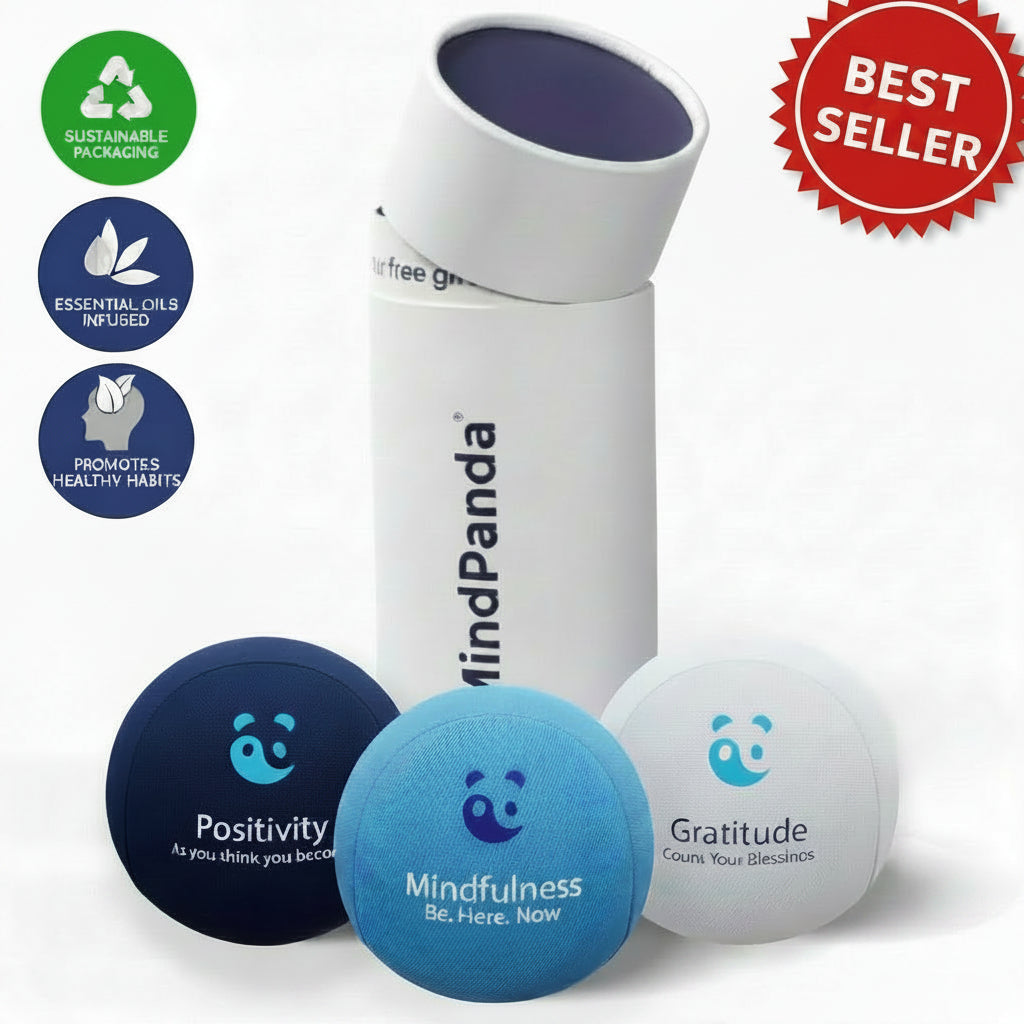
The hardest part of minimalist self-care usually isn’t the habit itself. It’s the decision paralysis before you even begin: which journal, which breathing tool, which stress ball actually helps. Mindpanda built the Mindfulness Wellbeing Bundle to solve exactly that problem, a small, curated set of tools (a stress ball, a simple journal, a few grounding items) that gives your anchor habit and micro-care moments something physical to attach to.
If you’d rather choose your own pieces, you can build your own wellbeing bundle instead and pick only what fits your routine. Either way, browse the bundle now and pick one item to pair with the anchor habit you read about above. That single pairing is often the difference between a routine that starts and one that sticks.
Sources
- 5 mental health rewards of embracing minimalism, according to a psychologist — Forbes
- Towards a theory of minimalism and wellbeing — ResearchGate
- How to start a self-care routine — Everyday Health
- How to start a self-care routine — Cleveland Clinic