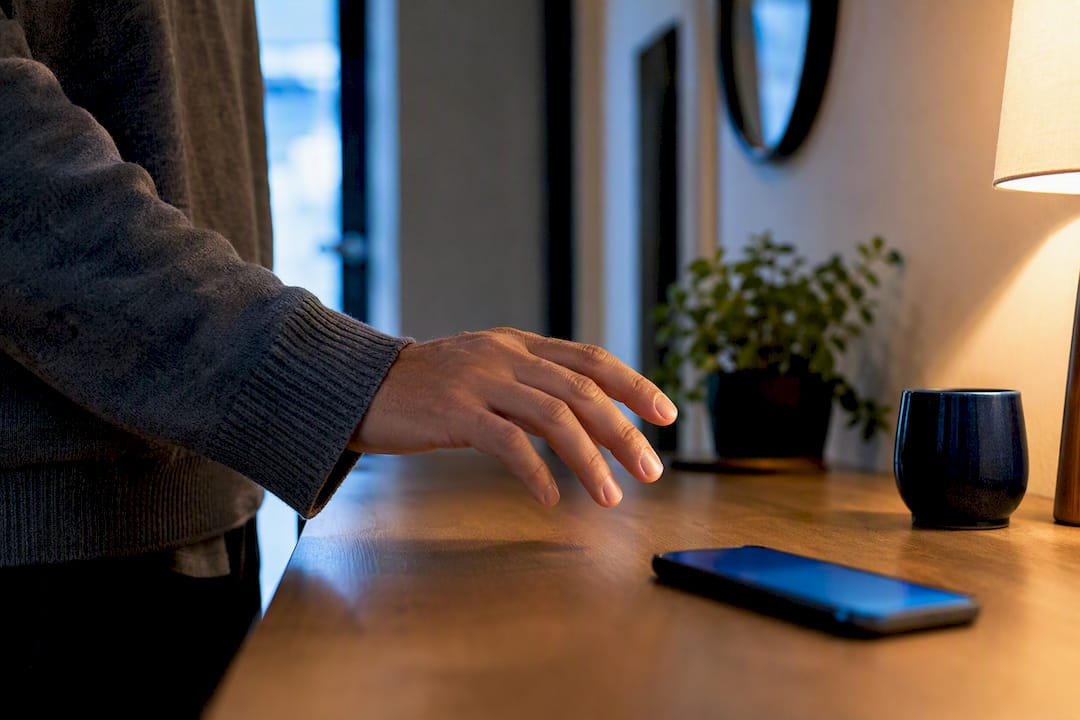
Yes, phone anxiety is common, and you can reduce it. The reliable path combines two things: in-the-moment regulation techniques you use during a call, and a structured exposure plan you build over weeks. This is not about eliminating nervousness overnight. It’s about training your body and brain to tolerate the phone ringing without spiraling. Most people who practice consistently notice real improvement within a few weeks to a few months.
TL;DR:
- Starting with simple exposure tasks, such as listening to voicemails or making low-stakes calls, can gradually build your tolerance over weeks.
- Consistent use of quick regulation techniques like box breathing and grounding exercises during calls helps reduce immediate anxiety.
- Using practical tools such as crib sheets, scheduled call times, and call barriers can lower the unpredictability and pressure of phone conversations.
- Long-term progress depends on ongoing practice, monitoring early warning signs, and incorporating environmental adjustments to maintain gains.
- If avoidance or anxiety significantly interferes with work or personal life despite regular effort, professional therapy may be necessary.
Table of Contents
- What Phone Anxiety (Telephobia) Is and Why Calls Trigger It
- Immediate Coping Techniques to Use Before and During a Call
- A Structured Gradual Exposure Plan to Reduce Phone Anxiety Over Weeks
- Preparing for Calls: Crib Sheets and a Simple Environment Checklist
- Phone Anxiety at Work: Boundaries, Scripts, and Small Adjustments
- Evidence Summary and Mindpanda Practice Resources
- Long-Term Maintenance to Keep Phone Anxiety From Creeping Back
- Technology Tools That Can Take the Edge Off Calls
- An Honest Note on Progress and Patience
- Mindpanda Tools That Support Your Practice Between Calls
- Sources
What Phone Anxiety (Telephobia) Is and Why Calls Trigger It
Telephobia is a specific, recognized form of social anxiety centered on making or receiving phone calls. The American Psychiatric Association classifies social anxiety disorder as an intense fear of judgment or scrutiny in social situations, and phone calls hit that fear from an unusual angle: you lose every visual cue you’d normally rely on.
No facial expressions. No body language. No way to gauge in real time whether the other person is annoyed, confused, or bored. Your brain fills that silence with worst-case guesses, and for many people, that unpredictability is worse than an in-person conversation would be.
A few things tend to trigger the spiral:
- Unpredictability — you don’t know who’s calling, what they want, or how the conversation will go.
- Missing nonverbal feedback — no nod, no smile, no way to adjust mid-sentence.
- Fear of judgment — worrying you’ll sound awkward, forget words, or stumble.
- Conditioned responses — a past bad call (an angry client, awkward silence) that your nervous system now treats as a threat cue.
Physically, this shows up as a racing heart, a mind that suddenly goes blank, nausea, or a strong urge to let it ring out. None of that means something is wrong with you. Cognitive behavioral therapy and exposure therapy are established, effective treatments for this exact pattern, and most people see meaningful change within a few weeks to a few months of consistent practice.
Immediate Coping Techniques to Use Before and During a Call
When the phone rings and your chest tightens, you need something that works in seconds, not something that requires a calm mindset you don’t currently have.
- Box breathing. Inhale for 4 counts, hold for 4, exhale for 4, hold for 4. Repeat for one minute before dialing or before answering. It’s fast, discreet, and works at a desk or in a parking lot.
- 4-7-8 breathing for sharper spikes. Inhale for 4 counts, hold for 7, exhale slowly for 8. This longer exhale pulls your nervous system out of fight-or-flight faster than short breathing does.
- 5-4-3-2-1 grounding. Name 5 things you see, 4 you can touch, 3 you hear, 2 you smell, 1 you taste. It interrupts the anxious loop by forcing your attention into the present room.
- Let voicemail catch it. Letting a call go to voicemail so you can prepare is a legitimate strategy, not a failure, and it gives you room to call back on your own terms.
- Ask for a moment. “Can I call you back in five minutes?” is a complete sentence. Use it.
- A one-breath ritual before dialing. One slow inhale and exhale, hand on the phone, before you press call. Small, repeatable, calming.
Pro Tip: Keep a stress ball or another tactile object at your desk. Squeezing it while you talk gives your body something physical to do with the adrenaline, which can make it easier to stay present in the conversation instead of drifting into panic. Mindpanda’s guide to breathing exercises walks through several of these in more detail if you want to practice before you’re mid-call.
Posture matters more than it sounds like it should. Sitting up straight and even smiling slightly, even though no one can see you, measurably shifts your tone and lowers physical tension.
A Structured Gradual Exposure Plan to Reduce Phone Anxiety Over Weeks
Regulation techniques calm you down in the moment. Exposure is what actually shrinks the fear over time. The principle is simple: start with the easiest possible version of the trigger, repeat it until it’s boring, then move one notch harder, as explained in this guide on stage fright: how to deal with it, and its possible benefits. Therapists emphasize that the goal isn’t zero fear; it’s increased tolerance, tracked through measurable objectives like call duration rather than vague feelings.
Here’s an example progression you can adapt to your own pace:
- Listen to old voicemails you’ve been avoiding.
- Leave a voicemail for a business (a pharmacy, a store) that doesn’t require a live response.
- Call an automated system (checking a balance, a movie showtime line).
- Make a short call to a friend or family member you’re comfortable with.
- Make a call with a single, low-stakes goal (booking a haircut, asking a store’s hours).
- Handle a slightly harder call (rescheduling an appointment, a customer service question).
- Make a moderately challenging call (a work call, a call involving negotiation or complaint).
- Answer an unexpected incoming call without screening it first.
Set an objective goal at each level, not a feeling-based one. “Stay on the call for five minutes” is measurable. “Don’t be nervous” is not, and it sets you up to feel like you failed even when you succeeded.
| Progress marker | What to log after each call |
|---|---|
| Call duration | How many minutes you stayed on |
| Task completed | Yes/no, regardless of how you felt |
| Anxiety level | Before the call and right after |
| One win | One specific thing that went better than last time |
If your anxiety spikes into panic attacks, if avoidance is costing you a job or relationships, or if you’ve been stuck at the same step for months without movement, that’s a sign to bring in a therapist. Exposure paired with cognitive restructuring works better with professional guidance for more severe cases.
Preparing for Calls: Crib Sheets and a Simple Environment Checklist
Preparation should give you flexibility, not a script you’ll panic over the moment the conversation veers off course. A crib sheet with 3 to 5 bulleted goals and 2 to 3 backup phrases works far better than a word-for-word script, because a rigid script falls apart the second the other person says something unexpected.
Before you dial, set up:
- A quiet space where you won’t be interrupted mid-sentence.
- Your crib sheet, visible and easy to glance at.
- Water nearby, in case your mouth goes dry.
- A clear plan for voicemail if you need to buy time.
Once you’re comfortable with prepared calls, try graded steps like recording a voice note instead of typing a text, or scheduling a call for a specific time so you’re not caught off guard. Both function as lower-pressure exposure that still counts as progress.
Phone Anxiety at Work: Boundaries, Scripts, and Small Adjustments
Work calls carry extra pressure because there’s often a professional consequence attached to messing up. A few adjustments make a real difference:
- Build simple templates for recurring call types (client check-ins, internal updates) and rehearse them once with a colleague before using them live.
- Book a private room or step away for one minute of prep before answering, rather than picking up cold.
- Batch your communications, checking messages at set times like 9 AM, 1 PM, and 5 PM instead of reacting to every notification as it lands.
- Use voicemail strategically for calls that don’t need an immediate live response, and set expectations with coworkers about your response window.
If phone-related anxiety is affecting your ability to do your job, that’s worth raising with a manager or HR as a legitimate accommodation conversation, not a personal failing you need to hide.
Evidence Summary and Mindpanda Practice Resources
The clinical picture here is consistent: CBT and exposure therapy are effective treatments for social anxiety, and most people see meaningful improvement within several weeks to a few months of steady practice. Breathing and grounding work because they directly calm the physiological arousal (racing heart, shallow breath) that keeps the fear loop running.
A few Mindpanda resources pair well with the steps above, as supportive tools rather than a substitute for therapy:
- Box breathing technique guide for a step-by-step version of the breathing pattern used before calls.
- Mindfulness activities for anxiety to build baseline calm outside of call situations.
- Stress ball exercises for quick tactile grounding during or right after a hard call.
Long-Term Maintenance to Keep Phone Anxiety From Creeping Back
Getting comfortable with calls doesn’t mean the work is finished. Anxiety tends to resurface after a stressful stretch, a long gap without phone contact, or one bad call that shakes your confidence. Treat that as normal, not as proof you’ve regressed.
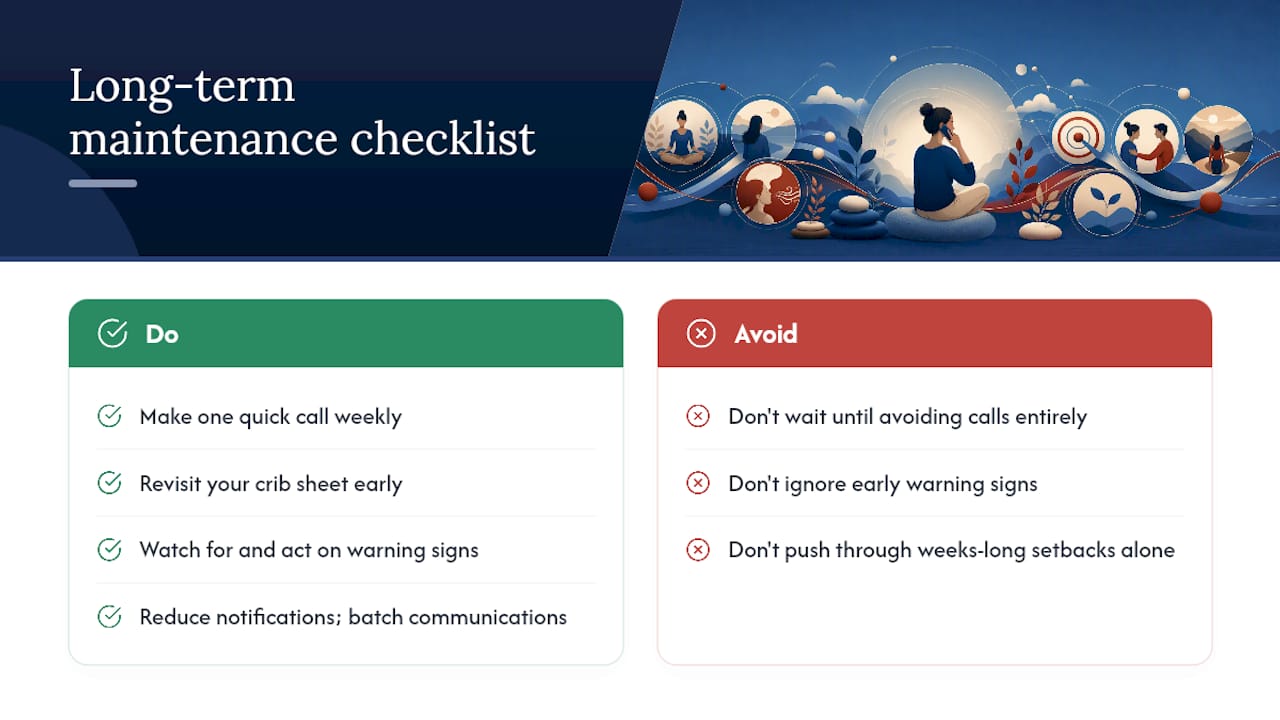
Keep a light, ongoing practice rhythm even after you’ve hit your goals. A quick call once a week, even a low-stakes one, keeps the skill from going rusty the way any skill does with disuse. Some people find it useful to revisit their old crib sheet format whenever they notice avoidance creeping back in, rather than waiting until they’re avoiding calls entirely again.
Watch for early warning signs: letting more calls go to voicemail than usual, feeling dread creep in before a specific type of call, or noticing your breathing tighten at the sound of a ringtone. Catching these early means a quick return to grounding techniques and a step or two of exposure, rather than starting the whole process over.
Reducing your baseline phone-related stress also matters here. Cutting unnecessary notifications, setting phone-free stretches during the day, and batching your communications all lower the general noise your nervous system has to manage, which makes any individual call less likely to feel like an emergency.
If you notice a setback lasting more than a couple of weeks, or spreading into anxiety about other forms of communication, that’s worth a conversation with a therapist rather than something to push through alone.
Technology Tools That Can Take the Edge Off Calls
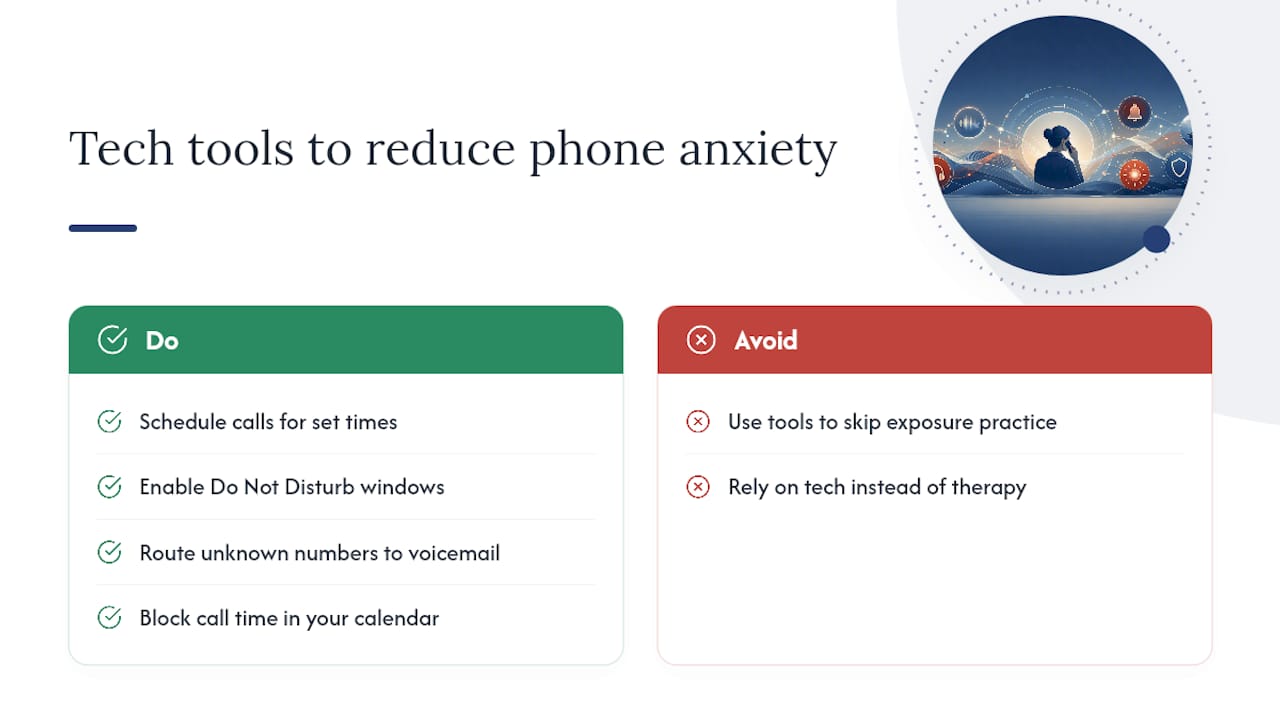
A handful of practical tech habits reduce phone-related stress without requiring any app at all. Scheduling calls for a set time, rather than accepting calls whenever they land, turns an unpredictable trigger into a planned event you can prepare for. Many phones let you set “do not disturb” windows or route unknown numbers straight to voicemail, both of which reduce the number of surprise calls you have to manage in a day.
Call scheduling features built into most calendar apps let you block time specifically for calls, so you’re not fielding them between unrelated tasks while your guard is down. Voice memo apps double as a low-pressure exposure step: recording a message to send instead of dialing live still builds comfort with your own voice and phrasing.
Some people also find that adjusting call settings, like enabling captions or transcription on calls, reduces the fear of missing something important mid-conversation. None of this replaces exposure practice or therapy. Treat these tools as scaffolding that makes each practice call slightly easier, not as a way to avoid making calls altogether.
An Honest Note on Progress and Patience
Progress on phone anxiety rarely moves in a straight line. You’ll have a great week of calls, then a bad one that makes you feel like you’ve lost ground you hadn’t actually lost. That’s not failure. That’s how exposure work goes for almost everyone who does it.
Set goals small enough to actually hit, like staying on one call for three extra minutes than last week, and actually acknowledge it when you do. It sounds minor. It isn’t. If phone anxiety is interfering with your work, relationships, or daily functioning despite consistent practice, bring in a therapist. There’s no version of this where asking for help is the wrong move.
— Ravi
Mindpanda Tools That Support Your Practice Between Calls
The techniques in this guide work best when you’ve got something physical to anchor them to, and that’s where a stress ball, a journal, or a short breathing card actually earns its place on your desk. They’re not a treatment for phone anxiety. They’re a way to make the grounding and exposure work above easier to stick to on a hard day.
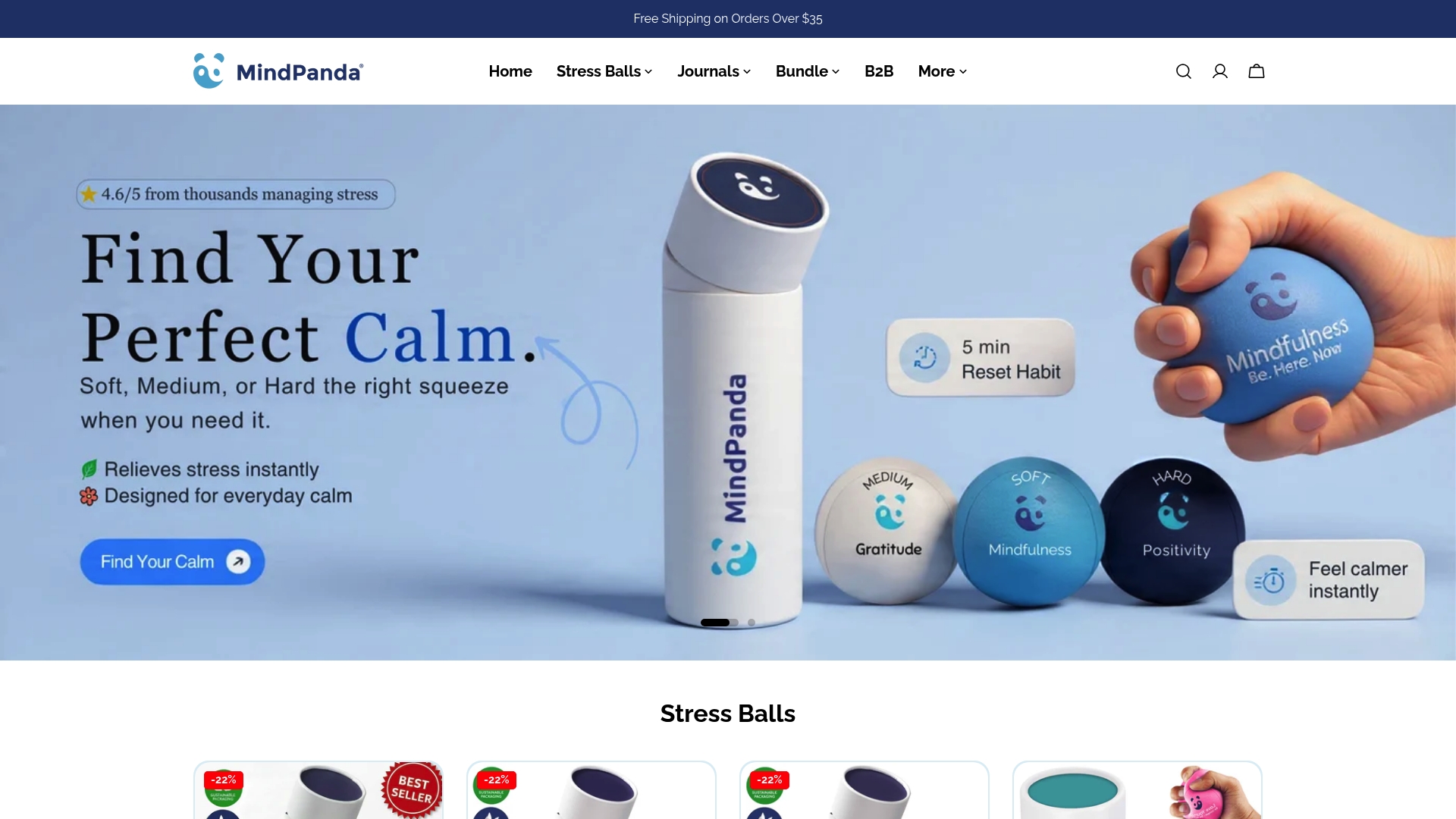
Mindpanda’s Mindfulness Wellbeing Bundle pairs a stress ball for tactile grounding with a journal for logging your call progress, exactly the kind of tracking the exposure plan above depends on. If you’d rather pick your own combination, you can build your own wellbeing bundle with the specific tools that match your routine, whether that’s a breathing card by your phone or a journal for noting wins after each call. Either way, the next step is small: pick one tool, put it next to your phone, and use it before your next call.
This article is general information, not a substitute for advice from a qualified doctor. Consult a qualified healthcare professional about your own circumstances before acting on anything here.
Sources
- American Psychological Association — Anxiety
- Healthline — Does your phone give you anxiety? 7 steps to cope