Short answer: inhalation of lavender, jasmine, bergamot and bitter orange has the strongest support in clinical research on anxiety and stress, and the safest way to use them is through a diffuser or brief direct inhalation rather than applying them undiluted to skin. Pregnant women, people with asthma, young children and anyone on medication should check with a clinician first. The evidence behind these claims is summarized further down.
TL;DR:
- Inhalation via diffusion or brief direct breaths is the safest and most supported method for anxiety reduction from lavender, jasmine, bergamot, and bitter orange oils.
- Clinical evidence shows jasmine and bitter orange yield the most significant anxiety reduction, with jasmine affecting short-term and bitter orange impacting long-term anxiety.
- Short, repeated inhalation sessions of 15 to 30 minutes, with breaks in between, are most effective and should be complemented with other stress management practices.
- Proper dilution, lab-verified purity, patch testing, and avoiding undiluted skin contact are crucial for safe and effective topical use of essential oils.
- Certain groups, including pregnant women, children, and respiratory sufferers, should consult a healthcare professional before using aromatherapy oils.
Table of Contents
- Top essential oils for stress: what each one is best for
- What the research shows about essential oils and stress
- How to use essential oils safely and effectively for stress relief
- Choosing quality essential oils and reading labels
- Safety, contraindications and when to consult a clinician
- Potential side effects and allergic reactions beyond contraindications
- Duration and frequency of use for optimal stress relief
- How essential oils compare with other stress relief methods
- Guidance on combining multiple essential oils safely (blending)
- Integrating aromatherapy into a practical stress-management routine
- A discreet alternative: MindPanda products that complement aromatherapy
- Sources
- FAQ
Top essential oils for stress: what each one is best for
Some oils have more research behind them than others, and the delivery method matters almost as much as the oil itself.
- Lavender: the most studied calming oil, generally inhaled through a diffuser or a few drops on a pillow, and diluted before any skin contact.
- Bergamot: linked to mood lift and lower anxiety when inhaled; skip topical use before sun exposure since citrus oils can increase photosensitivity.
- Jasmine: a 2023 network meta-analysis found jasmine had one of the largest effects on short-term (state) anxiety among the oils tested, best used through inhalation.
- Bitter orange (Citrus aurantium): the same analysis found meaningful improvement in longer-running (trait) anxiety, again through inhalation rather than topical use.
- Chamomile: mild, often blended with lavender, used in diffusers or as a diluted massage oil.
- Frankincense: valued for a grounding scent, typically diffused or diluted at low percentages for skin use.
- Ylang ylang: associated with relaxation, usually diffused since it is strong enough to cause headaches at high concentrations.
- Neroli: a citrus-blossom oil sometimes used for mood support, best diffused or diluted well below 2% for skin.
- Eucalyptus: more associated with clear breathing than calm, but its cooling scent is a common diffuser addition.
- Sandalwood: a woody, grounding note often blended into calming mixes, diffused or diluted at low strength.
These are properties and common uses, not brand recommendations, and the strength of evidence varies by oil.
What the research shows about essential oils and stress
The 2023 network meta-analysis pooled 44 randomized controlled trials and found that essential oils significantly reduced both state and trait anxiety, with jasmine showing the largest reduction in state anxiety (WMD -13.61) and bitter orange showing the largest reduction in trait anxiety (WMD -9.62). Those numbers come from clinical trial settings and shouldn’t be read as a guaranteed personal result, but they do point to which oils researchers currently rate highest.
A separate narrative synthesis of aromatherapy studies covering more than 70 trials between 2000 and 2021, involving 6,539 patients, found inhalation aromatherapy potentially effective for stress reduction in healthy adults and for anxiety management around surgery, with over 70% of the reviewed studies reporting a positive effect. The same synthesis noted wide variation in how trials were designed, which oils were tested, and how outcomes were measured.

That heterogeneity matters for everyday use. A study on perioperative patients inhaling lavender before a procedure doesn’t tell you much about diffusing bergamot at your desk for three months. Short inhalation sessions show up more consistently in the data than long topical regimens, and most trials measure short-term anxiety rather than chronic stress. The practical takeaway: brief inhalation or diffusion sessions can produce a noticeable, temporary sense of calm for many people, but aromatherapy works as a support alongside other habits, not as a stand-alone treatment.
How to use essential oils safely and effectively for stress relief
Getting the method right matters as much as picking the right oil.
- Diffusion: run a diffuser for 15 to 30 minutes at a time in a room of normal size, then pause for at least 30 to 60 minutes before starting again to limit continuous exposure for everyone in the room, a pattern supported by guidance from Johns Hopkins Medicine.
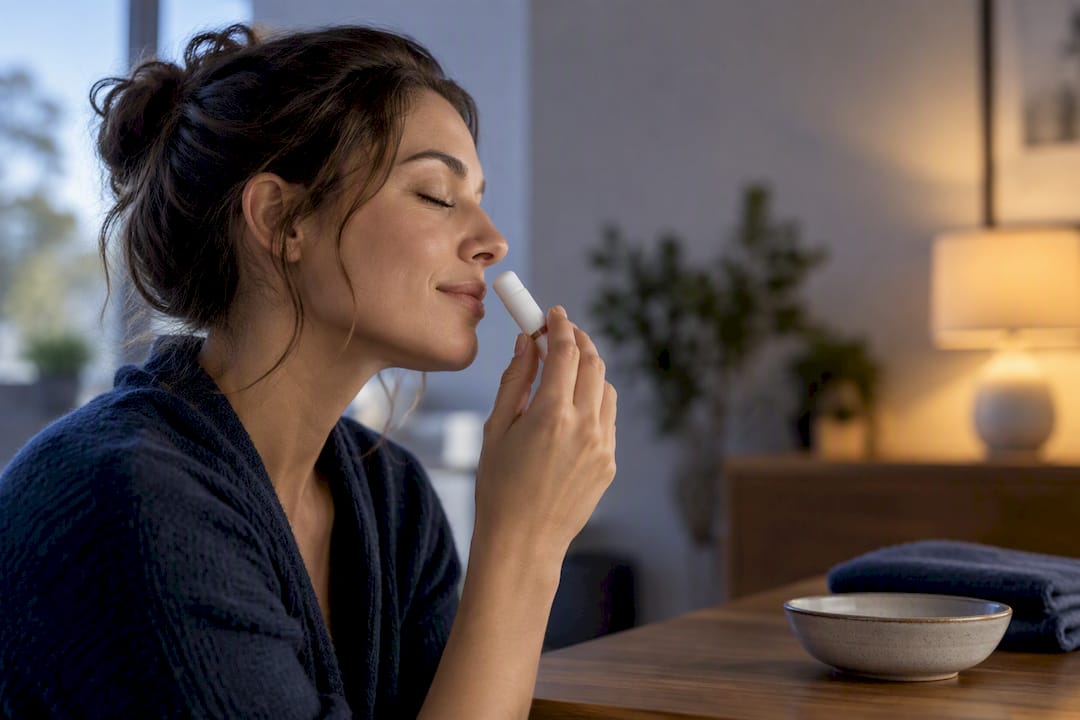
- Direct inhalation: put one drop on a tissue or personal inhaler and take three slow, deep breaths when you need a quick reset.
- Topical use: dilute to about 1% (roughly six drops per ounce of carrier oil such as jojoba or sweet almond) for daily use, or up to 2% for short-term use, and always patch test on your inner forearm first, waiting 24 to 48 hours to check for irritation.
- Bath or massage: mix oils into a carrier oil or an emulsifier such as unscented liquid soap before adding to bathwater, since undiluted oil floats on the surface and can irritate skin.
- Follow the basic dos and don’ts: never ingest an oil unless a qualified professional directs it, avoid eyes, ears and broken skin, and store bottles out of reach of children.
Pro Tip: Mix two drops of lavender, one drop of bergamot and one drop of chamomile into ten milliliters of jojoba oil, label the bottle “calm blend,” and keep it by your bed for a consistent nightly routine.
Choosing quality essential oils and reading labels
A trustworthy label lists the plant’s scientific (botanical) name, not just “lavender,” along with the extraction method, country or region of origin, and a batch or lot number.
- Look for the Latin binomial, such as Lavandula angustifolia, rather than a generic common name.
- Favor sellers who publish GC/MS (gas chromatography-mass spectrometry) testing, which verifies purity and screens for adulteration, a practice Cleveland Clinic experts point to when choosing products.
- Store bottles in dark glass in a cool place, away from direct sunlight, to slow degradation.
- Treat a label that says only “fragrance,” “perfume” or “proprietary blend” with no listed ingredients as a red flag.
The FDA does not regulate most essential oils as drugs; they typically fall under cosmetics or fragrance rules unless a company markets them with specific disease-treatment claims, in which case drug regulations apply.
Safety, contraindications and when to consult a clinician
Certain groups should be more careful, or check with a clinician before starting: pregnant women, infants and very young children, people with asthma or other respiratory conditions, and people with seizure disorders. Cleveland Clinic experts specifically advise consulting a doctor during pregnancy or with respiratory conditions before starting aromatherapy.
Some oils carry documented poisoning risk when misused, including camphor and wintergreen, and Poison Control notes that undiluted application or accidental ingestion can cause serious harm, with children especially vulnerable. Stop use and seek medical attention if you notice breathing difficulty, swelling, or a severe rash, and talk to a clinician before relying on aromatherapy if you have an ongoing anxiety disorder or are changing medication. Companies cannot legally market essential oils as disease treatments without meeting drug regulations, which is part of why most bottles describe scent and mood rather than medical outcomes.
Potential side effects and allergic reactions beyond contraindications
Even outside the higher-risk groups, essential oils can cause reactions worth watching for. Skin contact with undiluted or poorly diluted oils commonly causes redness, itching or a burning sensation, and citrus oils like bergamot can cause photosensitivity, meaning skin exposed to sunlight after topical use is more prone to burning or dark spots.
Inhalation isn’t risk-free either. Strong scents in a poorly ventilated room can trigger headaches, nausea or dizziness, particularly with potent oils like ylang ylang or eucalyptus. Allergic reactions, though less common, can range from mild hives to more significant swelling, and anyone with known plant or pollen allergies should be cautious with the corresponding essential oil, since chamomile, for example, is related to ragweed.
A patch test before regular topical use catches most sensitivities before they become a problem. If you notice a new headache, skin reaction or unusual respiratory symptom after starting an oil, stop using it and see whether the symptom resolves. Persistent or severe reactions, especially swelling of the face or throat or difficulty breathing, need immediate medical attention rather than a wait-and-see approach.
Duration and frequency of use for optimal stress relief
Most of the clinical benefit reported in trials comes from short, repeated sessions rather than constant exposure. A diffuser running 15 to 30 minutes, followed by a break of 30 to 60 minutes before the next session, is a reasonable pattern for daily use in a shared space, based on guidance from Johns Hopkins Medicine.

For direct inhalation, a brief session of a few deep breaths, repeated a handful of times through the day when stress spikes, tends to match how trials are structured better than one long exposure.
There’s no universal rule for how many weeks of use produce the best results, since most trials measure short-term anxiety around a single stressful event rather than months of ongoing use. A sensible approach is to treat aromatherapy as a tool you reach for around specific stress points, bedtime, a stressful commute, before a presentation, rather than a supplement you take on a fixed schedule. If a particular oil or blend stops feeling helpful after regular use, switching scents or taking a break for a week is a reasonable adjustment.
How essential oils compare with other stress relief methods
Aromatherapy sits closer to a supportive habit than a primary treatment when compared with options like meditation, exercise or prescribed medication. Meditation and cognitive behavioral techniques have a broader and generally stronger evidence base for anxiety over the long term, while medication prescribed by a clinician is the appropriate route for a diagnosed anxiety disorder that aromatherapy alone won’t resolve.
Where essential oils tend to hold their own is in speed and accessibility: a diffuser session or a few breaths from an inhaler can take effect in minutes and requires no training, unlike a meditation practice that builds benefit over weeks. The narrative synthesis of aromatherapy studies frames inhalation aromatherapy as potentially effective for everyday stress and perioperative anxiety, language that reflects a supporting role rather than a replacement for therapy or medication.
The most realistic way to use essential oils is alongside other habits: a diffuser during a meditation session, an inhaler before a therapy appointment, or a calming scent paired with a wind-down routine before bed. None of that requires choosing between aromatherapy and evidence-based care; the two work on different timelines and different mechanisms, and combining them is more practical than picking one.
Guidance on combining multiple essential oils safely (blending)
Blending two or three oils can create a more balanced scent and, in some cases, a broader set of calming properties, but the same dilution and quantity rules still apply to the total mixture, not just each individual oil.
A simple approach is to build around one base note (something woody or heavy, like sandalwood or frankincense), one middle note (a floral or herbal oil, like lavender or chamomile), and one top note (something bright, like bergamot), keeping the combined total within the same 1% to 2% dilution range recommended for a single oil. Start with a small batch, two or three drops total in ten milliliters of carrier oil, and patch test the finished blend rather than each oil separately, since combined oils can interact on skin differently than any one alone.
Avoid stacking multiple strong or potentially irritating oils, like ylang ylang and eucalyptus, in the same blend at full strength, since their individual effects on headaches or skin sensitivity can compound. If you’re diffusing rather than applying topically, the same logic holds: two or three oils together is plenty, and adding more rarely improves the effect enough to be worth the added risk of irritation or overwhelming scent.
Integrating aromatherapy into a practical stress-management routine
My own routine is simple: a lavender diffuser at bedtime, three slow breaths from a bergamot inhaler before a stressful meeting, and a few minutes of journaling afterward. Aromatherapy supports better sleep and exercise habits, it doesn’t replace them, and it never replaces therapy when that’s what’s needed. A stress ball paired with aromatherapy can round out that kind of routine.
— Ravi
A discreet alternative: MindPanda products that complement aromatherapy
A diffuser handles the scent, but stress often needs something for your hands and your head too. Pairing a calming blend with a physical outlet or a short daily writing habit gives you two different tools working at once instead of relying on scent alone.
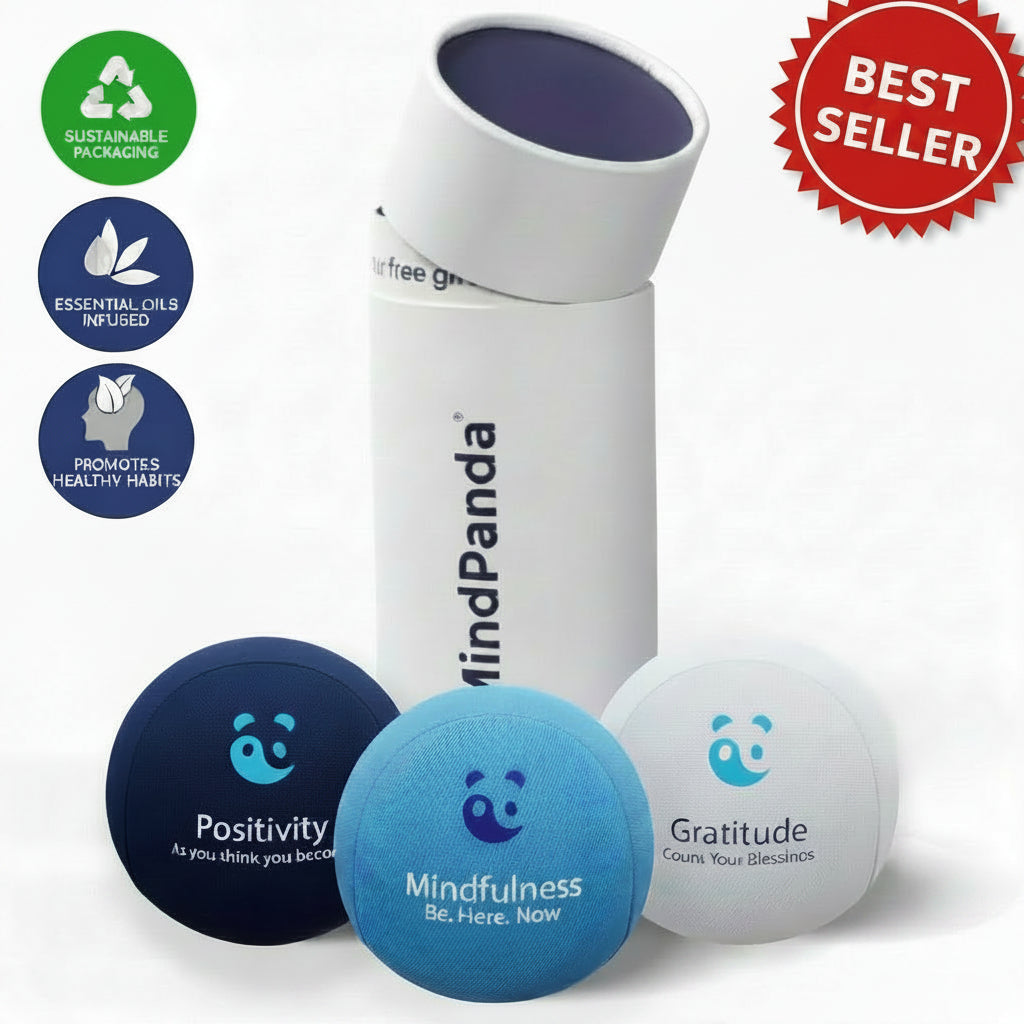
- Our aromatherapy stress ball sets combine a calming scent with a physical fidget option for moments when you need both at once.
- The Balance productivity planner gives you a place to note what triggered your stress and what helped, building a pattern you can act on.
- Workplaces looking to offer stress-relief tools at scale can look into our corporate gifting and bulk order options.
None of these replace clinical care, but they’re a practical, low-cost way to build a routine around the habits this article covers. Browse the Stress Balls collection to find one that fits your routine.
This article is general information, not a substitute for advice from a qualified doctor. Consult a qualified healthcare professional about your own circumstances before acting on anything here.
Sources
- Network meta-analysis (2023) on aromatherapy and anxiety
- Narrative synthesis of aromatherapy clinical studies (2023)
- FDA guidance on aromatherapy and cosmetic vs drug regulation
- Cleveland Clinic: Essential Oils 101 — Which are best for stress (2025)
FAQ
What are the best essential oils for stress?
Lavender, jasmine, bergamot and bitter orange have the most consistent support in clinical research on anxiety and stress. A 2023 network meta-analysis found jasmine and bitter orange produced the largest reductions in anxiety measures among the oils studied.
What is the best oil for stress relief?
Lavender is the most widely studied and commonly recommended oil for general calming and sleep support, typically used through a diffuser or brief inhalation. Jasmine and bitter orange showed the strongest effects on anxiety specifically in the 2023 network meta-analysis, though individual response varies.
How can I reduce stress?
Stress responds best to a combination of approaches: regular sleep, physical activity, and practices like meditation or therapy tend to have the strongest long-term evidence. Aromatherapy through short diffusion or inhalation sessions, as described in the narrative synthesis of aromatherapy studies, can offer supportive relief alongside those habits rather than in place of them.
What smells calm anxiety?
Lavender, bergamot, jasmine and chamomile are among the scents most often associated with a calming effect in clinical trials. The network meta-analysis found jasmine had the largest measured effect on short-term anxiety among the oils tested, best experienced through inhalation rather than topical use.