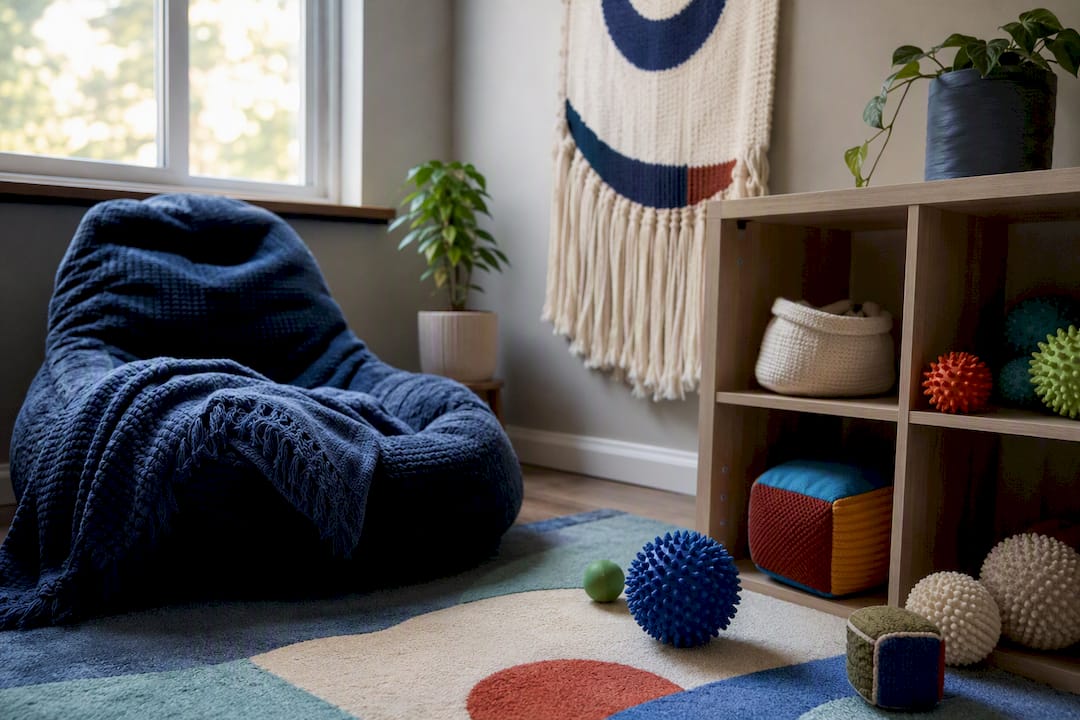
A calm down corner is a small, low-stimulation space where a child can pause, breathe, and work through big feelings before rejoining the group. It works because it separates the feeling from the room, giving a child a few quiet minutes and a couple of physical tools instead of a lecture.
Start with just three things:
- A comfortable seat — a cushion, beanbag, or small chair that says “this spot is different from the rest of the room.”
- A clear visual cue — a feelings chart or a short “support menu” so a child who can’t find words yet can point instead.
- One regulation tool — a stress ball, putty, or fidget the child can squeeze while their body calms down.
Keep visits short and practiced ahead of time, not improvised in the middle of a meltdown. For toddlers and young preschoolers, an adult should stay close by; older kids can use the space more independently once they’ve rehearsed it a few times.
Key Takeaways
A calm-down corner works when it pairs a rehearsed routine with a small, durable set of tools matched to the child’s age and needs.
| Point | Details |
|---|---|
| Start with three items | A comfortable seat, a visual feelings cue, and one regulation tool cover most needs immediately. |
| Keep the toolset small | Two to four rotating tools work better than a crowded basket that adds decision fatigue. |
| Match tools to age | Toddlers need co-regulation and nearby adults; teens need privacy and non-childish tools. |
| Practice before crisis | Rehearse the routine during calm moments so the child chooses the corner voluntarily later. |
| Watch for misuse | Set time limits and break tickets in classrooms to prevent the corner from becoming an avoidance habit. |
| Stock durable basics | MindPanda’s wellbeing bundles and stress ball sets offer washable, non-distracting tools built for repeated use at home or school. |
Table of Contents
- Calm Down Corner Ideas: What Actually Makes Them Work
- Calm Corner Items That Actually Help (Not Just Decorate)
- What Changes By Age (Toddlers to Teens)
- Setting Up at Home Versus in the Classroom
- Teaching a Child to Actually Use the Corner
- Where Calm Corners Go Wrong
- Why MindPanda Backs This Approach
- What Most Advice Gets Wrong About Calm Corners
- Building Your Calm Corner With MindPanda
- Sources
Calm Down Corner Ideas: What Actually Makes Them Work
A calm-down corner isn’t a timeout spot, as explained in why emotional regulation matters in sports performance, highlighting that it is a deliberate, low-stimulation area built to teach a skill: noticing a big feeling and doing something about it before it takes over. It’s a deliberate, low-stimulation area built to teach a skill: noticing a big feeling and doing something about it before it takes over. WebMD frames it plainly as a tool for teaching emotional regulation, not a punishment, and that distinction changes everything about how you set it up and talk about it.
The physiological case is straightforward, too. Therapists interviewed by Real Simple report that a predictable, low-stimulation space reduces physical signs of stress when a child uses it briefly and has practiced the routine beforehand. The mechanism is simple: a familiar, quiet environment lets the nervous system downshift out of fight-or-flight mode.
A calm corner works because it’s boring in the right way. No screens, no toys that overstimulate, just enough sensory input to help a body settle back down.
That framing matters for adults, too. Introduce the space when everyone is calm, use warm language (“this is your quiet spot” instead of “go cool off”), and model using it yourself once in a while. A child who watches a parent take three slow breaths in the corner learns faster than one who’s just told to go sit there.
Calm Corner Items That Actually Help (Not Just Decorate)
Skip the temptation to fill a basket with everything you own. A low-stimulation setup with a short routine and a small set of well-matched tools outperforms a crowded shelf of options every time, because too many choices just adds another decision a stressed kid has to make. Two to four tools, rotated occasionally, is plenty.
Organize by what each tool actually does for the nervous system:
- Tactile: therapy putty, a textured stress ball, or a small sensory bin for hands that need something to do.
- Proprioceptive: a weighted lap pad or a firm cushion to hug, giving deep pressure input that helps some kids settle faster than anything visual.
- Auditory: noise-canceling headphones or a small speaker with nature sounds, especially useful in a noisy classroom or busy household.
- Visual: a calm-down jar (glitter suspended in liquid) gives eyes something slow to track while the body catches up.
- Movement: a wall push, a few simple stretches, or a mini yoga sequence taped to the wall for kids who calm down through motion, not stillness.
- Reflective: a blank journal or a set of feelings cards for kids old enough to name what happened once the storm passes.
Action for Healthy Kids recommends pairing a comfortable seat with a visual choice board and one or two auditory or tactile supports, plus a simple timer so a “reset” doesn’t quietly turn into avoidance.
Pick durable, washable materials, especially if more than one child will use the space. A stress ball that splits open after three weeks of hard squeezing isn’t calming anyone down. Our mindfulness toys for kids roundup covers a few sturdy options worth stocking first.
Pro Tip: Rotate one or two items every few weeks instead of buying more. Novelty resets a child’s interest in the tools they already have, and it costs nothing.
What Changes By Age (Toddlers to Teens)
The core idea stays the same at every age. What changes is how much independence the child has and how “babyish” the tools can look before an older kid rolls their eyes at them.
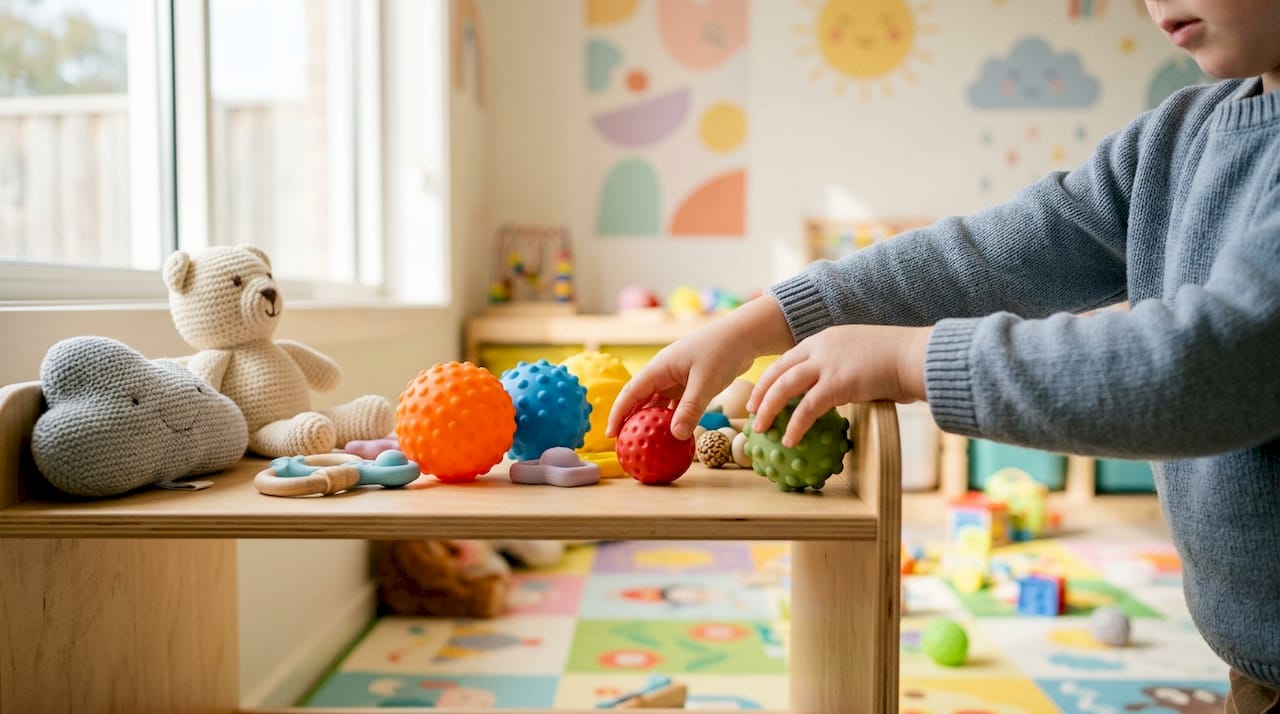
- Toddlers and preschoolers need an adult nearby, not a solo retreat. Co-regulation items work best here: a sensory bottle to shake and watch, bubbles to blow slowly (which doubles as breathing practice), or a soft toy to squeeze while a parent narrates the feeling out loud.
- Early elementary kids can start using a feelings board to identify what’s happening and pick from two or three simple choices. A visual timer, a set of headphones, and putty or a stress ball cover most of what this age group needs.
- Upper elementary and tweens start caring about how “cool” a space looks. Keep the decor neutral, add journaling prompts instead of picture cards, and offer noise-canceling headphones. A private check-in with an adult afterward, rather than a group discussion, respects their growing need for discretion.
- Teens want autonomy more than tools. A journal, a mindfulness app, or a playlist works better than anything that reads as a kid’s toy. Talk through boundaries together, like how long a break can run, rather than dictating rules unilaterally.
Our guide to mindfulness activities for anxiety has a few age-flexible practices worth adapting for tweens and teens who bristle at anything that looks like “little kid stuff.”
Setting Up at Home Versus in the Classroom
The bones of a calming space stay consistent, but home and classroom setups solve different problems. A living room corner can be personal and soft. A classroom corner has to survive twenty-five kids and a teacher who can’t watch it every second.
At home:
- Pick a predictable, low-traffic spot, a nook by a bookshelf works better than the middle of the living room.
- Keep it simple and cozy rather than elaborate; a beanbag and a small basket of tools beats an over-decorated setup nobody wants to maintain.
- Let the child help pick items and colors. Ownership drives voluntary use far more than a perfectly styled corner does.
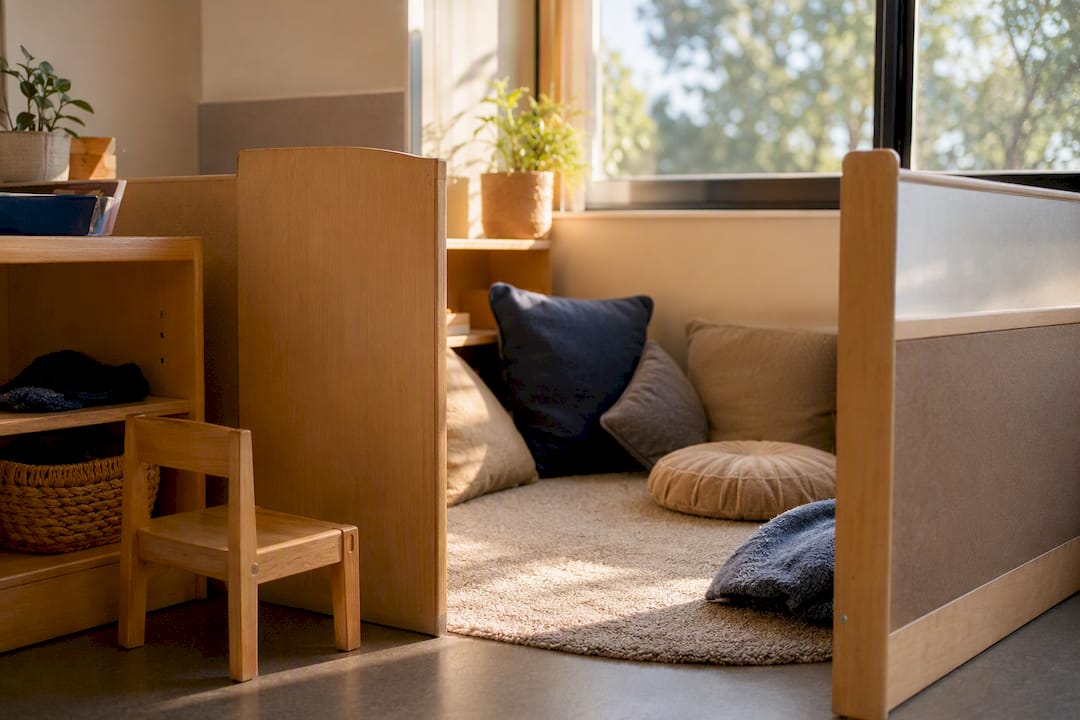
In the classroom, The Watson Institute recommends placing the space in a low-traffic area with soft seating, visible calming strategies, and a visual timer, then explicitly teaching students to use it as a short reset rather than a way to dodge work. Materials need to be sturdier and more neutral than at home, since a dozen different kids will use the same putty and headphones. Teachers should build in brief check-ins and consider a simple “break ticket” system if a student starts using the space too often.
One trade-off worth naming: privacy versus visibility. A child needs to feel unwatched enough to actually decompress, but a teacher or parent still needs a sightline for safety. A low partition or a corner angled away from the main flow of traffic usually threads that needle.
Teaching a Child to Actually Use the Corner
A calm-down corner only works if a child knows how to use it before they need it. Practicing the routine during a calm moment, the way you’d walk through a fire drill, matters more than any item you put in the space. Generation Mindful suggests introducing the space when everyone’s relaxed, then letting the child help name it and pick a tool or two, which builds the buy-in that makes voluntary use possible later.
A simple teaching sequence looks like this:
- Show the child the space and explain what it’s for, in plain, non-punitive language.
- Name the purpose out loud: “this is where we go when big feelings show up.”
- Role-play a visit together during a calm afternoon, not during an actual meltdown.
- Practice the same short routine a few times over the following week.
- Reinforce it warmly every time the child returns to the group.
The micro-routine itself can be tiny: notice the feeling, sit down, choose one tool, take three slow breaths or run a two-minute timer, check in briefly with an adult, then return. Most visits should run three to ten minutes. A visual timer or a simple hand signal works well as the exit cue, so the end of a break feels clear instead of open-ended.
Pro Tip: Practice the routine on a good day at least three times before you ever expect a child to use it during a real meltdown. Skills learned under stress rarely stick the first time.
Where Calm Corners Go Wrong
The most common mistake is turning the corner into a punishment by mistake. Sending a child there in an angry tone, or forcing them to sit until they “behave,” undoes the entire point and teaches them to associate the space with shame instead of relief.
A few other patterns to watch for:
- Too many items. A basket stuffed with ten toys distracts more than it calms. Pare it back to what actually helps that specific child.
- Avoidance creep. If a child starts asking for a break every time work gets hard, set a limit, use a sign-in sheet or break ticket, and retrain the expectation that the corner is for big feelings, not for dodging math homework.
- Skipping the practice step. A corner nobody’s rehearsed using becomes furniture. Revisit the routine periodically, especially after a long break like summer.
Why MindPanda Backs This Approach
We built our product lineup around the same principle clinicians keep pointing to: brief, practiced resets beat long, unstructured breaks. Research on restorative, low-stimulation spaces supports short, repeated practice over extended withdrawal, which lines up with what WebMD and Real Simple both report from working therapists.
A few things we prioritize when we design or recommend items for a calm corner:
- Durable, washable materials that survive daily use in a busy household or classroom.
- Neutral, non-distracting designs so a stress ball doesn’t become the main attraction instead of the calming tool.
- Eco-friendly packaging, because a wellness product shouldn’t create waste on its way to your shelf.
What Most Advice Gets Wrong About Calm Corners
Most guides treat a calm corner like a shopping list problem, buy enough stuff and the meltdowns solve themselves. They don’t. The research consistently points somewhere else: a short, rehearsed routine matters more than the inventory sitting in the basket. A child who’s practiced naming a feeling and taking three breaths will use a bare corner with one cushion better than a child who’s never rehearsed anything will use a corner stocked with every sensory toy on the market.
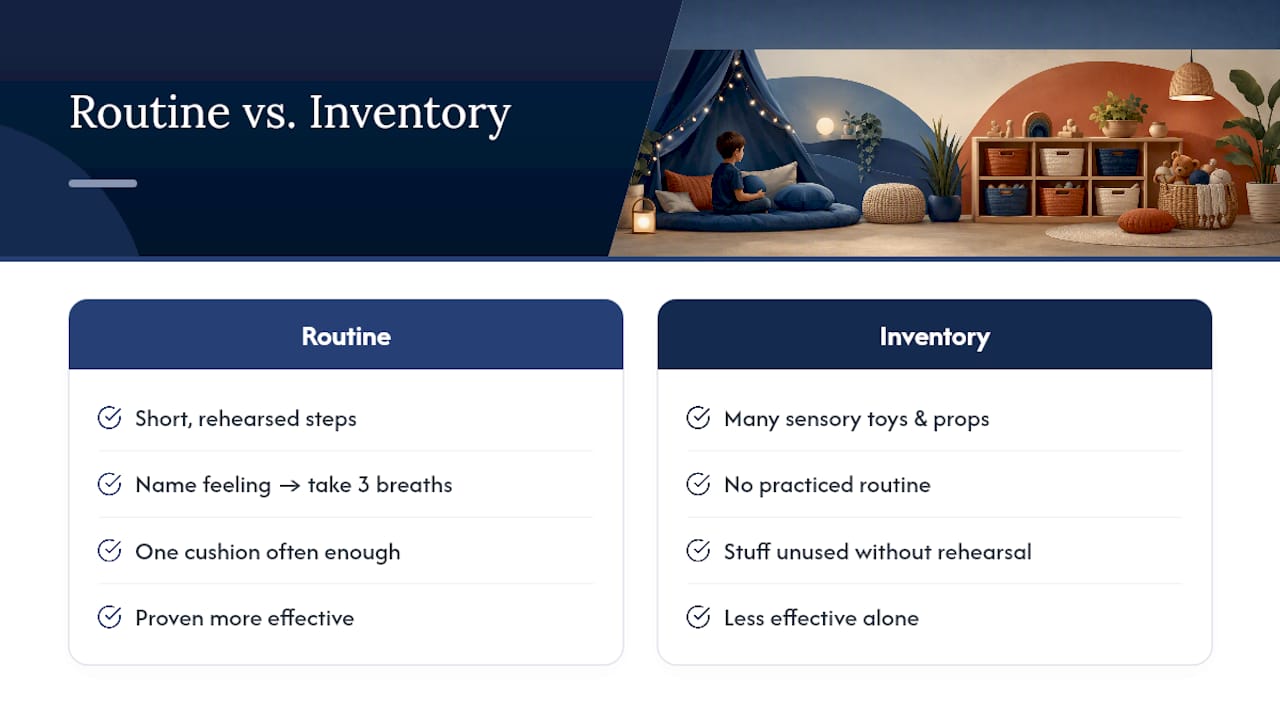
The other place conventional advice falls short is age flexibility. A lot of calm-corner content shows the same glitter jar and feelings chart for every age, then wonders why a twelve-year-old refuses to go near it. Tweens and teens need privacy and dignity more than props.
If you’re starting from zero, prioritize the routine first, the seat and one tool second, and the extras last. Everything else is decoration around a habit that has to be taught, not assumed.
— Ravi
Building Your Calm Corner With MindPanda
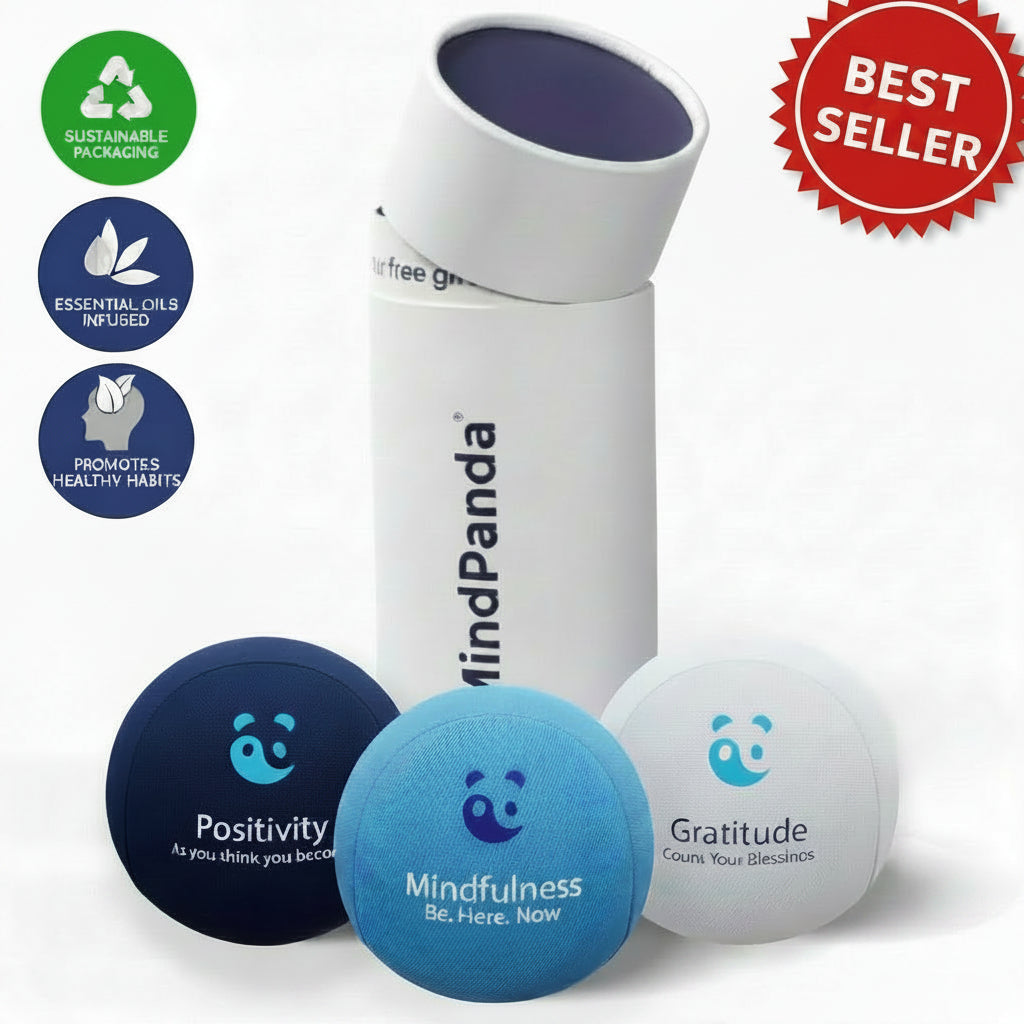
MindPanda is the practical starting point for stocking a calm corner without guessing at what belongs in it. Rather than piecing together items from a dozen different stores, our Mindfulness Wellbeing Bundle groups durable, washable tools, journals, and tactile items that hold up to daily use at home or in a shared classroom space.
If you already know a stress ball or two is your starting tool, our stress ball sets come in themed and aromatherapy options suited to different ages and sensory preferences. Prefer to build the corner your own way? Use Create Your Own Wellbeing Bundle to pick the exact mix of tactile, visual, and reflective tools that match the child you’re setting this up for, then check out and have it ready to place in the corner this week.
Sources
- What’s a Calm Down Corner? What you need to know to create your own
- How to Create a “Calm Corner” at Home—and Why Therapists Swear By Them
- Setting up and using a classroom calming corner
- How to Create a Calm-Down Corner That Actually Helps