Aromatherapy can meaningfully ease anxiety symptoms, but it works best as a complementary tool, not a replacement for treatment. The strongest clinical evidence points to jasmine, citrus aurantium (neroli), and lavender, with measurable drops in anxiety scores after sessions lasting a moderate duration typically associated with trials. It won’t resolve a diagnosed anxiety disorder on its own, and anyone on medication or facing severe symptoms should loop in a clinician before relying on essential oils.
TL;DR:
- Jasmine and citrus aurantium show the strongest effects, but their benefits are mainly observed in short-term, situational anxiety rather than chronic conditions.
- Diffuser use and personal inhalers deliver measurable calming responses, with optimal sessions lasting around 15 to 30 minutes and only a few drops.
- Lavender provides the most consistent evidence for everyday stress relief, though its effect size is smaller compared to jasmine or neroli.
- Aromatherapy primarily influences the nervous system via scent pathways, causing modest reductions in blood pressure and heart rate.
- Use essential oils safely by diluting appropriately, patch-testing, avoiding ingestion, and consulting healthcare providers if on medications or pregnant.
Table of Contents
- Which Essential Oils Have the Strongest Evidence for Anxiety Relief?
- How Does Aromatherapy Work on the Brain and Body?
- How to Use Essential Oils Safely for Anxiety
- What Do Clinical Trials and Meta-Analyses Actually Show?
- Safety Rules, Drug Interactions, and Who Should Avoid Essential Oils
- Simple Aromatherapy Routines Worth Trying
- Where Aromatherapy Fits Into a Real Self-Care Routine
- Pair Your Aromatherapy Routine With a Few Simple Tools
- Sources
Which Essential Oils Have the Strongest Evidence for Anxiety Relief?
Not all essential oils carry equal weight in the research. A 2023 network meta-analysis pooling numerous randomized controlled trials involving thousands of participants ranked specific oils against each other, and the results surprised a lot of people who assumed lavender would win by default. It’s still a strong contender. It’s just not alone at the top.
Jasmine came out ranked highest for state anxiety, the acute, in-the-moment kind you feel before a flight or a big presentation. The meta-analysis of randomized controlled trials recorded a notable reduction on State Anxiety Inventory scores for jasmine specifically, a far larger drop than most other oils tested. Jasmine’s floral, slightly narcotic scent profile seems to trigger a fast sedative response, which may explain why it performs so well in short, situational trials.
Citrus aurantium, the bitter orange tree that also produces neroli oil, ranked highest for trait anxiety, the longer-running, more persistent kind. Its a significant reduction on Trait Anxiety Inventory scores in the same pooled analysis. Neroli shows up often in preoperative anxiety trials, where patients inhale it in a waiting room before a procedure, and the consistency of those results is part of what pushed it up the rankings.
Lavender (Lavandula angustifolia) remains the most studied oil in this entire field, and for good reason: it delivers consistent, moderate effects across dozens of trials rather than one or two outlier studies. Using lavender for relaxation has decades of practitioner tradition behind it, and the clinical data now backs a good chunk of that reputation, particularly for milder, everyday stress rather than acute panic. Both inhaled lavender and some oral lavender oil products have shown benefit, though the oral versions cross into supplement territory and carry their own regulatory questions.
Rose (Rosa damascena or Rosa rugosa) shows up in several trials with measurable physiological benefit, including changes in subjective calm ratings and some autonomic markers. It’s a heavier, sweeter scent than lavender, which some people find more soothing and others find cloying. That personal reaction matters more than you’d think.
Bergamot has a body of research showing benefits for both mood and physiological stress markers, often tested in massage or diffuser combinations rather than alone. Its bright, slightly bitter citrus note tends to feel energizing rather than sedating, which makes it a common pick for daytime anxiety rather than bedtime routines.
Lemon and other citrus oils have produced some positive trials, but the pattern is less consistent than lavender or jasmine. Part of the problem is heterogeneity: “lemon oil” in one study might come from a different lemon variety, a different extraction method, or a different concentration than “lemon oil” in another. That variability runs through this entire field. Species matters (Lavandula angustifolia behaves differently than Lavandula latifolia), chemotype matters, and dose and delivery method both shift outcomes enough that direct comparisons between studies get messy fast.
A few things worth keeping in mind before picking an oil:
- Jasmine and citrus aurantium show the largest effect sizes, but most of that data comes from short-term, situational anxiety trials, not chronic generalized anxiety disorder.
- Lavender has the deepest and most consistent research base overall, even if its individual effect size isn’t the largest.
- Rose and bergamot show real but more modest benefits, often in combination formulas.
- Citrus oils like lemon show promise but the evidence base is thinner and more mixed.
- Extraction method and species matter enough that a cheap, unlabeled oil may not behave like the one used in the clinical trial.
How Does Aromatherapy Work on the Brain and Body?
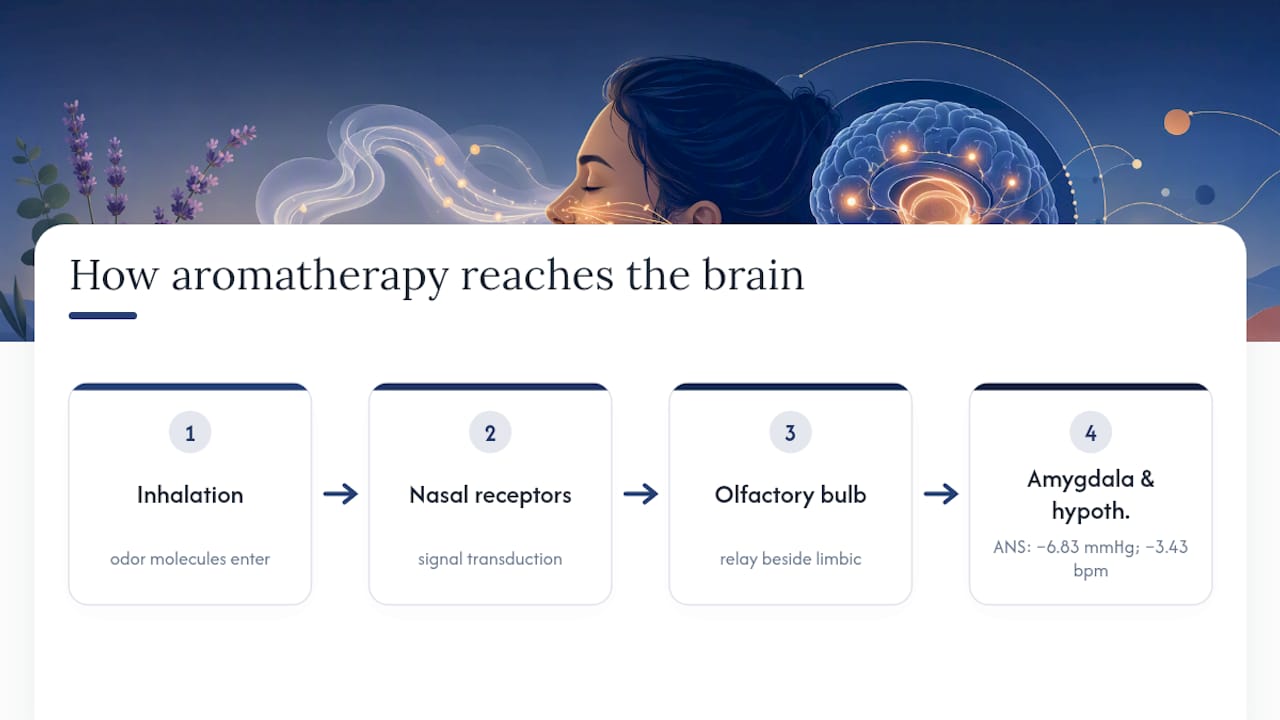
Smell has a more direct route to the emotional centers of your brain than any other sense. When an odor molecule hits receptors in your nasal cavity, the signal travels almost immediately to the olfactory bulb, which sits right next to the amygdala and hypothalamus, the structures most involved in processing fear, stress, and emotional memory. That’s the biological reason a specific scent can trigger a flood of feeling before you’ve consciously registered what you’re smelling.
Physiologically, several trials have measured what happens after an aromatherapy session, not just what people report feeling. Pooled data from a systematic review and network meta-analysis found systolic blood pressure dropped by a weighted mean difference of −6.83 and heart rate dropped by −3.43 following essential oil exposure. Those are modest but real shifts in autonomic nervous system activity, generally read as a move toward parasympathetic dominance, the “rest and digest” state that counters the fight-or-flight response anxiety triggers.
Some of this effect traces back to specific chemical constituents. Linalool, a compound abundant in lavender and found in smaller amounts in bergamot and other oils, has been studied for its interaction with GABA receptor activity, the same neurotransmitter system targeted by several anti-anxiety medications. That doesn’t mean lavender works like a sedative drug. It means there’s a plausible chemical mechanism behind an effect that isn’t purely psychological.
But the psychological part is real too, and probably underrated. Expectancy, personal scent preference, and simple distraction from a stressful thought all contribute to how someone responds to an oil. Johns Hopkins Medicine notes that individual response to aromatherapy varies significantly, and a scent someone associates with a calm memory, a grandmother’s garden, a vacation, a childhood home, may outperform a “better” oil on paper simply because of that association. This is why testing a few oils yourself matters more than chasing whichever one ranked highest in a trial.
How to Use Essential Oils Safely for Anxiety
Getting the delivery method right changes how much benefit you actually get, and getting the dilution wrong is the fastest way to turn a calming tool into a skin problem.
1. Diffuser sessions for ambient calm. Use an ultrasonic diffuser in a room with reasonable airflow, adding 3 to 5 drops of essential oil per 100 milliliters of water for an average bedroom-sized space. Run it for a moderate duration, the window most trials associate with measurable mood and physiological change, rather than leaving it running all day, which can dull your sensitivity to the scent.
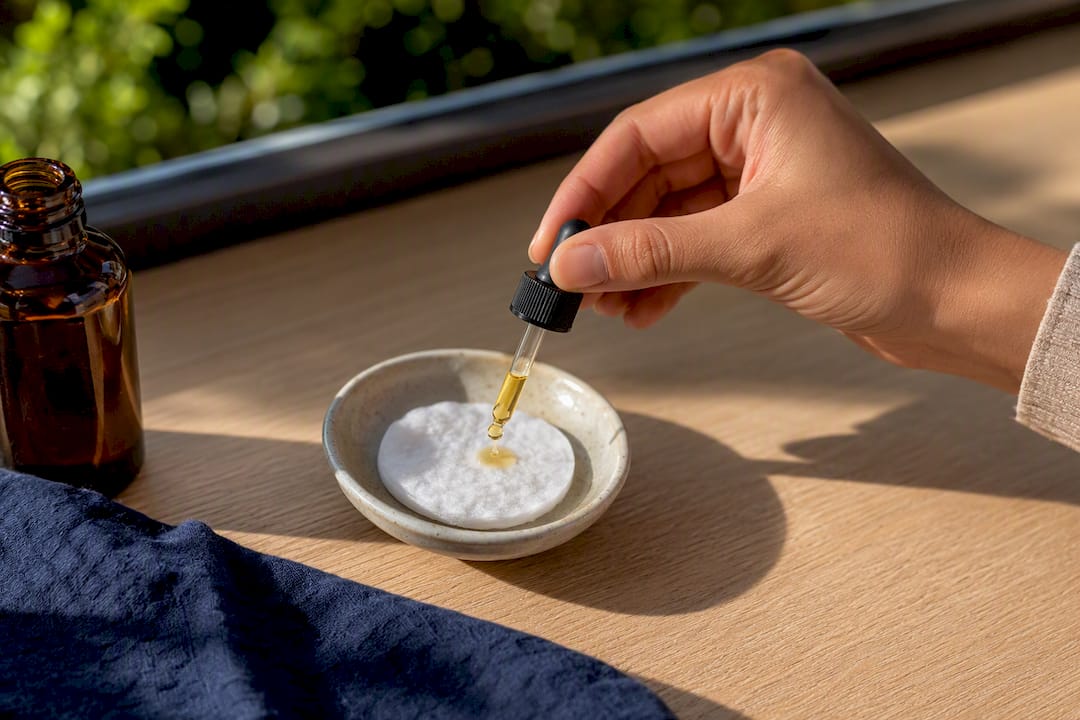
2. Personal inhalers for acute anxiety. For a panic spike, a big meeting, or a flight, a personal aromatherapy inhaler stick or a few drops on a cotton pad sealed in a small container gives you a portable, concentrated dose. Bring it to your nose and take 1 to 3 slow, deliberate breaths. This matches how neroli and other oils are used in preoperative anxiety trials, where patients inhale directly from a strip or cotton ball rather than sitting near a diffuser.
3. Topical application, properly diluted. For daily use on skin, a conservative dilution is 1% essential oil to carrier oil, which works out to about 6 drops of essential oil per ounce of a carrier like jojoba, sweet almond, or fractionated coconut oil. Never apply undiluted essential oil directly to skin.
4. Patch test every new oil. Apply a diluted drop to your inner forearm and wait 24 hours before using it anywhere else. Redness, itching, or a rash means that oil isn’t for you, full stop, regardless of how good its clinical data looks.
5. Never ingest essential oils unless directed by a qualified healthcare provider trained in clinical aromatherapy. Oral use changes the risk profile entirely and isn’t something to improvise from a blog post, including this one.
Pro Tip: Keep a rollerball of diluted lavender or bergamot in your bag for commutes, waiting rooms, or right before a stressful call. The ritual of pulling it out and taking a few slow breaths does double duty: the scent itself and the deliberate pause both work in your favor.
What Do Clinical Trials and Meta-Analyses Actually Show?
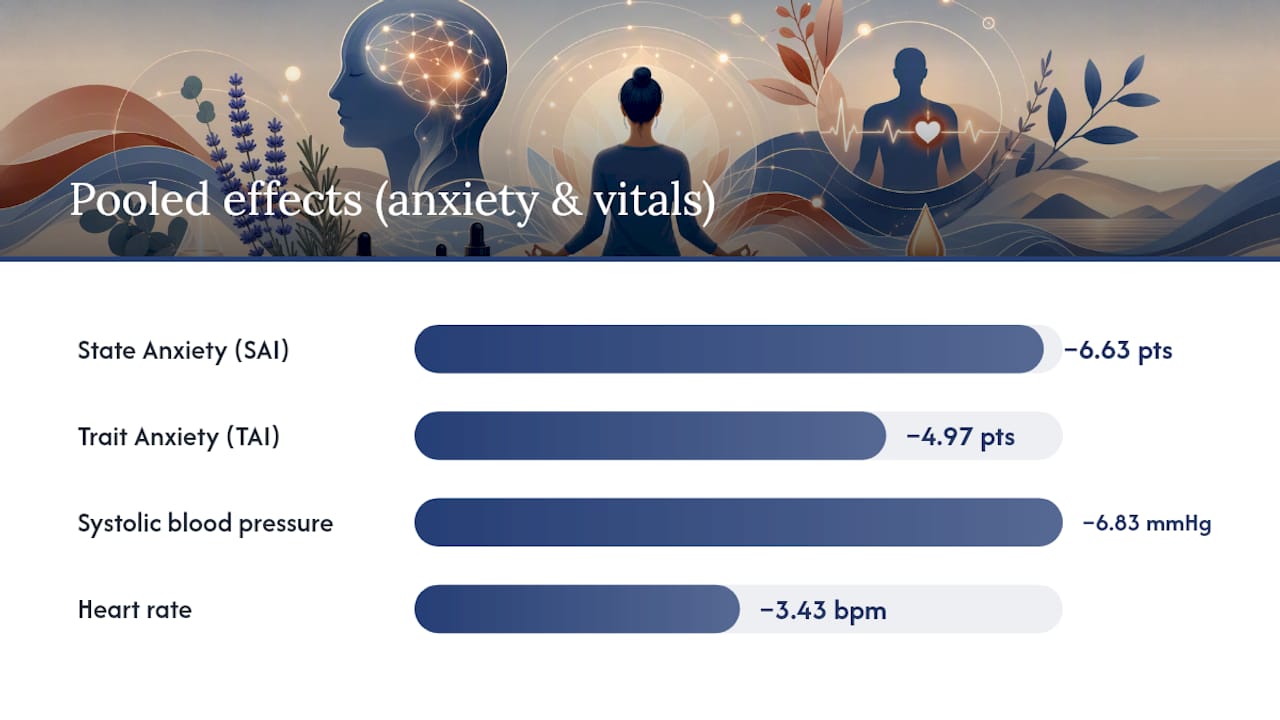
The headline numbers are worth sitting with, because they put a real shape around a claim that’s often left vague in wellness content. Pooling 44 RCTs, researchers found essential oils produced a weighted mean difference of −6.63 on State Anxiety Inventory scores and −4.97 on Trait Anxiety Inventory scores, alongside drops of −6.83 in systolic blood pressure and −3.43 in heart rate, according to the meta-analysis of randomized controlled trials. Those aren’t dramatic swings. They’re the kind of moderate, real effect you’d expect from a genuinely useful complementary tool rather than a cure.
| Measure | Pooled effect (WMD) | What it means |
|---|---|---|
| State Anxiety Inventory (SAI) | −6.63 | Meaningful drop in acute, situational anxiety |
| Trait Anxiety Inventory (TAI) | −4.97 | Smaller but real drop in longer-running anxiety tendency |
| Systolic blood pressure | −6.83 | Modest reduction in a key stress marker |
| Heart rate | −3.43 | Small shift toward calmer autonomic state |
Jasmine and citrus aurantium were the standout performers in the network meta-analysis, ranking highest for state and trait anxiety respectively among all oils tested. That ranking system matters because it lets researchers compare oils against each other directly rather than each against a placebo in isolation.
The caveat that deserves real attention: much of this evidence comes from situational anxiety, preoperative patients waiting for surgery, people facing a specific stressful procedure, rather than people managing generalized anxiety disorder day after day. Sample sizes in individual trials tend to run small, populations vary widely, and extraction methods aren’t always standardized between studies, which is exactly the heterogeneity problem mentioned earlier with citrus oils. None of that erases the pooled signal. It does mean the honest takeaway is “likely helpful for situational and mild to moderate anxiety, especially as an add-on” rather than “clinically proven anxiety treatment.”
Compared to pharmacological options or cognitive behavioral therapy, aromatherapy sits in a different category entirely. CBT has a much larger and more consistent evidence base for treating diagnosed anxiety disorders, and medications like SSRIs work through mechanisms aromatherapy doesn’t approach. Aromatherapy’s real strength is as a low-risk layer added on top of those approaches, or as a first line of defense for everyday stress that hasn’t reached clinical severity.
Safety Rules, Drug Interactions, and Who Should Avoid Essential Oils
Essential oils are concentrated plant chemistry, and concentrated plant chemistry can interact with medications the same way grapefruit juice does with certain prescriptions.
- Anyone taking anticoagulants, sedatives, or SSRIs should talk to a pharmacist or doctor before regular essential oil use, since some plant compounds affect the same metabolic pathways as these medications, a concern raised in reviews of herbal supplements with anxiolytic and sedative action.
- Pregnant or breastfeeding individuals should avoid unsupervised use of concentrated oils; safety data for this group remains limited, and several commonly used oils are specifically flagged as ones to avoid during pregnancy.
- Children need far lower dilutions than adults, if oils are used at all, and some oils are considered unsuitable for young children entirely.
- Anyone with a history of skin sensitivity, asthma, or fragrance allergies should patch-test rigorously and consider starting with hydrosols or very light diffusion instead of topical application.
Product quality is its own safety issue, separate from the oil itself. Adulteration, cutting a genuine essential oil with synthetic fragrance or a cheaper oil, is common enough in this industry that buying blind from an unfamiliar seller is a real risk. Look for suppliers who publish GC/MS (gas chromatography-mass spectrometry) testing results for each batch, list botanical names and lot numbers on the label, and can tell you where the plant material was grown. If a supplier can’t answer basic sourcing questions, that’s a signal to look elsewhere.
Know when to step back from aromatherapy entirely. If anxiety is severe, persistent, or interfering with daily function, essential oils are not the right first response. The NCCIH’s guidance on complementary approaches to anxiety is direct about this: these tools support care, they don’t substitute for it, especially for anyone with a diagnosed condition or on existing medication.
Simple Aromatherapy Routines Worth Trying
Building a routine beats randomly sniffing oils when you’re already stressed, because consistency is part of what makes the effect measurable in the first place.
- Morning focus blend: 2 drops bergamot and 2 drops lemon in a diffuser for 15 minutes while getting ready. Bright citrus notes tend to feel activating rather than sedating, useful for anxious mornings that need calm plus alertness.
- Midday reset: A personal inhaler with lavender and a touch of rose, used for 1 to 3 breaths during a break or before a stressful meeting.
- Evening wind-down: Diffuse lavender alone, or lavender with a drop of neroli, for 20 to 30 minutes starting an hour before bed. This pairs naturally with a wind-down ritual like journaling before sleep, which gives the mind something structured to do instead of spiraling.
- On-the-go acute stress kit: A lava bead bracelet or small rollerball with diluted jasmine or bergamot, kept in a bag or desk drawer for flights, waiting rooms, or sudden spikes in anxiety.
- Workplace-safe option: A cotton pad with 1 to 2 drops sealed in a small tin, since not every office allows diffusers running at a desk.
Adjust these based on your own scent preference, since personal association with a scent plays a real role in how well it works for you specifically. Tracking helps too: a quick 1 to 10 anxiety rating before and after a session, jotted in a notebook or mindfulness journal, turns a vague impression into a pattern you can actually trust over a few weeks.
Where Aromatherapy Fits Into a Real Self-Care Routine
The gap between what aromatherapy promises online and what the research actually supports is smaller than skeptics assume, but it’s still a gap. The data backs jasmine, citrus aurantium, and lavender as genuinely useful for situational and mild anxiety. It doesn’t back the idea that a diffuser replaces therapy or medication for anyone dealing with a diagnosed disorder.
What the research doesn’t fully capture is how much aromatherapy works as a cue, a signal to your nervous system that it’s time to slow down, paired with whatever else you’re doing in that moment. That’s part of why Scent can be treated as one piece of a broader self-care toolkit rather than a standalone fix. Start with one oil, test it honestly for a couple of weeks, and keep the dilution conservative. Safety first, curiosity second.
— Ravi
Pair Your Aromatherapy Routine With a Few Simple Tools
Building a calming routine gets a lot easier when you’re not hunting for five different products from five different sellers. Mindpanda’s Create Your Own Wellbeing Bundle lets you combine a journal, a stress ball, and other grounding tools into one curated set, shipped in eco-friendly packaging, so your evening wind-down routine has everything it needs in one place instead of scattered across a dozen tabs.
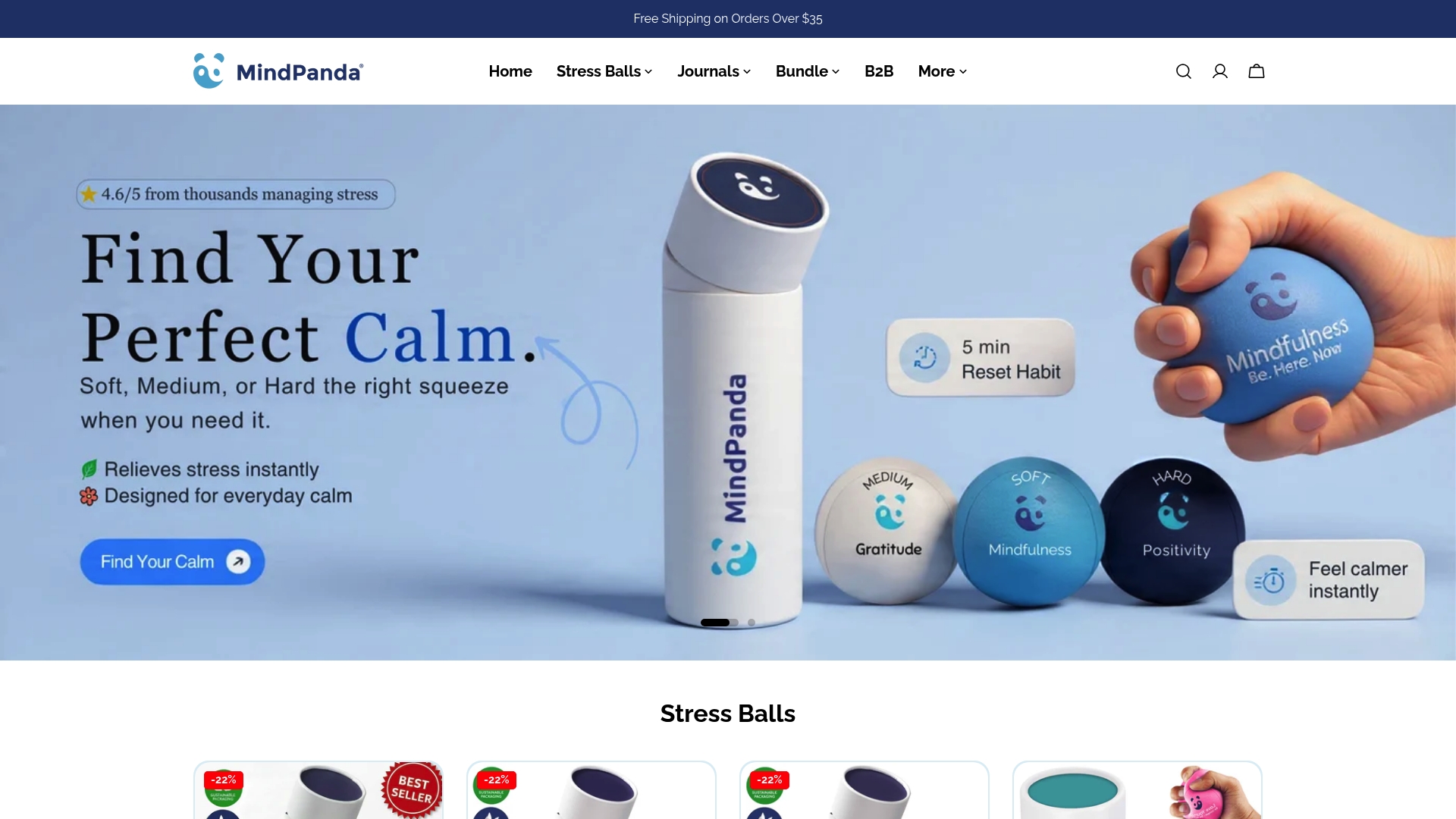
If you’d rather start with a single anchor piece, the Balance daily productivity planner works well as the tracking half of an aromatherapy routine, giving you a place to jot that quick before-and-after anxiety rating mentioned earlier. Pick either option, add your own essential oil routine on top, and give it two honest weeks before judging whether it’s working for you.
This article is general information, not a substitute for advice from a qualified doctor. Consult a qualified healthcare professional about your own circumstances before acting on anything here.
Sources
- Effects of aromatherapy on anxiety: A meta-analysis of randomized controlled trials (2023)
- Essential oils for treating anxiety: a systematic review and network meta-analysis (Frontiers, 2023)
- Aromatherapy: Do essential oils really work? | Johns Hopkins Medicine
- Anxiety and complementary health approaches | NCCIH