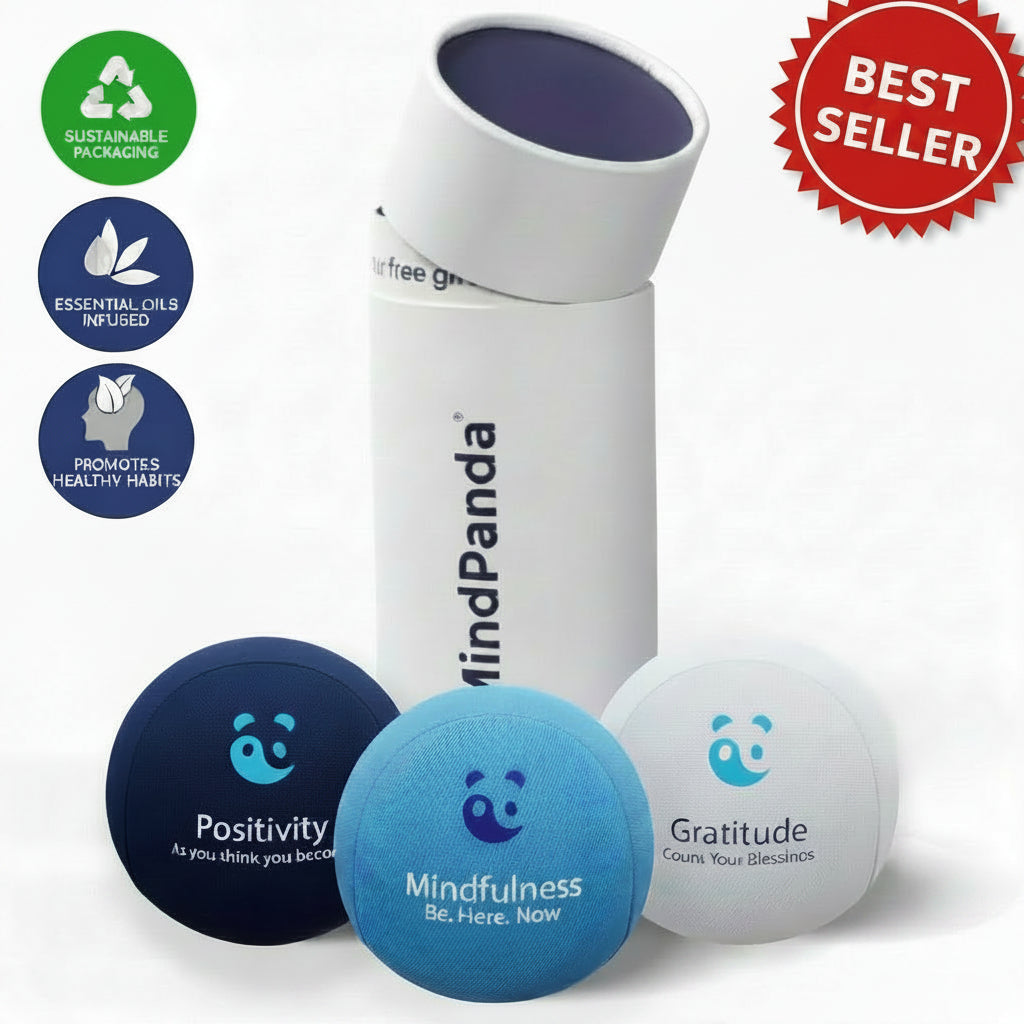
The highest-impact Mental Health Awareness Month ideas you can run this May include: a screening pop-up linked to Mhascreening, a Be Seen in Green campaign, guided mindfulness sessions, a gratitude-journaling drive, a community walk or move-for-mental-health challenge, an art-share or open-mic event, a social hashtag campaign using #MoreGoodDays, a workplace wellness challenge, a bulletin board reflection station, and a low-barrier giveaway with journals or wellness bundles. The 2026 Mental Health Month Planning Guide from Mental Health America organizes these into engagement events, skill-building workshops, and supportive practices — a framework worth bookmarking before you plan a single detail.
Three immediate next steps:
- Pick your audience. Workplace, school, community, or virtual? Each needs a different lead activity and communication style.
- Choose one lead activity with a clear, measurable goal: screening sign-ups, attendees, or funds raised.
- Set one measurable outcome before you book anything — attendance alone tells you almost nothing useful.
Pro Tip: Hand people something they can take home. A journal, a QR card linking to mhascreening.org, or a small wellness bundle gives participants a private, low-pressure next step after the event ends.
Key Takeaways
Mental Health Awareness Month works best when you pair one measurable goal with a mix of active and reflective options, a visible referral pathway, and at least one tangible item participants can take home.
| Point | Details |
|---|---|
| Start with one measurable goal | Define attendance, screening completions, or funds raised before booking anything else. |
| Mix activity formats | Pair high-energy options (walks, challenges) with calm ones (journaling, screening stations) to reach more people. |
| Always include a referral pathway | Post 988, mhascreening.org, and local crisis lines on every printed material and digital asset. |
| Use MHA’s free resources | The 2026 Planning Guide and Action Guide include printables, social copy, and campaign templates ready to adapt. |
| Mindpanda bundles simplify giveaways | Pre-built or custom wellness bundles reduce sourcing time and give participants a private, low-pressure takeaway. |
Table of Contents
- What are the best mental health awareness month ideas by type?
- How to run Mental Health Awareness Month activities at work
- School and youth program ideas that are age-appropriate and safe
- Community and nonprofit event ideas that connect people to local resources
- Virtual and social media campaign ideas that reach remote audiences
- How to use bulletin boards, posters, and printables effectively
- How to plan your campaign: timeline, budget, and evaluation
- Safety, inclusivity, and referral best practices
- Authoritative resources and partner organizations to use
- What the research shows about effective mental health month programming
- Why one small, inclusive activity often matters more than a big flashy event
- Mindpanda wellbeing bundles as event giveaways and welcome kits
- Sources
What are the best mental health awareness month ideas by type?
The 2026 Mental Health Month Action Guide centers this year’s campaign on “More Good Days, Together” — a theme that works equally well for a 10-person team meeting and a 500-person community event. Below is a numbered inventory of ready-to-run ideas. Each entry includes a one-line execution note and an audience tag.
Engagement events
- Community mental health walk or run — Partner with a local park or recreation department; collect pledges for a local MHA affiliate. (Community, workplace)
- Be Seen in Green Day — Ask participants to wear green on a set date; pair with a social post and a screening QR code. (All audiences)
- Open-mic or storytelling night — Recruit 4–6 speakers with lived experience; set a 5-minute time limit per story and brief a trained facilitator. (Community, college)
- Mental health art show — Invite submissions on a theme like “What a good day looks like”; display in a lobby, library, or online gallery. (School, community, virtual)
- Pop-up screening station — Set up a table with tablets or printed QR codes linking to mhascreening.org; staff it with a trained volunteer. (Workplace, community)
- Gratitude wall or post-it board — Post the prompt “What helped you today?” on a bulletin board; photograph and share results with permission. (School, workplace)
Skill-building workshops
- Guided mindfulness session — A 20-minute session led by a certified mindfulness teacher works at lunch or as a virtual webinar. (Workplace, school, virtual)
- Sleep hygiene workshop — Cover the basics from MedlinePlus evidence-based self-care guidance: consistent sleep schedule, screen limits, and wind-down routines. (All audiences)
- Journaling for stress relief — Provide a simple prompt sheet and a journal; no sharing required. (School, workplace, virtual)
- Nutrition and mood lunch-and-learn — A 30-minute session on how diet affects mood, grounded in the American Psychiatric Association’s lifestyle categories: physical activity, diet, sleep, social connection, and mind-body practices. (Workplace, community)
- Move for Mental Health challenge — A 30-day step or movement tracker shared via a group app or printed log. (Workplace, school, virtual)
Low-pressure supportive practices
- Anonymous peer support circle — Small, optional groups of 6–8 with a trained facilitator; no pressure to share. (Workplace, college)
- Daily micro-break reminders — Push a 2-minute breathing prompt via Slack, email, or a posted card each morning. (Workplace, virtual)
- Mental health book club — One book per month; discussion is optional and kept light. (School, community, virtual)
- Mood-check bulletin board — Color-coded sticky notes let people mark how they’re feeling without words. (School, workplace)
Fundraising and advocacy
- Pledge drive for a local MHA affiliate — Tie pledges to a physical activity (steps, miles) for built-in engagement. (Community, workplace)
- Day of Action or advocacy town hall — Invite a local official or clinician to discuss community mental health resources. (Community)
- Bake sale or raffle with a mental health theme — Proceeds go to a named local organization; disclose the recipient publicly. (School, community)
Awareness campaigns
- #MoreGoodDays social challenge — Ask followers to post one thing that made their day good; reshare with permission. (Virtual, all)
- Testimonial video series — 60-second clips from staff, students, or community members; captions required. (Workplace, school, virtual)
- Light-up-green building display — Contact facility managers and city officials at least 6–8 weeks in advance for permitting. (Community)
- Email newsletter series — One evidence-based tip per week for four weeks; link each to a screening or resource page. (Virtual, workplace)
How to run Mental Health Awareness Month activities at work
The single best workplace move this May is pairing an anonymous screening link with one optional, low-pressure activity — a lunch-and-learn or a mindfulness session — so employees have both information and a private path to act on it. The WHO’s workplace mental health guidance confirms that effective employer-facing programs combine awareness with concrete support structures, not just one-off events.
Six concrete workplace ideas:
- Lunch-and-learn with a licensed clinician — 45 minutes, recorded for those who can’t attend live; Q&A is anonymous via a chat box.
- Anonymous screening pop-up — Set up a quiet station with tablets linked to mhascreening.org; no sign-in required.
- Move for Mental Health challenge — A two-week step or activity tracker shared in a team channel; participation is opt-in.
- Micro-break mindfulness sessions — Three 5-minute guided breathing sessions per week, posted as audio files or run live at 10 AM. See Mindpanda’s mindfulness activities for adults for ready-to-use scripts.
- Be Seen in Green fundraiser day — One designated Friday; match employee donations to a local MHA affiliate up to a set cap.
- Manager communication toolkit — A one-page template reminding managers how to refer employees to the EAP without diagnosing or pressuring.
HR checklist before launch:
- Send EAP reminder with direct phone number and website link two weeks before May 1.
- Share the confidential screening link (mhascreening.org) in all internal communications.
- Brief managers on language: “I noticed you seem stressed — our EAP is available if you want support” is enough.
- Confirm all activities are opt-in and that no participation data is tied to individual employees.
- Check accessibility: captions on videos, quiet room options for sensory-sensitive staff, and language access for non-English speakers.
Sample weekly schedule for a 50-person company:
- Week 1: EAP email + screening link; green ribbon at reception desk.
- Week 2: Lunch-and-learn (recorded); post-it gratitude wall in the break room.
- Week 3: Move for Mental Health challenge kicks off; daily micro-break audio posted to Slack.
- Week 4: Be Seen in Green day; manager debrief and anonymous feedback survey.
For a 500-person organization, layer in department-level champions who run the same schedule locally, and add a virtual option for remote staff at every step.
Pro Tip: Never make mental health activities feel mandatory. Frame every communication as “here’s something available” rather than “here’s what we’re doing together.” Employees who feel watched or pressured are less likely to use the resources you’re offering.
School and youth program ideas that are age-appropriate and safe

Schools should lead with low-pressure, guided activities and clear referral pathways before anything else. A student who feels seen but not put on the spot is far more likely to seek help when they need it.
Ideas by age group:
- Elementary (K–5): Mood-check bulletin board with color-coded faces; read-aloud of a picture book about feelings; simple breathing exercise led by the teacher.
- Middle school (6–8): Guided journaling with optional sharing; art project on “what helps me feel calm”; counselor-led classroom visit with a Q&A.
- High school (9–12): Student-led peer support booth in the hallway; mental health book list with discussion prompts; anonymous screening QR code posted in the counselor’s office and restrooms.
- College/university: Peer educator panel; campus walk for mental health; free journal giveaway at the student union with a screening link attached.
Safety notes for working with minors:
- Train all staff on the difference between a student venting and a student in crisis before any activity launches.
- Post the 988 Suicide and Crisis Lifeline number visibly at every event and in every printed material.
- Route any student who discloses distress to a licensed school counselor immediately — do not attempt peer counseling without training.
- Involve parents or guardians when a student’s safety is at risk; for non-emergency disclosures, follow your district’s confidentiality policy.
- Use safe messaging guidelines from state toolkits (the Minnesota Department of Health’s 2026 toolkit includes sample weekly messaging and suicide-safe communication scripts you can adapt).
Sample parent/guardian email template:
Pro Tip: Post the 988 number and a local crisis line on every printed material, even if the activity is low-key. Students notice when it’s there — and when it isn’t.
Community and nonprofit event ideas that connect people to local resources

The highest-impact community move is a mixed-format event: one low-pressure activity (a walk, an art station, a journaling table), one resource access point (a screening station or provider Q&A), and one storytelling element (a speaker or a shared display). That combination reaches people at different readiness levels without requiring anyone to raise their hand publicly.
Six event templates:
- Community screening with provider Q&A — Partner with a local clinic or MHA affiliate; set up a screening station and a 20-minute Q&A with a licensed clinician.
- Art-share mural or community project — Invite contributions to a public theme; display in a library, community center, or online.
- Advocacy town hall or Day of Action — Invite a local official, a clinician, and a lived-experience advocate; keep it to 90 minutes with a clear agenda.
- Pop-up screening station at the library — Libraries are trusted, neutral spaces; staff the station with a trained volunteer and printed resource cards.
- Light-up-green building coordination — Contact city officials and facility managers at least 6–8 weeks in advance; if time is short, pivot to window displays or green ribbon distributions at local businesses.
- Walk or run fundraiser — Partner with a local park department; tie pledges to a named MHA affiliate and publish the total raised.
Partnership checklist:
- Local MHA affiliate (find yours at mhanational.org)
- Public library system
- City parks and recreation department
- Local businesses willing to display green lighting or posters
- Community health clinics or federally qualified health centers
- Faith communities (with sensitivity to diverse beliefs)
Outreach template for partners:
Pro Tip: If you’re short on lead time for a light-up-green event, green ribbon distributions at local businesses or a window-display campaign require no permits and can be organized in under two weeks.
Virtual and social media campaign ideas that reach remote audiences
Mix scheduled live sessions with always-on social assets and a clear CTA — specifically a screening link — so people who can’t attend live still have a path to resources. A campaign that runs only during a single Zoom call misses most of its potential audience.
Campaign building blocks:
- Week-by-week content calendar — Assign a theme per week (e.g., Week 1: movement; Week 2: sleep; Week 3: connection; Week 4: seeking help) and batch-create posts in advance.
- #MoreGoodDays hashtag challenge — Ask followers to post one thing that contributed to a good day; reshare with permission and a screening link in every caption.
- Testimonial video series — 60-second clips from real participants; always include captions and a plain-language description in the post.
- Micro-learning email series — One evidence-based tip per week drawn from Mindpanda’s mental health resources; link each email to a screening tool or a specific resource page.
- Guided audio session — A 10-minute recorded mindfulness session posted to your website or YouTube; pin it to your social profiles for the month.
- Virtual walk or run tracker — Use a free app like Strava or a shared spreadsheet; post weekly totals to keep momentum.
Five social post templates:
- “This May, we’re sharing what makes a good day. Drop yours in the comments. 💚 #MoreGoodDays #MentalHealthMonth”
- “One small thing you can do right now: take three slow breaths. Seriously. [Link to guided session]”
- “Free, anonymous mental health screening — takes 2 minutes. No sign-in required. [mhascreening.org]”
- “Wear green on [date] and tag us. Every post = one more person who sees they’re not alone. #BeSeenInGreen”
- “This week’s focus: sleep. Here’s one change that actually helps. [Link to sleep tip post]”
Accessibility checklist:
- Add captions to every video, including live streams (use auto-captions and review for accuracy).
- Write alt text for every image: describe what’s shown, not just the mood.
- Use plain language in all descriptions — aim for an 8th-grade reading level.
- Offer an asynchronous option (recorded session, downloadable resource) for every live event.
Measuring impact: Track screening link clicks, email open rates, hashtag reach, and session sign-ups. After the month ends, send a two-question anonymous survey: “Did this campaign connect you to a resource?” and “What would you change?” Those two answers tell you more than impressions alone.
Pro Tip: Schedule your social posts in batches at the start of each week. Campaigns that rely on daily manual posting almost always go quiet by Week 3.
How to use bulletin boards, posters, and printables effectively
Printable materials extend your reach beyond the event itself — but only when they carry a clear CTA. A poster without a QR code or a phone number is decoration. Every piece of physical material should point somewhere: mhascreening.org, the 988 Lifeline, a local resource page, or an event sign-up.
Poster text snippets you can adapt:
- “One in five adults experiences a mental health condition each year. You’re not alone. Free screening: [QR code]”
- “May is Mental Health Awareness Month. What does a good day look like for you? 💚”
- “Talk to someone. Text or call 988. It’s free, confidential, and available 24/7.”
- “Join us: [Event Name], [Date], [Location]. Free and open to all.”
Bulletin board prompts that invite participation without pressure:
- “What helps you have a good day? Write it on a post-it and add it to the board.”
- “One thing I do to take care of myself: ___”
- “A person who supports my mental health: ___” (first names or initials only)
- “A resource I’ve found helpful: ___”
QR code placement tips:
- Eye level on bulletin boards and at reception desks.
- Bottom-right corner of every poster (where eyes naturally land last).
- On table tents at lunch tables, waiting rooms, and registration tables.
- On the back of every physical handout.
MHA’s site hosts ready-to-use printable graphics and sample social copy you can download and customize without starting from scratch.
Toolkit items worth distributing:
- Pocket journals with a printed prompt on the inside cover
- Wallet cards listing the 988 Lifeline, a local crisis line, and mhascreening.org
- Stress-relief items (stress balls, fidget tools) paired with a coping tip card
- Wellness calendars with one small daily action per day in May
Pro Tip: Print QR codes at least 1.5 inches square and test them from 3 feet away before your event. A QR code that doesn’t scan is worse than no QR code — it signals disorganization to the people you’re trying to reach.
How to plan your campaign: timeline, budget, and evaluation
Define one measurable outcome per activity before you book a venue or print a poster. “Raise awareness” is not a goal. “Generate 50 screening completions” is.
Four-week planning timeline:
| Week | Key Tasks |
|---|---|
| Week 1 (early April) | Confirm audience, lead activity, and measurable goal; identify partners; submit permit applications for any public events or building light-ups |
| Week 2 (mid-April) | Book speakers or facilitators; order printed materials and giveaway items; draft social posts and email templates |
| Week 3 (late April) | Finalize logistics (venue, tech, accessibility); send partner and staff briefings; launch pre-event social posts |
| Week 4 (May, event week) | Run activities; staff screening stations; collect sign-in sheets or digital RSVPs; post daily social content |
| Post-event (late May) | Send follow-up email with resources; distribute anonymous feedback survey; compile metrics and share with partners |
Budget estimates:
- Low cost (under $200): Printed posters and QR cards, post-it board supplies, green ribbons, and a free virtual session using Zoom or Google Meet.
- Mid-range ($200–$800): Speaker honorarium, journal giveaways, a small wellness bundle order, and light refreshments for an in-person event.
- Higher investment ($800+): Venue rental, professional facilitator fee, bulk wellness bundle order, and a paid social media boost.
Post-event evaluation questions:
- How many people completed a screening or clicked the screening link?
- Did participants report connecting to a new resource or making a behavior change? (Ask via a 2-question anonymous survey.)
- What percentage of attendees said they would recommend the event to someone else?
These three questions give you quantitative reach data, qualitative behavior-change signal, and a net promoter proxy — enough to write a credible impact report for funders or leadership.
Safety, inclusivity, and referral best practices
Always include a clear, visible referral pathway — the 988 Suicide and Crisis Lifeline, mhascreening.org, and local crisis lines — and assign a trained facilitator whenever your programming touches sensitive topics. This is not optional.
Trauma-informed event checklist:
- Offer a content note before any session that includes personal stories or mental health disclosures.
- Make participation optional at every step; never call on individuals or require sharing.
- Designate a quiet exit and a private space where someone can decompress or speak with a staff member.
- Have a trained staff member or volunteer on-site (or on-call by phone) for the duration of any in-person event.
- Post confidentiality statements clearly: what is shared in the room stays in the room, except for safety concerns.
- Use gender-inclusive signage and language throughout all materials.
“The most successful initiatives are those that honor the personal nature of mental health and provide multiple ways to engage.” — Mental Health America, 2026 Action Guide
Referral flow for in-person events:
- A participant signals distress to a staff member or volunteer.
- The staff member moves the conversation to a private space.
- If the person is in immediate danger, call 911. If they need crisis support, offer to call or text 988 together.
- For non-emergency follow-up, provide a printed card with the EAP number, mhascreening.org, and local community mental health center contact.
Accessibility and inclusivity notes:
- Provide materials in the primary languages spoken in your community; contact your local MHA affiliate for translated resources.
- Offer sensory-friendly spaces (low lighting, minimal noise) as an alternative to main event areas.
- Avoid requiring attendees to disclose personal information to participate in any activity.
- Design activities so someone can engage for 2 minutes or 20 minutes — lower-barrier participation increases overall reach.
Pro Tip: Print the 988 number on every single piece of material you produce, even if the activity is a gratitude wall. Someone may pick up that flyer weeks after your event.
Authoritative resources and partner organizations to use
Core links to bookmark and share:
- MHA 2026 Mental Health Month Planning Guide — categorized activity ideas, planning tips, and printable templates.
- MHA 2026 Action Guide — campaign theme, social copy, Be Seen in Green toolkit, and screening links.
- Mhascreening — free, anonymous mental health screenings; link or QR-code this in every piece of material.
- SAMHSA — treatment locator, crisis resources, and evidence-based program registry.
- MedlinePlus / NIH mental health resources — evidence-based self-care guidance for workshop content.
- WHO mental health at work fact sheet — workplace-specific evidence for employer-facing programming.
How to contact your local MHA affiliate:
Go to mhanational.org and use the affiliate finder. Most affiliates offer co-branded materials, speaker referrals, and co-promotion in exchange for event credit. Email them at least four weeks before your event date with a one-paragraph description of your activity and a specific ask (speaker, materials, co-promotion).
Recommended speaker and facilitator types:
- Licensed clinical social workers or psychologists for Q&A sessions and lunch-and-learns.
- Lived-experience advocates for storytelling events and open-mic formats.
- Certified mindfulness teachers for guided sessions and micro-break programming.
- Employee Assistance Program (EAP) representatives for workplace-specific briefings.
A note on sponsorships and product donations: If you accept product donations or sponsorships for your event, disclose the relationship publicly in all event materials. Participants should know who contributed and why.
What the research shows about effective mental health month programming
Mixed-format programming — skill-building paired with low-pressure supports and direct resource access — consistently outperforms awareness-only events. Handing someone a flyer about mental health and calling it an event is not programming; it’s decoration.
The American Psychiatric Association groups lifestyle behaviors into six categories: physical activity, diet, mind-body practices, sleep, social connection, and avoiding harmful substances. Each category maps directly to a workshop topic or challenge format. A month-long campaign that touches at least three of these categories gives participants more entry points and a higher chance of finding something that resonates.
“Effective programming focuses on action and measurable goals — screening sign-ups, follow-up care connections, or self-reported behavior changes — rather than awareness alone.” — MHA 2026 Mental Health Month Planning Guide
MHA’s guidance is direct on one point: people respond differently to mental health programming, so offering both high-energy activities (walks, challenges) and calm, reflective options (journaling, screening stations) increases overall participation. An event designed for one type of person leaves everyone else at the door.
Three evidence-backed design principles for organizers:
- Pair information with action. A talk about stress management lands better when participants leave with a journal and a printed coping card than when they leave with a handout alone.
- Make the next step frictionless. A screening link that requires sign-in will get far fewer clicks than an anonymous QR code. Remove every barrier between a participant and the resource.
- Measure behavior change, not just attendance. A post-event survey with two questions — “Did you connect to a new resource?” and “Did you try something new this month?” — gives you data that actually justifies running the event again next year.
Why one small, inclusive activity often matters more than a big flashy event
The temptation when planning Mental Health Awareness Month is to go big: a keynote speaker, a catered lunch, a building lit up in green. Those things have value. But the events that generate the most meaningful outcomes are often the quietest ones — a screening station in a break room, a post-it board in a school hallway, a 10-minute guided breathing session before a team meeting.
A single well-staffed screening pop-up at a community library can connect more people to follow-up care than a 200-person gala, because the library station is low-stakes and private. Nobody has to raise their hand. Nobody has to explain themselves to a colleague. They just scan a QR code.
The organizer tip that actually matters: reuse MHA’s free printables, assign one person to own each activity (not a committee), batch your social content on Sunday for the whole week, and use a pre-built wellness bundle as your giveaway so you’re not sourcing 15 individual items the week before the event. Document one or two participant stories (with permission) and share them with your partners and funders. Qualitative anecdotes move budgets in ways that attendance numbers alone rarely do.
Mindpanda wellbeing bundles as event giveaways and welcome kits
Mindpanda offers curated wellness products — journals, planners, aromatherapy stress balls, and wellness bundles — that work well as event giveaways, registration incentives, or self-care station supplies. The products ship in eco-friendly packaging, which matters when you’re distributing them at a public event where your brand values are on display.
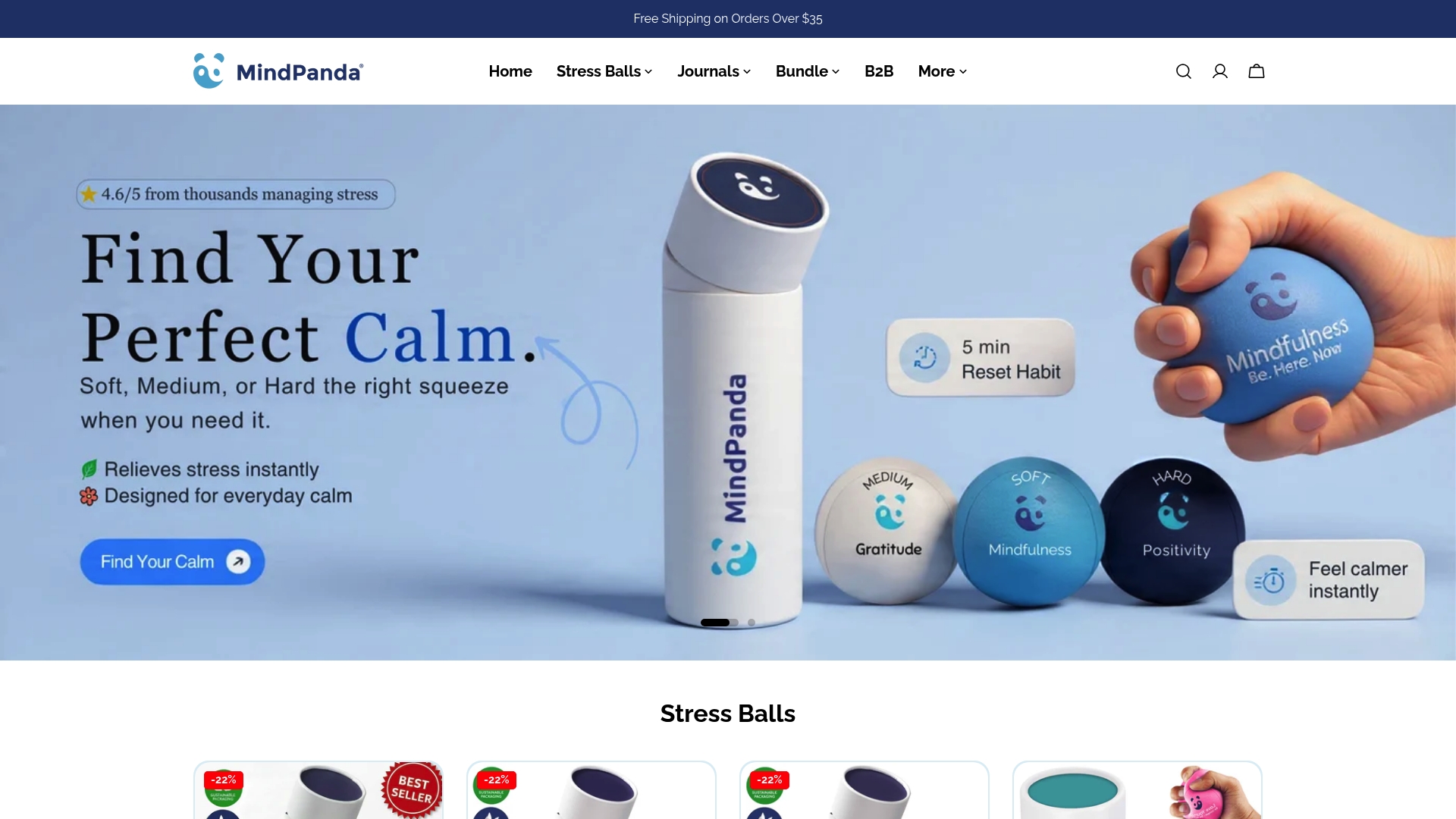
Three practical ways to use Mindpanda products at your event:
- Welcome kits: Place a journal, a stress ball, and a printed coping tip card in a small bag at registration. Participants have something to engage with during the event and take home afterward.
- Relaxation corner: Set up a quiet station with aromatherapy stress balls, a printed breathing guide, and a QR code to mhascreening.org. No staff required after setup.
- Raffle or prize mechanic: Offer a wellness bundle as an opt-in raffle prize; tie entry to completing an anonymous screening or signing a pledge card. Keep participation genuinely optional.
For events under 50 people, a pre-made Mindfulness Wellbeing Bundle covers most welcome-kit needs. For larger events or custom selections, build your own bundle to match your audience and budget. Order at least two weeks before your event date to allow for shipping and any customization.
Sources
- 2026 Mental Health Month Planning Guide (Mental Health America)
- 2026 Mental Health Month Action Guide | Mental Health America
- How to improve mental health (MedlinePlus)
- Psychiatry
- Mental health at work (World Health Organization)
Adapt every resource to your local context, and reach out to your local MHA affiliate early — they often have co-branded materials and speaker connections that save significant preparation time.
This article is general information, not a substitute for advice from a qualified doctor. Consult a qualified healthcare professional about your own circumstances before acting on anything here.