For sustained focus during a meeting or study session, a fidget toy usually wins. For releasing physical muscle tension in your hands and forearms, a stress ball is the better pick. Both are adjunctive tools, meaning they work best alongside breathing techniques, mindfulness, or professional support, not as standalone fixes.
Best for at a glance:
- Fidget toy: Discreet, sustained hand activity that keeps your body grounded while your mind stays on task, especially useful for ADHD, anxiety, or long focus sessions.
- Stress ball: Deep-pressure squeeze relief for physical tension, hand exercise, or moments when you need a quick, forceful release.
As clinicians note, neither tool is a cure for anxiety or attention difficulties. They support grounding and self-regulation, but they work best as part of a broader coping strategy.
Key takeaways
Stress balls and fidget toys both support grounding and self-regulation, but they work through different mechanisms and suit different situations. Starting with a stress ball is the lower-risk choice for most people new to tactile stress tools.
| Point | Details |
|---|---|
| Stress ball best for | Physical tension, hand exercise, and deep-pressure sensory needs |
| Fidget toy best for | Sustained focus, discreet background use, and neurodivergent grounding |
| Clinical caveat | Both are adjunctive tools; pair with mindfulness or professional support for lasting results |
| Safety first | Check for small parts, latex allergies, and scent sensitivity before buying for children or shared spaces |
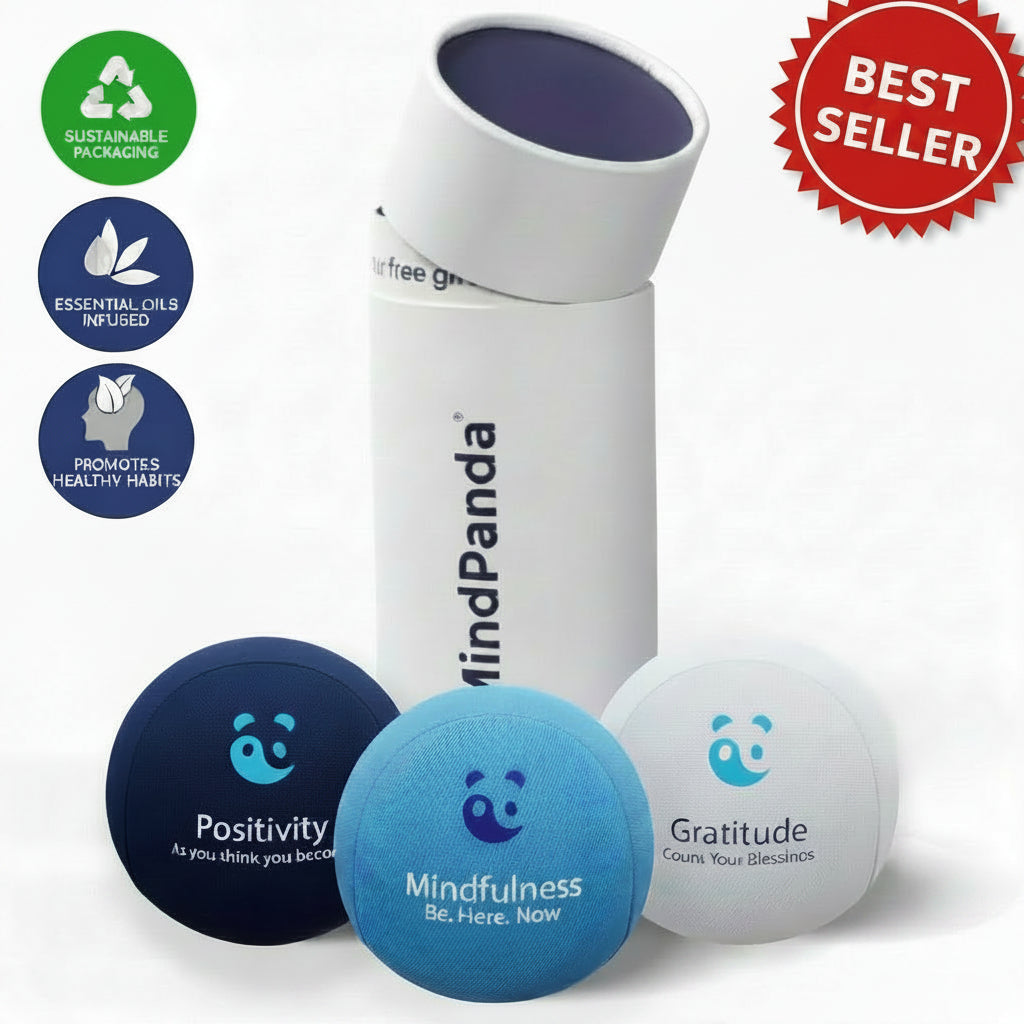
| Mindpanda starting point | The Mindfulness Wellbeing Bundle offers a low-commitment, desk-friendly entry point with scented and unscented options |
Table of Contents
- What’s the difference between a fidget toy and a stress ball?
- How fidget toys and stress balls compare side by side
- When a stress ball is the better choice
- When a fidget toy is the better choice
- School, office, and public settings: what’s actually appropriate
- Age, safety, and hygiene: what to check before you buy
- How to choose: a practical buying checklist
- Can you own both? How to use them together
- What the research actually says
- The case for starting with a stress ball, not a spinner
- A low-friction way to start with Mindpanda
- Sources
What’s the difference between a fidget toy and a stress ball?
These two categories overlap more than most people realize, and the same object can belong to either depending on how you use it.
Stress balls are squeeze-based devices designed to deliver deep pressure to the hand and forearm muscles. Classic foam spheres are the most familiar example, but the category also includes therapy putty, gel-filled orbs, and textured latex balls. The defining feature is the squeeze-and-release action.
Fidget toys are manipulation-based tools that keep hands busy through varied, often rhythmic movements. Common examples include:
- Fidget spinners and rings
- Fidget cubes with buttons, sliders, and dials
- Textured rollers and mesh tubes
- Infinity cubes and flip chains
- Therapy putty (when rolled, stretched, or shaped rather than squeezed)
The overlap is real. Therapy putty, for instance, counts as a stress ball when you squeeze it hard for grip strength and as a fidget toy when you roll it between your fingers during a phone call. Context and intent decide the classification, not the object itself.
How fidget toys and stress balls compare side by side
The practical differences come down to what kind of sensory input your body needs and where you plan to use the tool.
| Dimension | Stress ball | Fidget toy |
|---|---|---|
| Best for | Physical tension relief, hand exercise | Sustained focus, discreet grounding |
| Sensory input | Deep pressure, forceful squeeze | Varied: texture, spin, click, slide |
| Noise level | Generally silent | Varies widely (silent rings to clicking cubes) |
| Discreetness | Moderate (visible squeezing motion) | High when small and silent |
| Portability | High (pocket-sized) | High for rings/cubes; moderate for spinners |
| Durability | Foam degrades; gel/latex lasts longer | Metal and silicone options last years |
| Age safety | Check for small parts; latex allergy risk | Small parts common; not for under 3 |
| Price range | $3 for singles | $5 depending on material and type |
The core trade-off is straightforward: stress balls demand active, conscious squeezing, which makes them great for deliberate tension release but less suited to background use. Fidget toys, when chosen well, operate almost automatically, keeping hands busy without pulling attention away from the main task.
When a stress ball is the better choice
Stress balls earn their place in specific, physical situations where deep pressure is the point.
- Hand and forearm tension after typing: A few minutes of squeezing a firm ball can relieve the muscle fatigue that builds up after long keyboard sessions.
- Post-therapy hand exercise: Occupational therapists often prescribe grip-strengthening routines using therapy putty or resistance balls to rebuild hand strength after injury or surgery. A caregiver-oriented sensory resource notes that deep-pressure tools are among the most consistently recommended calming interventions in clinical settings.
- Sensory-seeking that needs heavy input: Some people, particularly those with sensory processing differences, find that light tactile stimulation isn’t enough. A firm stress ball delivers the intensity they need.
- Classroom use for attention: A small classroom study found that sixth-graders who used stress balls during lessons showed reduced distraction and improvements in writing and classroom interaction, suggesting that for some learners, the squeeze action itself aids focus.
One safety note worth keeping in mind: if you’re using a stress ball as part of a hand rehabilitation program, check with an occupational therapist before setting your own repetition count or resistance level. Overworking an injured hand is a real risk.
Pro Tip: When choosing firmness, go one level softer than you think you need. A ball that’s too firm causes you to grip with your whole arm rather than just your hand, which defeats the purpose and can cause strain. Textured surfaces add a secondary sensory layer that many people find more satisfying than smooth foam.
When a fidget toy is the better choice
The fidget toy’s advantage is that it can disappear into the background. A well-chosen one keeps your hands occupied without demanding any conscious attention, which is exactly what therapists mean when they say an effective fidget should operate outside conscious awareness. If you’re staring at it or thinking about how to use it, it’s become a distraction.
This makes fidget toys particularly useful in:
Long focus sessions. Studying, writing, or working through a complex task benefits from a low-cognitive-load hand activity. A smooth silicone ring you can rotate with one hand, or a flat fidget cube sitting on your desk, keeps restless energy channeled without breaking your concentration.
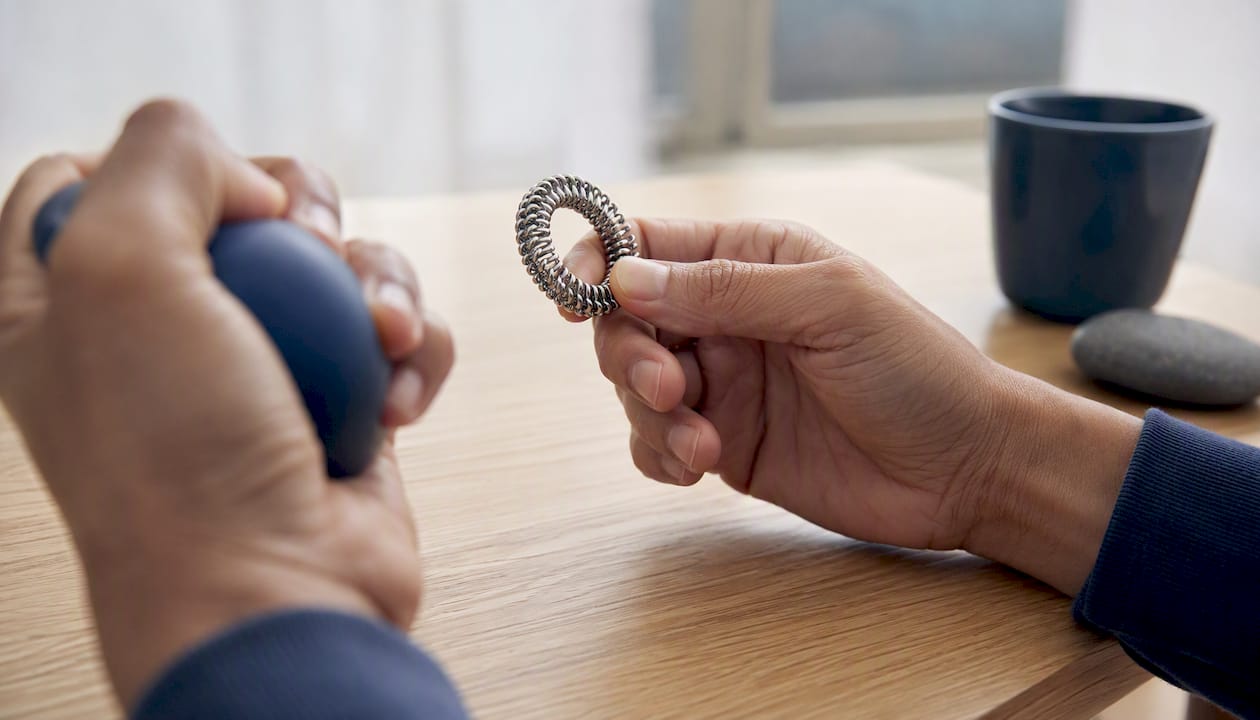
Meetings and calls. A silent textured ring or a small mesh roller is nearly invisible in a meeting. You can keep it in one hand under the table. A fidget spinner, by contrast, is visible and potentially distracting to others.
Neurodivergent support. Fidget tools channel nervous energy so the body stays grounded while the mind attends to the main task. This is especially well-documented for people with ADHD or autism, where the need for motor stimulation is a genuine neurological feature, not a habit to suppress.
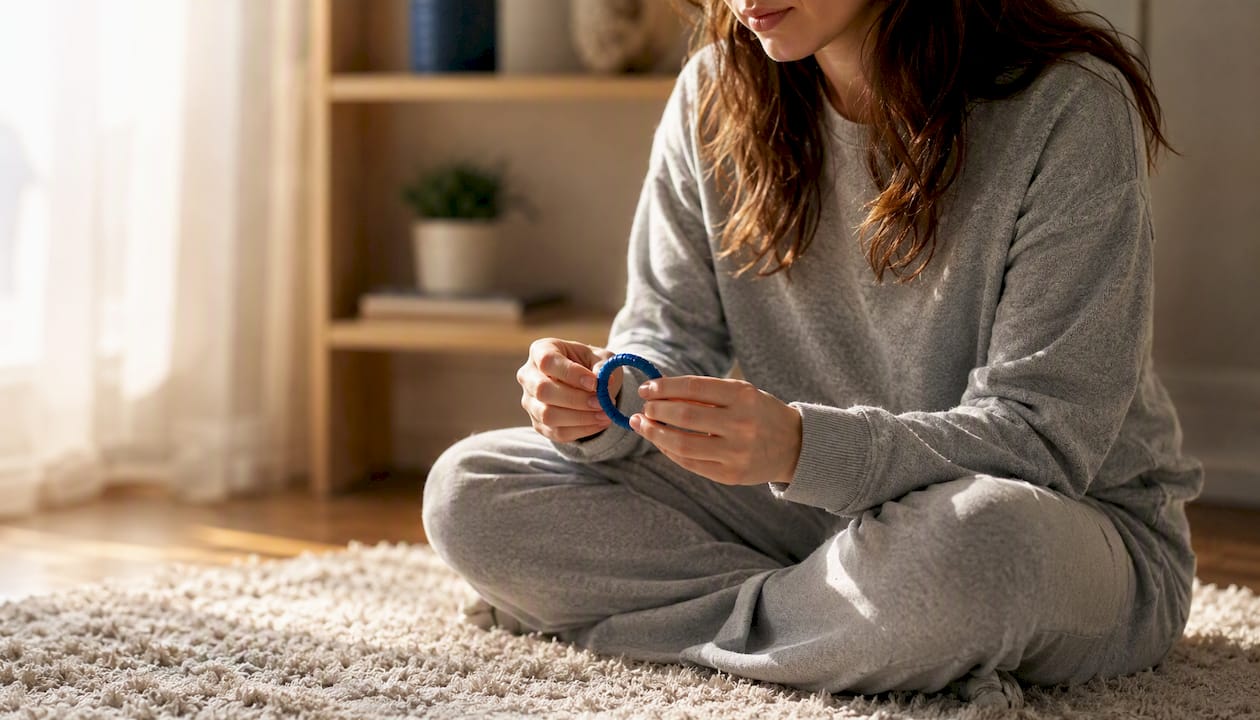
Matching the tool to the situation matters more than picking the “best” fidget overall. Hands-on reviewers consistently flag one-handed operation, quietness, and a self-contained design as the features that actually hold up in daily professional use.
School, office, and public settings: what’s actually appropriate
The right tool depends as much on your environment as on your needs.
Workplace: Silent fidgets, such as textured rings, smooth rollers, or a stress ball kept in a desk drawer for between-task use, are generally unobtrusive. Clicking or spinning toys in an open-plan office can irritate colleagues. If you’re in client-facing meetings, keep the tool in your lap or pocket. Some workplaces have no policy on this at all; others, particularly those with strict professional codes, may require you to ask a manager first.
Classroom: Many teachers now permit quiet fidget tools for students with documented attention needs, but the keyword is quiet. A silicone ring or a small piece of therapy putty is far less likely to cause a classroom policy conversation than a spinner. Check with the teacher before assuming it’s fine, especially for younger children.
Public spaces: Scented stress balls are worth a second thought in shared spaces. Essential-oil scents that feel calming to you can trigger headaches or allergic reactions in people nearby. Unscented options are the safer default in crowded or enclosed settings.
Age, safety, and hygiene: what to check before you buy
Safety considerations differ significantly between age groups and materials.
- Choking hazard: Any fidget toy with small detachable parts is unsafe for children under 3. Fidget spinners with removable caps and small fidget cubes with buttons fall into this category.
- Non-toxic materials: Look for BPA-free silicone, non-toxic foam, and latex-free options if there’s any allergy concern. Latex allergies are more common than most people expect and can cause skin reactions on contact.
- Scented products: Aromatherapy stress balls with essential oils are popular, but mainstream safety coverage flags that scents can bother co-workers or trigger allergic responses. Unscented is the safer default for shared or clinical environments.
- Cleaning: Silicone and hard plastic fidgets wipe clean with a damp cloth or mild disinfectant. Foam stress balls absorb moisture and are harder to sanitize; replace them when they show visible wear or odor. Therapy putty should be stored in its container and replaced if it dries out or picks up debris.
- Durability: Cheap foam balls split within weeks of regular use. Gel-filled or latex options last longer but can puncture. For daily use, silicone or dense rubber holds up best.
How to choose: a practical buying checklist
Before buying, run through these criteria against any product page.
| Criterion | What to look for |
|---|---|
| Material | Silicone or dense rubber for durability; latex-free if allergy is a concern |
| Firmness / feel | Soft for light sensory input; firm for deep-pressure or hand exercise |
| Noise level | Silent for office/classroom; noise acceptable only for home use |
| Size and portability | Palm-sized or smaller for desk use; ring or flat cube for pocket carry |
| One-handed use | Required for meetings or tasks where one hand stays occupied |
| Price | $5 covers most quality options; avoid the cheapest foam at under $3 |
| Ease of cleaning | Smooth surfaces clean easily; avoid porous foam for shared or clinical use |
A few quick buying tips worth keeping in mind:
- Try before you buy when possible. Firmness descriptions online are inconsistent, and what one brand calls “medium” another calls “firm.”
- Individual response varies more than most product descriptions acknowledge. What grounds one person distracts another. A return policy matters.
- For work or school, default to the quietest, smallest option and upgrade from there if it doesn’t meet your needs.
You can read more about what makes a stress ball worth buying before committing to a specific design.
Can you own both? How to use them together
Owning both a stress ball and a fidget toy is not redundant. They solve different problems, and switching between them based on the moment is a practical strategy.
Use a stress ball for a deliberate two-minute tension release between tasks. Switch to a silent fidget toy when you need to sustain focus for 30 minutes or more. The stress ball handles the acute physical release; the fidget handles the background motor need.
A simple routine for pairing either tool with a breathing exercise:
- Notice the tension or restlessness. Name it briefly (“I’m anxious” or “my hands need to move”).
- Pick up your tool and begin using it without forcing a particular technique.
- Breathe in for 4 counts, hold for 4, exhale for 8 (a 4-4-8 pattern that activates the parasympathetic nervous system).
- Continue for 2–3 minutes, letting the hand activity run in the background.
- Set the tool down and check in: is the tension lower? If yes, return to your task. If not, try a short mindfulness activity before continuing.
Pro Tip: Set a two-minute timer when you first start using either tool. Without a prompt, it’s easy to squeeze or fidget for 20 minutes without noticing, which can become its own distraction. Short, intentional sessions build the habit faster.
What the research actually says
The honest clinical picture is more modest than most product marketing suggests. Clinicians who work with anxiety and attention disorders describe these tools as useful for grounding and self-regulation, particularly in moments of acute stress or distraction. But experts are consistent that clear scientific evidence for long-term anxiety reduction is lacking. Most of the supporting data comes from small studies, anecdotal clinical reports, and individual practitioner experience.
The classroom study mentioned earlier, showing improved attention and writing in sixth-graders who used stress balls, is a real finding. It’s also a small, single-setting study. It points in a useful direction without proving a universal rule.
What clinicians do agree on is the selection principle:
If you’re managing anxiety, ADHD, or a sensory processing difference, pairing these tools with mindfulness activities for anxiety or working with a therapist will produce better outcomes than either tool alone. For personalized anxiety care that goes beyond self-help tools, a structured care model can help you figure out what combination of strategies actually fits your situation.
The case for starting with a stress ball, not a spinner
The conventional advice in most fidget-versus-stress-ball comparisons is to pick based on your primary symptom: anxiety gets a stress ball, focus gets a fidget toy. That framing is too clean.
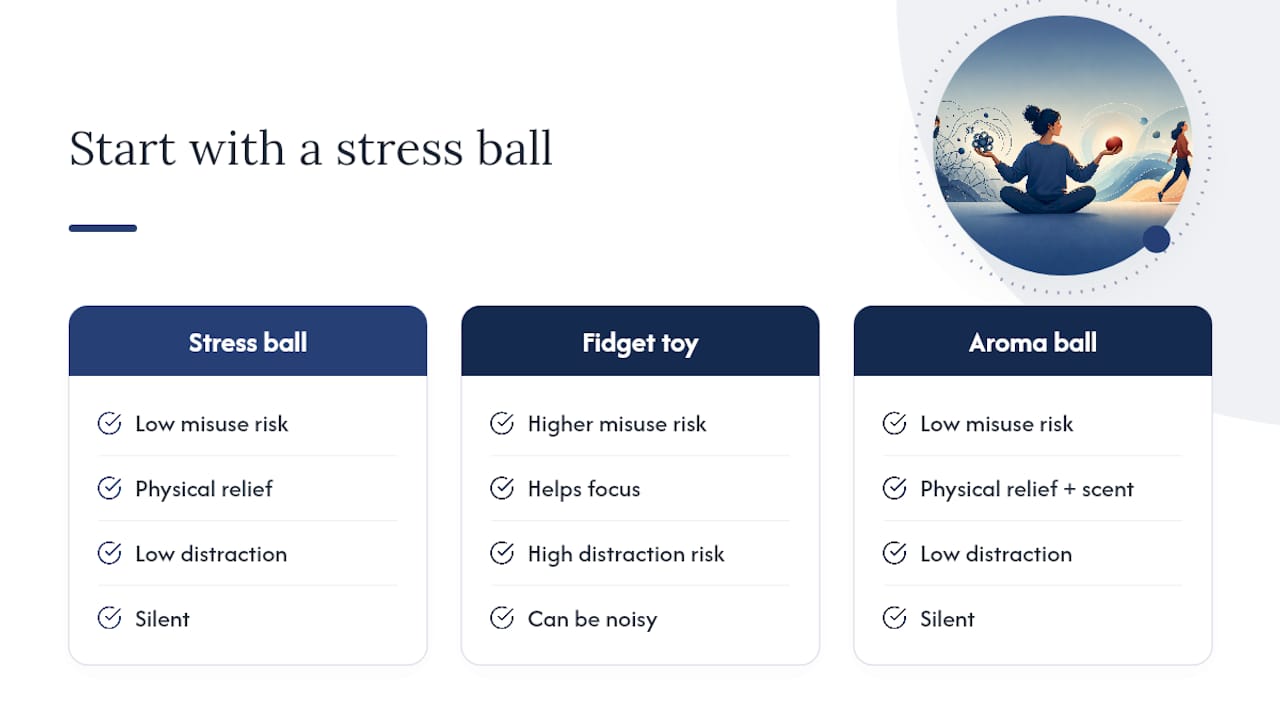
What the research and clinical guidance actually support is a simpler starting principle: begin with the tool that has the lowest failure mode. A stress ball is harder to misuse. You squeeze it, you feel the release, you put it down. A fidget toy, especially a spinner or a multi-function cube, can easily become the thing you’re paying attention to instead of your work. Therapists flag this directly: if you’re thinking about the toy, it’s not doing its job.
For most adults who are new to tactile stress tools, a firm, unscented stress ball is the lower-risk entry point. It delivers real physical relief, it’s silent, it works in almost any setting, and it doesn’t require any learning curve. Once you know what kind of sensory input your body actually responds to, adding a fidget toy for focus sessions makes sense. But starting with a spinner because it looks more interesting is how people end up with a drawer full of tools that didn’t help.
The other thing most comparisons underrate is scent. An aromatherapy stress ball with a calming essential oil adds a second sensory channel that a plain fidget toy can’t match. For people whose stress response is strongly tied to smell, that’s not a gimmick; it’s a meaningful functional difference.
A low-friction way to start with Mindpanda
If you’re not sure where to begin, Mindpanda’s stress-ball options are a practical first step. The Mindfulness Wellbeing Bundle pairs a stress ball with complementary mindfulness tools in a single set, so you’re not guessing at what to combine.
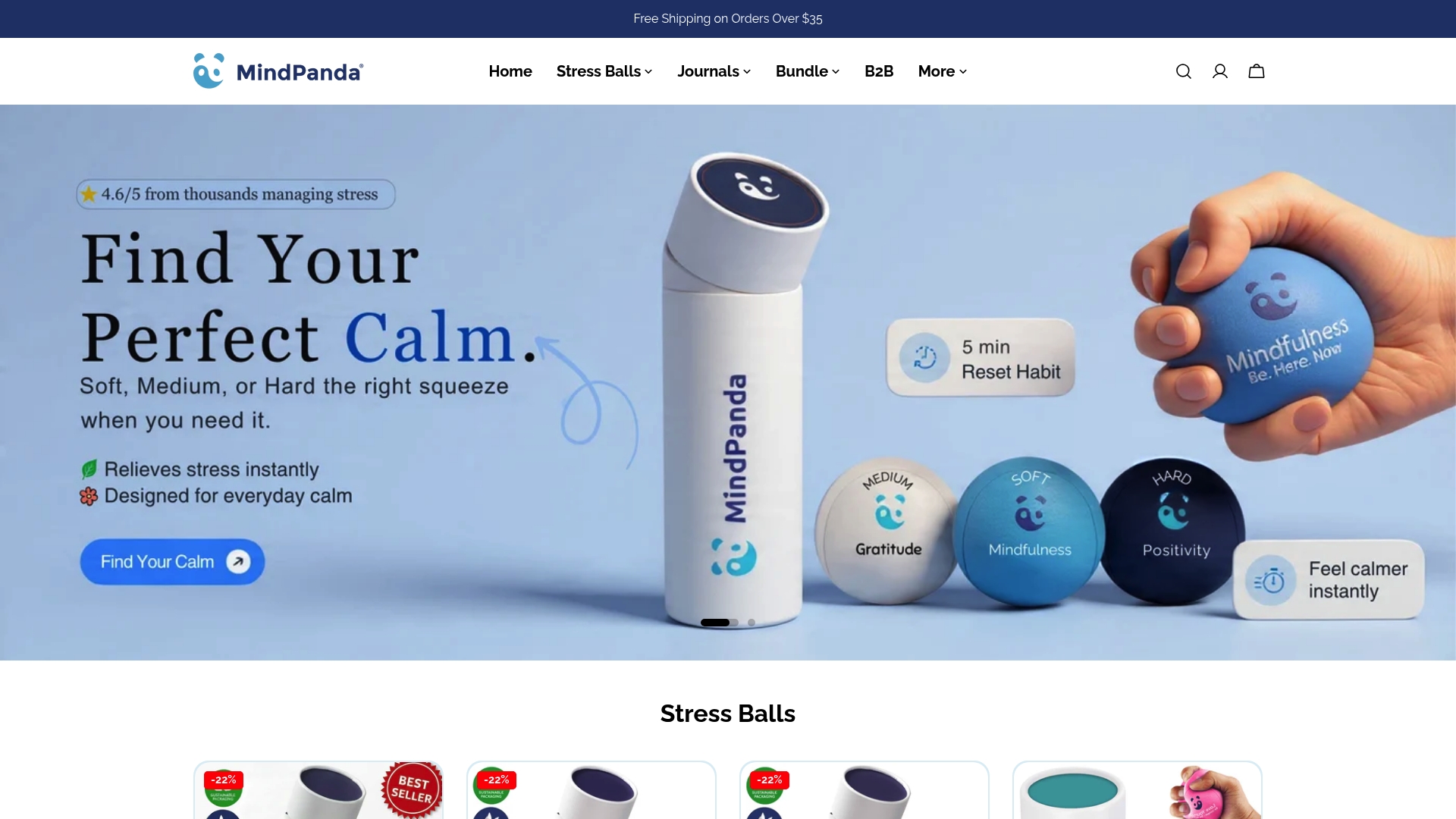
Mindpanda’s stress balls come in firm and soft options, with scented and unscented versions available, so you can match the tool to your actual sensory preference rather than a generic recommendation. The designs are desk-friendly and discreet enough for office use. If you’d rather build your own set, the Create Your Own Wellbeing Bundle lets you choose a stress ball alongside a journal or planner based on what you actually need. Independent adult fidget and stress-ball reviews have included Mindpanda stress balls as a mid-range, desk-friendly pick worth considering.
Browse the bundle options and pick the firmness and scent that fits your setting.
Sources
- Fidgets: How They Help ADHD, Anxiety, OCD and More
- Do stress balls or fidget spinners actually reduce stress or anxiety?
- I’m a desk fidgeter. These fidget toys help keep me sane while I work | PCWorld
- The Best Fidget Toys for Adults: A Review & Guide
This article is general information, not a substitute for advice from a qualified doctor. Consult a qualified healthcare professional about your own circumstances before acting on anything here.