Start with a small weekly grid with a few habits, or a daily pixel tracker, and track only what you can still do on your worst day. Small and visible beats big and buried in a drawer: a habit you see every morning acts as its own reminder, and a habit that takes five seconds to log never gets skipped because you’re “too busy.” Pick one habit right now, write it at the top of a page, and put a checkmark next to today’s date.
- Grab any notebook or open a blank note on your phone
- Write one habit at the top (something you’d do even on a bad day)
- Mark today, right now, before you close this tab
Key Takeaways
A habit tracker only works when it tracks a few small, visible actions and includes a built-in recovery step for low-energy days.
| Point | Details |
|---|---|
| Start small | Track 2 to 5 habits max, each small enough to finish in under two minutes. |
| Track actions, not outcomes | Write rows like “read 1 page,” never vague goals like “read more.” |
| Match format to frequency | Daily habits go in daily grids; weekly tasks belong in a weekly spread. |
| Build in recovery | Predefine a smaller version of each habit for bad days to protect the streak. |
| Pair tracking with tools | Mindpanda journals and planners give the tracker a physical home for nightly and weekly reviews. |
Table of Contents
- Habit Tracker Ideas Sorted by What You’re Actually Trying to Fix
- Which Tracker Layout Actually Fits Your Routine?
- How to Build a Tracker Plan You’ll Still Use in March
- Copy These Habit Tracker Templates Today
- Why Visibility and Small Wins Actually Change Behavior
- Sources
Habit Tracker Ideas Sorted by What You’re Actually Trying to Fix
The mistake most people make with a habit tracker guide is picking habits based on what they wish they did, not what they’ll actually log. Track actions, not outcomes. “Lose 10 pounds” gives you nothing to check off on a Tuesday. “Walked for 10 minutes” does. Here’s a menu sorted by goal, with the measurement format that fits each one.
Health
- Drink one glass of water before coffee (checkbox, easiest starter row)
- Walk 10 minutes outside (minutes counter)
- Take vitamins with breakfast (checkbox)
- Stretch for 2 minutes before bed (checkbox, easy win)
- Eat one vegetable at lunch (checkbox)
- Log weight once a week, not daily (number field, avoids obsessive checking)
Mind and focus
- Write down one thought before sleep (checkbox)
- No phone in the first 10 minutes after waking (checkbox)
- Read one page of a book (page counter, easy win)
- Sit quietly for 2 minutes (minutes counter)
Sleep
- Lights off by a set time (checkbox)
- No screens 30 minutes before bed (checkbox)
- Track hours slept (number field)
Relationships
- Text one person you care about (checkbox, easy win)
- Ask a family member one real question at dinner (checkbox)
Money
- Check bank balance (checkbox)
- Log every purchase over $20 (counter)
- Move $5 into savings (checkbox, easy win)
Quitting or reducing something
- Count caffeine drinks instead of banning them (counter)
- Note each smoke-free day with an X (checkbox)
- Track screen time instead of guessing at it (minutes, pulled from your phone’s own settings)
Rows marked “easy win” above make the best starter habits because they take under two minutes and rarely require willpower. A categorized menu like this works better than a vague goal list because every row answers the same question: did I do the thing, yes or no?
Which Tracker Layout Actually Fits Your Routine?
The layout matters more than people assume. A gorgeous tracker you abandon in week two is worse than an ugly one you keep for a year.
- The classic grid. Habits down the side, days across the top, boxes to fill in. Best when you’re tracking three or more habits and want a fast daily glance.
- Weekly spread. A fresh page every Sunday with 3 to 5 rows. Good for people who review and adjust often, since a full month doesn’t stare back and shame you.
- Year-in-pixels. One color per day for a single mood or habit, spread across all 12 months on one page. Best for tracking one thing you want a long view on, like mood or exercise.
- Circular or petal trackers. A ring divided into days, one habit per ring. Visually satisfying, works for people who track two or three habits max.
- Digital grids and phone widgets. A simple, low-friction app with a one-tap checkbox beats a gamified app with badges and streak animations if your goal is actually finishing the habit rather than playing a game.
- Spreadsheets. Underrated for people who like data. A basic Google Sheet with conditional formatting turns checkmarks into a color-coded grid for free.
Match the format to how often the habit happens: daily actions belong in daily grids, and anything weekly (like meal prep) belongs in a weekly spread, not squeezed into a daily row where it looks broken half the time.
How to Build a Tracker Plan You’ll Still Use in March
Most trackers fail for a boring reason: too many habits, too much intensity, no plan for bad days — follow these practical steps for establishing health-promoting routines to succeed. Fix the structure and the tracker takes care of itself.
- Start with 2 to 5 habits, never more. A tracker with 15 rows becomes a chore, and chores get skipped.
- Use the Two-Minute Rule: if a habit takes less than two minutes, resistance drops to almost nothing.
- Put the tracker somewhere you already look. A visible tracker functions as its own reminder, which matters more than any app notification.
- Stack the logging onto something you already do: after brushing your teeth, mark the tracker. That single second of overlap is what makes the habit stick, according to habit-formation research.
- Build in a recovery step. Define a smaller version of each habit in advance, like one push-up instead of twenty, so a rough day doesn’t turn into a broken streak and a reason to quit.
Pro Tip: Define your recovery version before you need it. “Walk 10 minutes” becomes “walk to the mailbox” on a bad day. Deciding this in advance removes the guilt that usually kills the whole tracker.
Momentum comes from small wins compounding, not from one heroic effort. Harvard Business Review’s research on small wins found that visible, incremental progress is one of the strongest drivers of sustained motivation, which is exactly why a checked box matters more than it looks like it should.
Copy These Habit Tracker Templates Today
You don’t need to design anything. Copy one of these directly.
- Micro-daily (3 rows). Water, 2-minute stretch, one page read. Check each box every evening before bed.
- Weekly spread (5 rows, with review). Monday through Sunday across the top, five habits down the side, and one line at the bottom for a Sunday-night review: “What worked, what didn’t, what changes next week.”
- Monthly year-in-pixels. One habit, one color code (green for done, yellow for partial, red for skipped), 31 boxes across a single row per month.
Use dots for partial completion, a check for full completion, and an X only for a deliberate skip, not a forgotten one. Write habit rows as actions: “Read 1 page,” not “Read more.” “Drink 1 glass of water,” not “Hydrate better.” Specific and small removes the guessing that kills consistency.
Why Visibility and Small Wins Actually Change Behavior
Keeping a tracker somewhere you’ll see it daily turns the tracker itself into the cue that triggers the habit. Combined with logging the moment a habit is done, this closes what behavioral researchers call the habit loop faster than willpower ever will.
Structured tracking supports early-stage consistency, and Harvard Health’s guidance on habit change backs the same principle: replace a vague goal with a specific, repeatable action you can measure daily.
- Pair a nightly journal entry with your tracker review for a two-minute end-of-day ritual
- Use a planner’s weekly layout for the 5-row spread template above
- Combine a mindfulness exercise with your hardest habit to lower the resistance to starting it
A candid note on realistic tracking
My own tracker has exactly one row some weeks: “Wrote one sentence.” Sounds small because it is small, and that’s the point. The habit that survives a bad month is never the ambitious one. Use your recovery step instead of quitting. A skipped week isn’t a failed system, it’s a system doing exactly what it’s built for.

Pair Your Tracker With the Right Tools
A tracker works better with a physical anchor instead of one more app buried in your phone. Mindpanda’s journals give you a dedicated spot for the nightly two-minute review, the planners fit the weekly 5-row spread template directly onto a page built for it, and the wellbeing bundles pair a mindfulness exercise with your hardest habit row so the two reinforce each other instead of competing for attention.
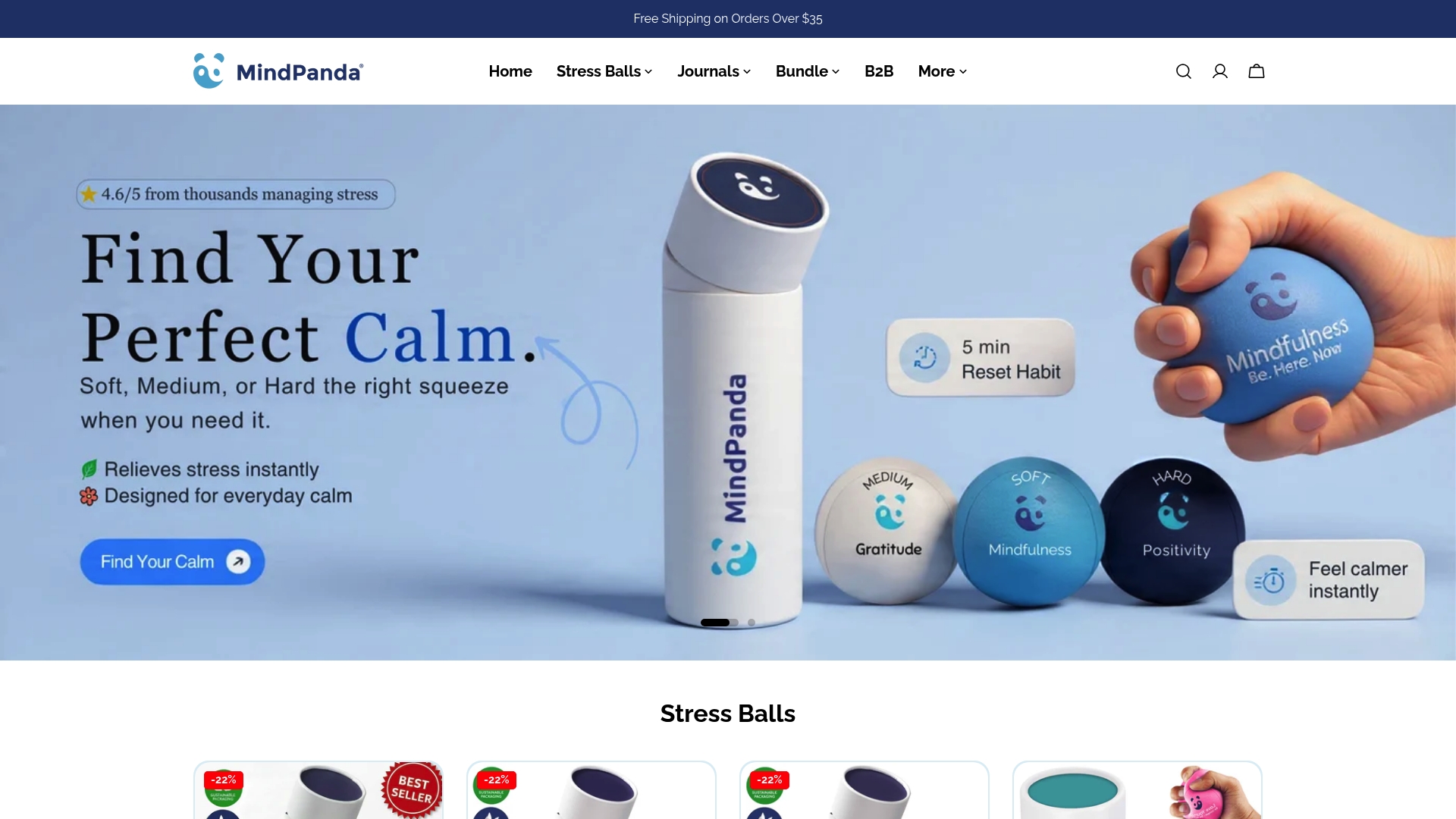
Use a journal for the evening check-in, a planner for the Sunday weekly reset, and a bundle when you want a mindfulness practice sitting right next to your habit rows. If none of the preset combinations fit your routine, build your own wellbeing bundle and pick the exact pieces that match the habits you listed above. Start with the Mindfulness Wellbeing Bundle tonight and have your tracker paired with a real routine before tomorrow’s check-in.
Sources
- The ultimate habit tracker guide — James Clear
- Research on habit formation (NCBI PMC3505409)
- Trade bad habits for good ones — Harvard Health
- The power of small wins — Harvard Business Review