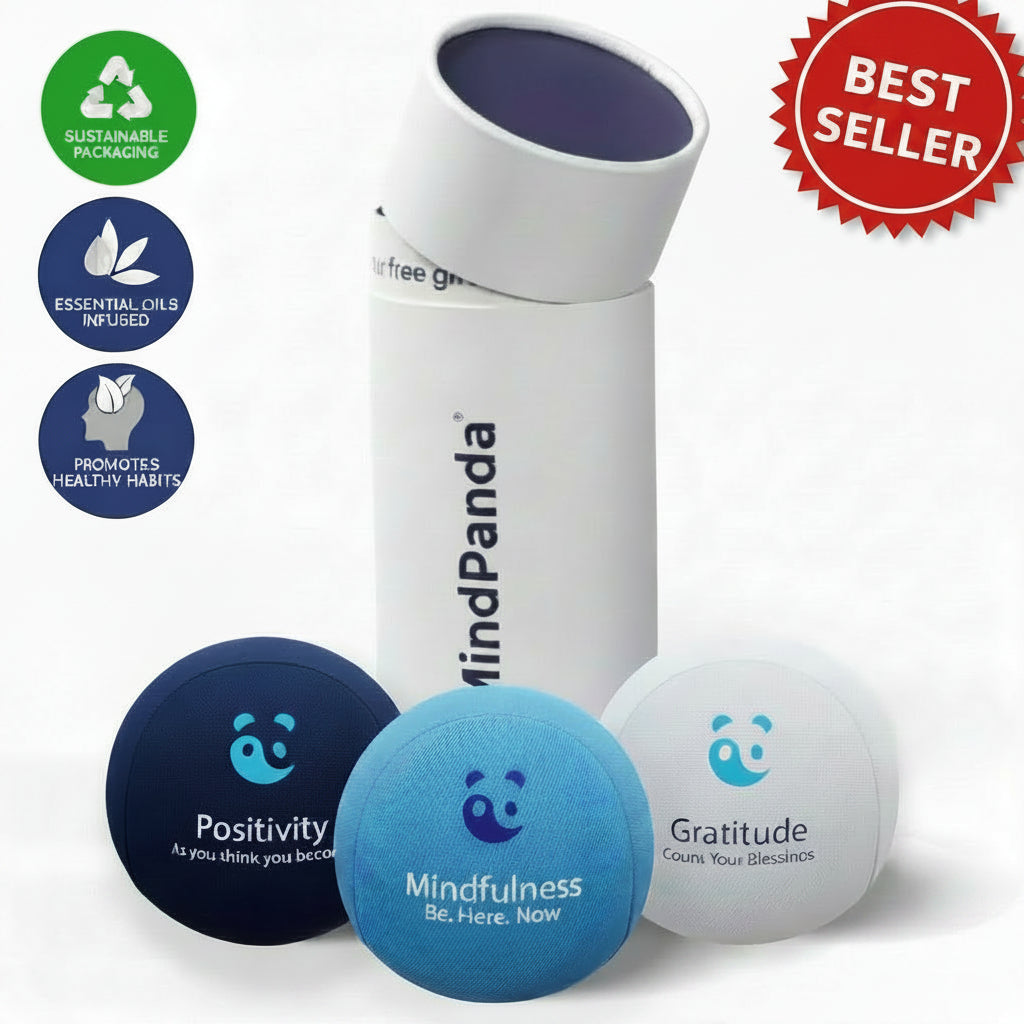
Short answer: yes, sometimes. Stress balls reliably ease short-term, situational anxiety by giving your hands and brain something concrete to do while your nervous system settles. They’re grounding tools, not treatment plans, and work best paired with breathing or mindfulness rather than used alone.
- A randomized crossover trial in hemodialysis patients found measurable drops in anxiety and depression during weeks patients used a stress ball versus weeks they didn’t.
- Squeezing one won’t touch a diagnosed anxiety disorder on its own, but it can interrupt a spike in the moment.
- Think of it as a release valve, not a repair job.
Key Takeaways
Stress balls ease short-term, situational anxiety through grounding and tactile distraction, but they don’t replace therapy or medication for chronic anxiety disorders.
| Point | Details |
|---|---|
| Evidence is real but narrow | Trials show benefits in specific settings like dialysis and surgery, not broad chronic anxiety relief. |
| State anxiety responds better | Stress balls calm situational spikes more reliably than persistent, generalized worry. |
| Pair, don’t rely | Combining a stress ball with breathing or mindfulness amplifies the calming effect. |
| Know the red flags | Panic attacks, sleep disruption, or daily impairment mean it’s time to consult a clinician. |
| Match texture to sensory needs | Mindpanda’s foam, putty, and aromatherapy stress balls let you find the resistance level that actually calms you. |
This article is general information, not a substitute for advice from a qualified doctor. Consult a qualified healthcare professional about your own circumstances before acting on anything here.
Table of Contents
- Does Squeezing a Stress Ball Actually Reduce Anxiety?
- How Do Stress Balls Reduce Anxiety in the Body?
- What Stress Balls Can and Cannot Do for Anxiety
- How to Use a Stress Ball for Real Anxiety Relief
- Who Benefits Most, and When Should You See a Professional?
- Sources
Does Squeezing a Stress Ball Actually Reduce Anxiety?
The research paints a specific picture: stress balls help state anxiety (the temporary spike before a needle stick, a presentation, or a stressful phone call) more consistently than trait anxiety (the more stable, chronic tendency to worry that characterizes generalized anxiety disorder). That distinction matters for setting realistic expectations.
The strongest clinical evidence comes from a single-blind crossover study in hemodialysis patients, where participants alternated between periods of encouraged stress-ball use and no intervention. Anxiety and depression scores dropped significantly during the stress-ball phases (p < 0.001). That’s a controlled, statistically sound result, though it comes from people undergoing a specific medical procedure, not a general population managing everyday worry.
Separately, haptic coordination research found that repeatedly squeezing a vibrating stress ball lowered both self-reported anxiety and physiological arousal compared with a control condition. Researchers at the University of Surrey also documented reduced pain and anxiety when patients used stress balls and simple distractions during surgical procedures.
The limitations are worth naming plainly:
- Sample sizes tend to be small, often a few dozen to a hundred participants.
- Most trials study specific contexts: dialysis chairs, operating rooms, lab-based coordination tasks.
- Few studies track whether the effect holds up for generalized or clinical anxiety over months.
Healthline’s review of the evidence sums it up well: the research is mixed and often anecdotal, but stress balls are broadly recognized as effective for short-term, situational relief through sensory grounding and distraction.
How Do Stress Balls Reduce Anxiety in the Body?
Three mechanisms seem to be doing the work, and none of them require you to believe in anything mystical.
First, haptic grounding. Squeezing something textured or resistant pulls attention out of your head and into your hand, which is exactly what grounding techniques are designed to do. Second, rhythm. A steady squeeze, hold, release pattern can sync naturally with slower breathing, and that pairing is what triggers what’s often called the relaxation response, according to Harvard Health’s guidance on relaxation techniques. Third, physical tension release. Anxiety often shows up as clenched muscles, and squeezing gives that tension somewhere to go.
- Foam balls offer light sensory feedback, good for people who find intense stimulation overwhelming.
- Therapy putty gives deeper resistance for people who want to really work against something.
- Vibrating stress balls add a haptic layer that lab studies show lowers physiological arousal through coordination.
None of this is fully mapped mechanistically. Researchers describe plausible pathways more than proven ones, so treat the “why” as a reasonable theory, not settled science.
Pro Tip: Match your squeeze to your exhale, not your inhale. Squeezing on the out breath reinforces the body’s natural relaxation signal instead of fighting it.
What Stress Balls Can and Cannot Do for Anxiety
- They ground you fast. A stress ball gives your hands a job during a spike, which can interrupt spiraling thoughts within a minute or two.
- They’re discreet and cheap. You can squeeze one under a conference table or in a waiting room without anyone noticing.
- They can interrupt compulsive habits. Some clinicians note that offering hands a competing behavior helps with skin-picking, nail-biting, or restless fidgeting tied to ADHD.
- They fade fast, too. The calming effect is real but temporary. It doesn’t rewire how your brain responds to the next stressor.
- Results vary person to person. Some people find squeezing calming; others find it irritating or overstimulating.
Where they shine: pre-meeting nerves, blood draws, test anxiety, waiting-room jitters. Where they fall short: panic disorder, generalized anxiety disorder, or any condition where anxiety is disrupting daily functioning without additional support. A stress ball won’t stop a panic attack that’s already underway, though it may help you ride out the tail end of one.
How to Use a Stress Ball for Real Anxiety Relief
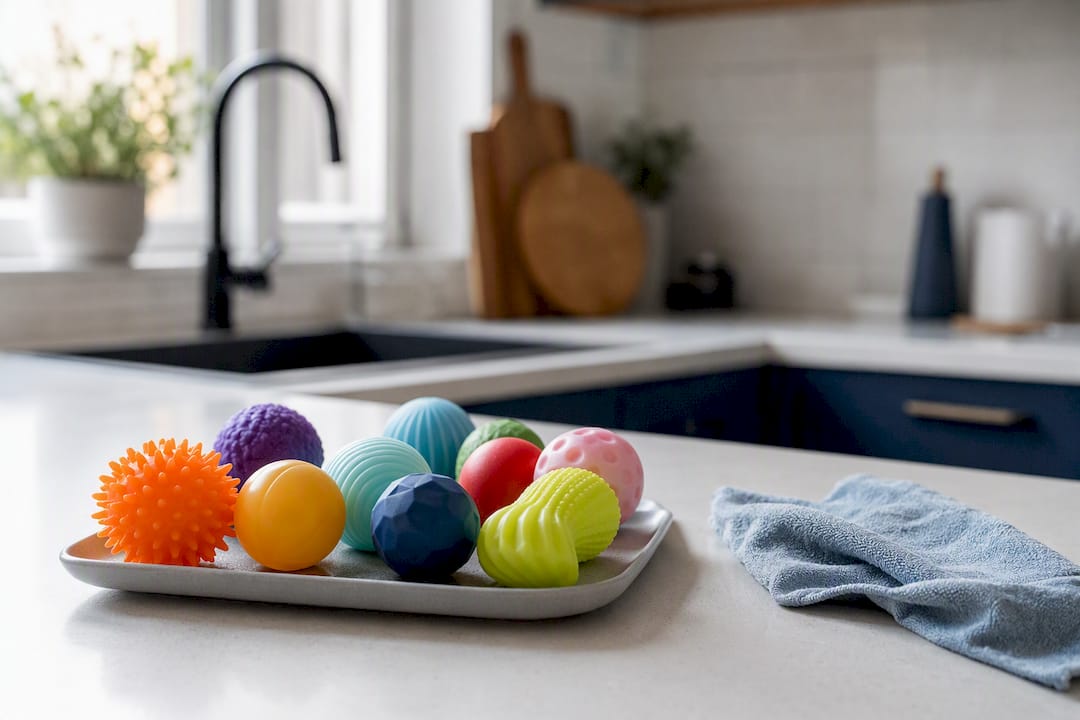
Picking the right one starts with your sensory preference, not the cutest design on the shelf. Light foam suits people who get overstimulated easily. Therapy putty rewards people who want deep resistance and a workout for their hands. Vibrating options give the strongest haptic feedback if you respond well to sensation-based grounding, per research on vibrating stress balls.
A few routines worth trying:
- The 2 to 5 minute reset. Step away, squeeze slowly for a count of four, hold for two, release for four. Repeat for two to five minutes.
- Breathe-squeeze-hold-release. Inhale as you squeeze, hold at the peak, exhale as you release. This mirrors the progressive muscle relaxation technique Mayo Clinic recommends for triggering a physical relaxation response.
- Pre-event warm-up. Squeeze for a minute or two before a known stressor, like a job interview or a needle stick, rather than waiting until you’re already anxious.
Stacking a stress ball with other mindfulness activities for anxiety or a short breathing script tends to outperform using it in isolation. Deep breathing on its own already calms the nervous system; adding tactile grounding gives your brain two anchors instead of one.
Pro Tip: Wipe silicone or rubber stress balls with a damp cloth weekly. Therapy putty should be replaced every few months once it loses elasticity, since worn-out putty gives weaker resistance feedback.
Who Benefits Most, and When Should You See a Professional?
Stress balls tend to help three kinds of people the most: habitual fidgeters who already reach for something to do with their hands, people who respond well to sensory grounding techniques generally, and anyone dealing with anxiety tied to a specific, identifiable trigger rather than constant background worry.
Watch for signs that a stress ball isn’t enough on its own:
- Anxiety is interfering with sleep, work, or relationships most days.
- You’re experiencing panic attacks, not just nervousness.
- Intrusive thoughts or worry persist regardless of what you’re doing with your hands.
Patient education resources from MedlinePlus frame relaxation tools like stress balls as complements to broader care, not substitutes for it. If anxiety is shaping your daily life, a clinician can build a plan where a stress ball is one small piece, not the whole strategy.
A practical, evidence-grounded take
Most guides oversell stress balls as either miracle cures or dismiss them as toys. Neither view holds up. The hemodialysis trial and the haptic coordination research both show real, measurable effects in specific settings, and dismissing that evidence because it isn’t sweeping is its own kind of bias. What I’d push back on is the assumption that one stress ball fits everyone. Sensory needs vary enormously. Someone who finds a vibrating ball calming might find it overstimulating to another person entirely, which is exactly why product variety matters more than most anxiety content admits. Mindpanda’s approach, offering multiple textures, resistances, and aromatherapy options with eco-friendly packaging, reflects that reality rather than a one-size-fits-all sales pitch.
— Ravi
Finding the Right Stress Ball for Your Anxiety Toolkit
If the research points anywhere clear, it’s this: the right stress ball is the one that matches your sensory preference, not the one with the best marketing. Mindpanda’s mindfulness-themed stress balls come in a range of textures and resistances, from soft foam to firmer aromatherapy-infused options, so you’re not stuck guessing which type actually calms you down.
If you already know breathing exercises or journaling help you, pairing a stress ball with those habits works better than using it solo, and Mindpanda’s create-your-own wellbeing bundle lets you combine a stress ball with a journal or aromatherapy add-on in one order. Start with one texture, notice how your body responds over a week, and adjust from there. Browse the stress ball sets to see the current range and pick one that fits how you actually want to feel calmer.
Sources
- Do Stress Balls Work? — Healthline
- Study: Stress ball use decreased anxiety and depression in hemodialysis patients — PubMed
- Haptic coordination: Squeezing a vibrating stress ball decreases anxiety and arousal — PubMed
- Relaxation techniques: Try these steps to lower stress — Mayo Clinic