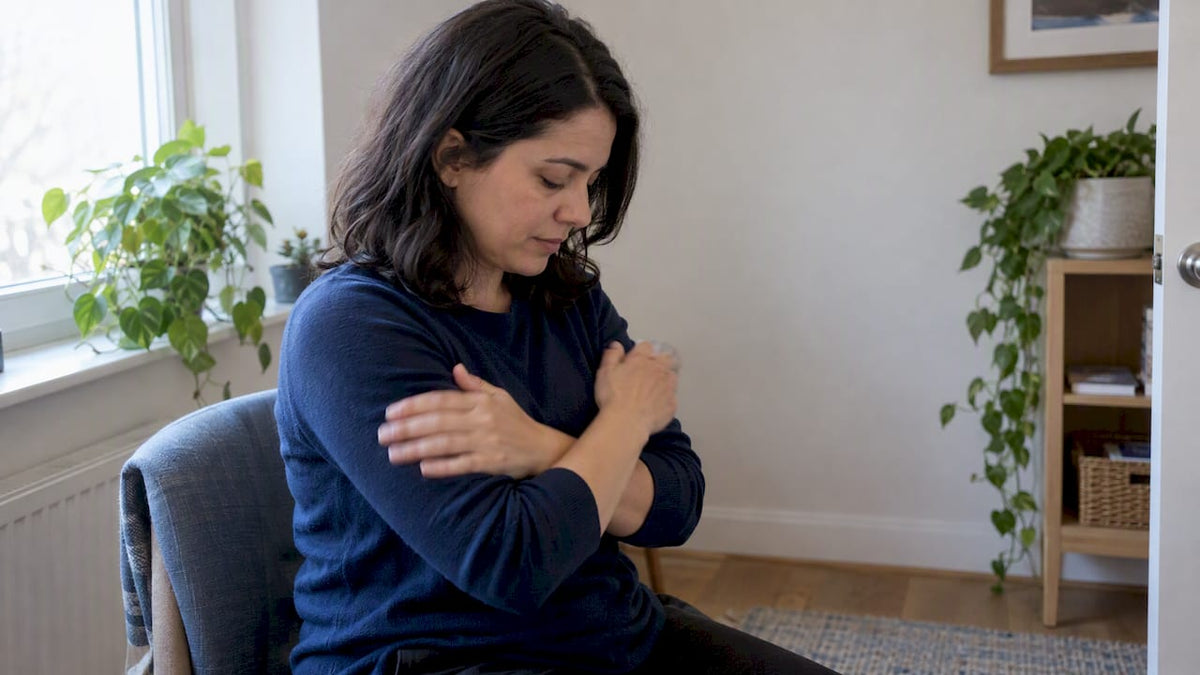
The butterfly hug is a quick, self-administered form of bilateral stimulation you can use right now to settle acute anxiety: cross your arms over your chest and alternate gentle taps on your shoulders or collarbones, like the wings of a butterfly. It takes under two minutes and needs nothing but your own hands.
TL;DR:
- Use an even rhythm of about one tap per second with slow breathing, then stop after six to eight taps or up to two minutes.
- Clinical EMDR uses alternating taps, but few trials test self guided use; the butterfly hug is a soothing tool, not a replacement for treatment.
- Stop if distress rises or several sets bring no relief, then ground yourself by naming five things you can see nearby.
- For children, caregivers can use alternating shoulder or back taps during a lap hug, pair them with a toy, song, or drawing, and stay present.
- Persistent distress, trauma processing, or safety concerns call for a licensed clinician, and people already in therapy should check with their therapist first.
Table of Contents
- What the Butterfly Hug Is and How It Connects to EMDR
- How to Do the Butterfly Hug Step by Step
- Adapting the Butterfly Hug for Children and Different Needs
- What the Research Says About the Butterfly Hug
- When to Stop and When to Get Professional Support
- A Few Words on Making This a Habit
- Building a Calming Routine With MindPanda
- FAQ
- Sources
What the Butterfly Hug Is and How It Connects to EMDR
The butterfly hug is a self-administered bilateral stimulation technique: you tap alternating sides of your own body in a steady rhythm while noticing what you feel. That alternating left-right pattern, known as bilateral stimulation (BLS), is the same mechanism used in EMDR therapy, where a clinician guides eye movements, tones, or taps alongside focused attention on a distressing memory.
The technique was developed by Lucina Artigas in 1998 for group EMDR interventions after disasters, and it earned the EMDRIA Creative Innovation Award in 2000 for making reprocessing work accessible in low-resource settings.
A few things matter for understanding why it calms the body:
- Bilateral stimulation is linked to reduced vividness and emotional intensity when paired with trauma-focused attention in clinical EMDR sessions.
- The butterfly hug was built as a portable, hands-free version of that same rhythmic left-right input.
- You do not need a clinician or a traumatic memory in mind to use the tapping as a calming skill.
How to Do the Butterfly Hug Step by Step
Find a seat with a straight back, or stand if that is more comfortable. The posture matters less than staying relaxed enough to breathe easily.
- Cross your arms over your chest, each hand resting near the opposite shoulder.
- Rest your middle fingertips just below your collarbones, fingers pointing upward.
- Alternate gentle taps, left hand then right hand, like slow wingbeats.
- Keep the rhythm even and unhurried, roughly one tap per second.
- Pair each tap cycle with a slow diaphragmatic breath, in through the nose, out through the mouth.
- Continue for 6 to 8 taps, or a short period of up to a couple of minutes, according to standard practice guidance.
- Pause, notice how your body feels, and repeat another set if you want more relief.
You can keep your eyes open or closed, whichever feels calmer. Some people prefer interlocking their thumbs before crossing their arms, which gives the hands a steadier anchor point.
Pro Tip: Try counting each tap silently. The counting gives your mind a small task to focus on, which often deepens the calming effect.
Clinical write-ups on group EMDR protocols suggest capping sets at a moderate number of taps to avoid overstimulation when the goal is to settle the nervous system rather than process a specific memory, since longer runs can sometimes pull attention away from a calming image you are trying to hold onto.
Adapting the Butterfly Hug for Children and Different Needs
The crossed-arm posture is not the only way to get the same rhythmic, bilateral effect, and plenty of adaptations exist for children or anyone who finds the standard position awkward.
- For young children, a caregiver can do a lap hug, gently tapping the child’s shoulders or back in the same alternating rhythm.
- Pairing the tapping with a favorite toy, a drawing activity, or a simple song helps younger kids stay engaged. Tapping alternating knees or thighs can also produce a similar bilateral pattern, and holding a soft object and squeezing it hand over hand offers another low-effort variation.
- Combining the taps with a safe-place image or a short calming phrase, like “I am okay right now,” gives the mind something steady to rest on.
EMDR clinicians who work with children report success with playful adaptations like musical instruments, scarves, or movement games instead of strict hand placement. When using any version with a child, stay present and watch for signs of distress rather than leaving them to self-administer it alone, especially the first few times.
What the Research Says About the Butterfly Hug
The butterfly hug carries a documented clinical history rather than a folk-remedy backstory. Lucina Artigas introduced it in 1998 as a tool for group EMDR work after natural disasters, and the EMDR International Association’s own account describes it as designed for settings where one-on-one therapy was not practical.
One documented fact matters here: the technique was recognized with the EMDRIA Creative Innovation Award in 2000, a sign that clinicians who use EMDR professionally consider it a legitimate extension of bilateral stimulation work, not a shortcut around it.
A few points keep expectations realistic:
- Clinicians generally describe the butterfly hug as a bilateral stimulation tool, with desensitization as a byproduct of its clinical use rather than its sole purpose.
- Research on low-intensity, self-guided EMDR style practices is still thin: reviews note that effective self-help interventions exist widely across mental health, but few randomized trials have tested self-help EMDR specifically.
- Guided or clinician-supported versions tend to carry stronger safety and adherence track records than fully unsupervised self-help use.
The practical takeaway: treat the butterfly hug as a short, accessible self-soothing method on its own, and as one piece of a larger bilateral stimulation toolkit when it is part of formal therapy.
When to Stop and When to Get Professional Support
Most people feel some settling within a set or two, but the technique is not a cure for every spike of distress, and knowing when to stop matters as much as knowing how to start.
- If distress increases, or nothing shifts after a few sets, stop and ground yourself instead: open your eyes and name five things you can see in the room.
- If the crossed-arm position causes any physical discomfort, switch to tapping your knees or thighs instead.
- Persistent high distress, a need to process traumatic memories, or any safety concerns call for a licensed clinician rather than a self-help routine.
- If you are already working with a therapist, ask whether the butterfly hug fits safely alongside your current treatment plan.
Pairing it with other grounding techniques gives you a backup plan when tapping alone is not enough, and the CDC’s guidance on coping with stress points to breathing exercises, journaling, and staying connected with others as practices that work well together.
A Few Words on Making This a Habit

I reach for the butterfly hug most often in the thirty seconds before a stressful call or when anxiety spikes out of nowhere during a busy afternoon. It is quiet enough to do at a desk, and nobody around me notices.
What helps it stick is pairing it with something else small: a round of box breathing right after, or a single line in a journal about what triggered the moment. Neither takes more than a few minutes, and the combination tends to carry further than either on its own. None of this replaces professional care when distress runs deep, but as a short, well-documented self-soothing habit, it earns its place in a daily routine.
— Ravi
Building a Calming Routine With MindPanda
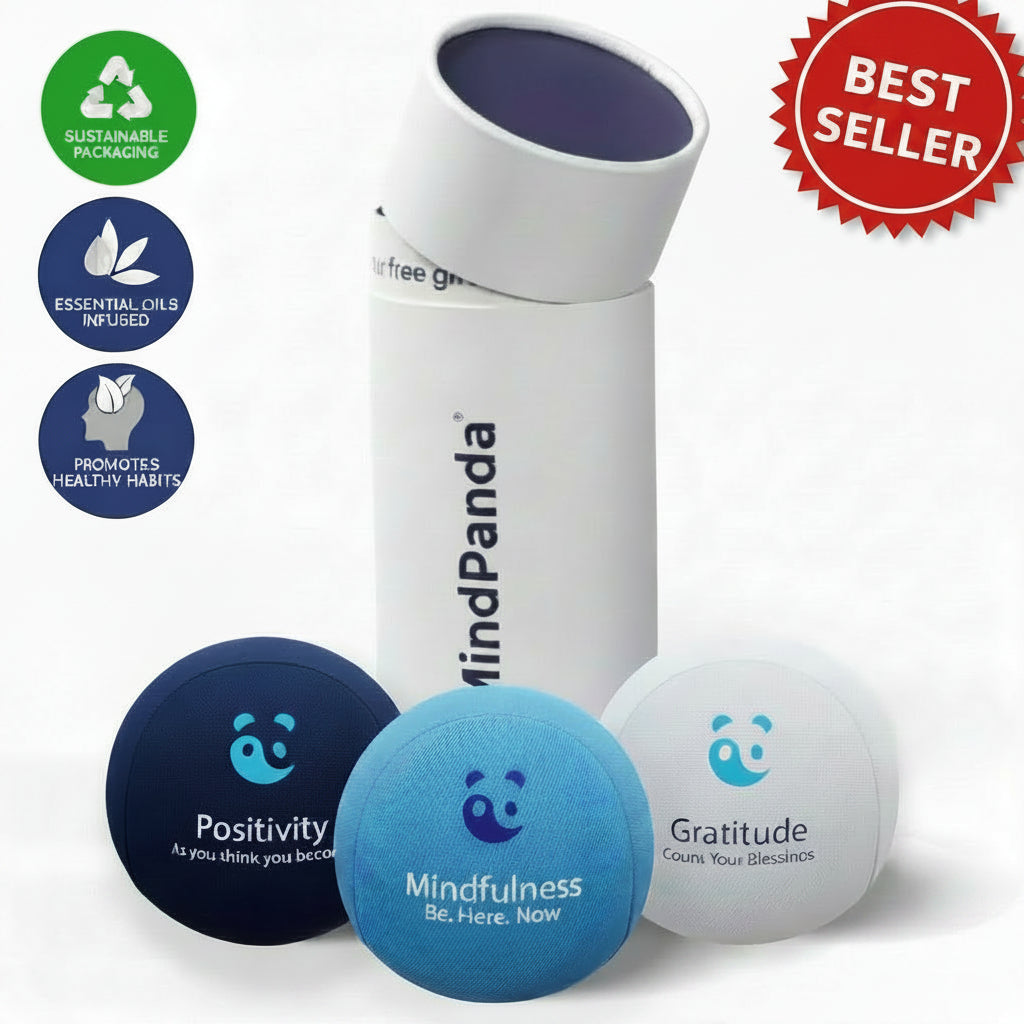
A tapping technique works best when it is part of a broader habit, and that is where a few simple tools can help. Our stress balls give your hands something tactile to hold onto right after a butterfly hug set, which some people find deepens the settling effect, and our journals and planners offer a place to jot down what triggered the moment and how the tapping helped.
Stress-relief products are designed with eco-friendly packaging and pair physical tools with reflection prompts, so building a calming routine does not mean juggling a dozen disconnected habits.
| Product line | How it pairs with the butterfly hug |
|---|---|
| Stress Balls | Tactile follow-up after a tapping set to extend the calming effect |
| Journals & Planners | A place to track triggers, patterns, and what helps |
- Browse our stress ball collection for a tactile companion to tapping-based techniques.
- Explore journals and planners on our main site to build a daily reflection habit.
- For teams or workplaces building a group wellness routine, our corporate gifting and bulk order options make it simple to share these tools widely.
This article is general information, not a substitute for advice from a qualified doctor. Consult a qualified healthcare professional about your own circumstances before acting on anything here.
FAQ
Is the butterfly hug a form of EMDR?
The butterfly hug is a bilateral stimulation technique developed within EMDR practice, specifically for group and self-administered use. It uses the same alternating left-right input that EMDR therapy uses with a clinician, but doing it on your own is not the same as a full EMDR session.
What is the butterfly hug technique in psychology?
In psychology and clinical practice, the butterfly hug refers to a self-administered bilateral stimulation method where you cross your arms and alternate taps on your shoulders or collarbones. It was created by Lucina Artigas in 1998 as a portable tool for calming distress during and after group EMDR sessions.
Can children use the butterfly hug method?
Yes, with simple adjustments. A caregiver can give a child a lap hug with alternating taps, or pair the rhythm with a toy, song, or drawing activity, and clinicians who work with children report good engagement with playful versions rather than the strict adult hand placement.
Does butterfly hug tapping actually help with anxiety?
Many people find the alternating tapping settles acute anxiety within a minute or two, likely tied to the calming effect bilateral stimulation has in clinical EMDR settings. Evidence specifically for self-help, unsupervised use is still limited, so treat it as a short-term soothing tool rather than a stand-alone treatment for ongoing anxiety.
What should I do if the butterfly hug does not help?
If a few sets bring no relief or distress increases, stop and try grounding instead, such as naming five things you can see around you. Persistent or worsening distress is a sign to talk with a licensed clinician, and resources like integrative therapy services that include EMDR can offer guided support.
Sources
- Fire in the Belly: The History of the Butterfly Hug, the EMDR-IGTP, and the ASSYST-Treatment Procedures - EMDR International Association
- The Butterfly Hug method for bilateral stimulation (MAP / EMDR Association PDF)
- Eye Movement Desensitization and Reprocessing (EMDR) Therapy - APA
- Living with stress and building resilience - CDC