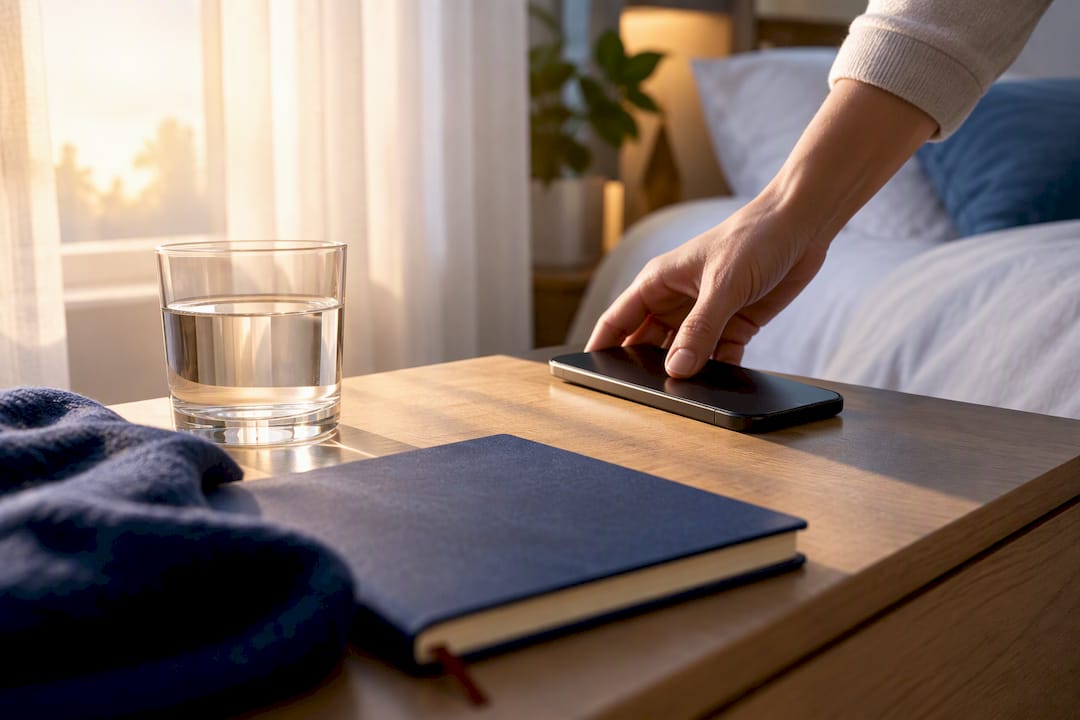
Delay any open-ended phone use for the first 30 to 60 minutes of your day. Start with a shorter time if that feels more realistic for your current habits. Use a cheap analog alarm and charge your phone outside the bedroom so the temptation isn’t within arm’s reach the second you wake up. Build the window up gradually instead of trying to go cold turkey on day one.
TL;DR:
- Limiting phone use in the first hour of the day significantly improves focus, mood, sleep quality, and reduces morning fatigue.
- Use simple routines like waking with a non-phone alarm, drinking water, moving briefly, journaling, and eating breakfast without screens to establish a habit.
- Environment fixes such as charging the phone outside the bedroom and pre-preparing minimalistic supplies boost routine adherence and reduce reliance on willpower.
- The first days are challenging due to withdrawal symptoms, but gradual scaling and setting specific check windows help overcome initial discomfort.
- Consistency and small environmental cues are more important than perfection, with broad habits outweighing rigid rules like the exact timing of breaks or specific durations.
Table of Contents
- What a Phone-Free Morning Actually Does for Your Brain
- A Simple Phone-Free Morning Routine You Can Copy Tomorrow
- The Mechanics That Make This Routine Stick
- What to Expect When It Gets Uncomfortable
- What the Research Settles and What It Doesn’t
- Why Perfection Isn’t the Point
- Small Tools That Make the Habit Easier to Keep
- Primary Sources and Further Reading
- Sources
- FAQ
What a Phone-Free Morning Actually Does for Your Brain
The case for a no phone morning routine isn’t just wellness folklore. Restricting bedtime and morning smartphone use has been shown to improve sleep duration, lower pre-sleep arousal, and reduce anxiety, according to a review of digital detox and smartphone restriction studies. The same research found that pilot trials of restricted phone use led to gains in positive mood and working memory. That’s not a small thing when your first waking thought sets the emotional tone for hours.
There’s a cost on the other side of the ledger too. Just 45 minutes of active smartphone use can raise subjective mental fatigue and weaken vigilance and inhibition, based on research on acute smartphone use and attention. Scroll for 45 minutes before you’ve had coffee, and you’re already starting the day running a mental deficit.
What consistency buys you:
- Sharper focus during the hours you’d normally spend reacting to notifications
- More stable mood before external inputs flood in
- Better sleep quality, since morning phone habits often echo nighttime ones
- A buffer against the fatigue that comes from early, unstructured scrolling
The benefits compound. One phone-free morning won’t transform your week, but a month of them tends to change how mornings feel entirely.
A Simple Phone-Free Morning Routine You Can Copy Tomorrow
You don’t need an elaborate ritual. You need a sequence that removes decisions, because decisions are where willpower leaks out.
Weekday version (30 to 45 minutes):
- Wake with an analog alarm. No phone in hand, no snooze negotiation with a screen.
- Drink a full glass of water before anything else. It’s a two-minute habit anchor that requires zero motivation.
- Move for 5 to 10 minutes. Stretching, a short walk, or a handful of push-ups all count. Morning movement is also linked to better weight outcomes in Harvard Health’s research on exercise timing.
- Eat breakfast without a screen in front of you. Even five distraction-free minutes changes the texture of the meal.
Weekend version: Stretch each step. Add 20 minutes of reading, a slower breakfast, or light journaling with prompts built for a quieter mind. The extra time on weekends is where the habit actually deepens.
Pro Tip: If you must touch your phone during the window, use the Named-Purpose Rule: pick up the device for exactly one task you named in advance, like checking the weather, then put it back down. Anything else is exactly the open-ended scrolling you’re trying to avoid.
The shortcut version for brutal mornings: water, two minutes of movement, one line in a journal. Three steps beat zero.

The Mechanics That Make This Routine Stick
Most phone-free morning attempts fail not from lack of motivation but from bad environmental design. Fix the environment and the willpower problem mostly disappears.
- Buy a separate alarm clock. An inexpensive one removes the phone’s core bedroom function and kills the reflex to check it the instant you wake up.
- Charge your phone outside the bedroom, ideally in another room entirely. Distance is the single biggest lever here.
- Prep the night before. Leave a book, a glass of water, or your workout clothes somewhere visible so the phone isn’t the default first move.
- Stack the new ritual onto an existing cue, like brushing your teeth or starting the coffee maker, so it rides on a habit you already have.
- Follow the “never miss twice” rule. One missed morning is a blip. Two in a row is the start of a new pattern, and it’s usually the wrong one.
None of this requires discipline in the traditional sense. It requires removing the phone from the first five feet of your morning.
What to Expect When It Gets Uncomfortable

The first few days are the hardest, and that’s backed by data, not just anecdote. A 72-hour smartphone restriction study of 127 participants found measurable withdrawal symptoms and a real spike in fear of missing out during that early window. If your chest tightens a little when you realize you haven’t checked anything in an hour, you’re not broken. You’re experiencing a documented, short-term response that tends to fade.
Tactics that help you push through it:
- Set a specific check window, like 8:00 a.m., so your brain knows relief is coming and stops negotiating every ten minutes.
- Tell one person what you’re doing. Light accountability reduces the urge to quietly cave.
- Scale up gradually: 15 minutes for a week, then 30, then 60. Jumping straight to a two-hour phone-free window is how most people quit by day three.
Reassess if the routine starts causing real problems, not just discomfort. Watch for disrupted sleep from anxiety about missed messages, genuine urgent work needs that can’t wait, or a partner or family member who feels shut out. A phone-free morning should reduce friction in your life, not create a new source of it.
What the Research Settles and What It Doesn’t
The evidence on reducing morning phone use is more solid than most wellness advice. Restricting smartphone access has a documented link to better sleep, lower anxiety, and improved working memory, and short bursts of active phone use measurably drag down attention and increase fatigue.
Where the science gets thinner is in specific, rigid rules. The popular 20/20/20 rule for eye strain has limited peer-reviewed support for its exact numbers, even though scheduled breaks in general are reasonable. Treat any rule promising a precise magic number with mild suspicion.
What actually holds up:
- Morning phone restriction improves mood, sleep, and focus in controlled studies.
- Withdrawal symptoms in the first days are real but typically temporary.
- Broad habits (movement, hydration, a consistent wake time) matter more than any single rigid rule.
If you want a guided starting point rather than building one from scratch, a short morning meditation or a structured journal routine gives you a template instead of a blank slate.
Why Perfection Isn’t the Point
The habit that actually worked for me wasn’t complicated: put a glass of water on the nightstand the night before. That’s it. It gave me one small, easy win before my hand ever found the phone, and that tiny win made the next step (getting up, moving, journaling) feel like momentum instead of effort.
Most advice about phone-free mornings assumes you’ll do it flawlessly from day one. You won’t, and that’s fine. The “never miss twice” rule matters more than any perfect streak, because streaks break, but a pattern you return to after a bad morning is the thing that actually changes your life over months. Aim for consistency, not a flawless record.
— Ravi
Small Tools That Make the Habit Easier to Keep
A phone-free morning routine gets easier when you have a physical cue that isn’t your phone. Mindpanda’s approach leans on exactly that: instead of asking you to rely on raw willpower, it gives you a tactile alternative to reach for.

Keep a journal on your nightstand and you’ve got somewhere to dump your first thoughts before your hand ever finds your phone. The journals and planners are built for that five-minute morning capture, and a themed stress ball doubles as a small mindful object you can hold instead of scrolling while your coffee brews. Neither replaces the habit mechanics above, but both give you something concrete to reach for during that first uncomfortable stretch. If you’re building habit kits for a team or want branded pieces for a wellness program, The business and wholesale solutions cover bulk orders and bespoke branding. Browse the journal collection and pick one that fits your morning before your next alarm goes off.
Primary Sources and Further Reading
- Digital detox and smartphone restriction effects (PMC7010281)
- Smartphone restriction and withdrawal (PubMed 30150959)
- Effects of acute smartphone use on attention and inhibition (PMC10754937)
- 20-20-20 rule evidence review (PubMed 36473088)
- Tips to change your night-owl lifestyle — Harvard Health
- Minimalist self-care and low-friction habits — Mindpanda
Sources
- Digital detox and smartphone restriction effects (PMC7010281)
- Smartphone restriction and withdrawal (PubMed 30150959)
- Effects of acute smartphone use on attention and inhibition (PMC10754937)
- 20-20-20 rule evidence review (PubMed 36473088)
FAQ
What is the best free app for building a morning routine without a phone?
The most effective tool isn’t an app at all. It’s a paper journal or planner and a separate alarm clock, since the entire goal is reducing screen contact. If you want structure, Mindpanda’s morning journal templates work as a free-form print or planner-based guide instead of another app competing for your attention.
What is the 4 a.m. rule?
The 4 a.m. rule is an informal productivity idea suggesting extremely early waking gives you uninterrupted time before the world wakes up. There’s no peer-reviewed backing for that specific hour, and Harvard Health’s guidance on changing sleep timing recommends shifting your schedule gradually rather than forcing a drastic, sleep-disrupting change.
Can three days without a phone reset your brain?
Three days won’t “reset” your brain, but it will produce noticeable effects. A 72-hour restriction study found real withdrawal symptoms and increased FoMO during that window, which suggests short breaks disrupt habitual patterns without erasing them. Lasting change comes from sustained practice, not a single long weekend.
What is the 20/20/20 rule for morning routines?
The 20/20/20 rule usually refers to a screen-break method: every 20 minutes, look at something 20 feet away for 20 seconds. Peer-reviewed evidence for those exact numbers is limited, so treat it as a reasonable habit rather than a proven formula, and prioritize consistent sleep and movement instead.