Your personal mindfulness at work policy is this: take one short, device-free pause every two to three hours, every workday, no exceptions. Start right now with three tiny actions: a 60-second box breath, a stress ball on your desk within reach, and one line in a journal about how you feel. Stress balls and journals can make the last two easier to actually keep up.
TL;DR:
- Micropractices like brief breathing exercises, journaling, and stretching for 2 to 5 minutes can significantly reduce stress when done consistently during the workday.
- Pair each micropractice with an accessible trigger, such as meeting endings or hourly timers, and use simple products like stress balls or journals to reinforce habits.
- Short, repeatable routines are more sustainable and effective than longer sessions, especially when tied to natural work triggers and tracked regularly.
- Use scent-free options or personal diffusion devices in shared spaces to avoid air quality issues and coworker discomfort caused by aromatherapy.
- Building a one-page personal policy with minimal rules and clear triggers dramatically increases the likelihood of maintaining mindfulness habits at work.
Table of Contents
- Practical micropractices and the products that make them stick
- How to build a one-page personal policy you’ll actually follow
- Safety rules for scented products in shared workspaces
- Three ready-to-use routines for your workday
- Why short, product-backed habits beat willpower alone
- Build your starter kit with MindPanda
- Sources
- FAQ
Practical micropractices and the products that make them stick
Short, repeatable actions beat long sessions you never get around to. A large randomized trial found that a brief, digital meditation program reduced perceived stress and job strain in employees, with 5 to 10 minutes a day producing measurable benefit at 8 weeks and effects still holding at 4 months, especially for people who kept up at least 5 minutes daily, according to research published on PubMed. Pair each micropractice with a trigger and a product so you do not have to think about it.
- Guided breathing or a short digital meditation, 5 to 10 minutes, once or twice a day, works well with a simple breathing script or a two-minute meditation you can run from your phone.
- Micro-journaling, 1 to 5 minutes, using a planner to log one win and one thing to let go of before you close your laptop.
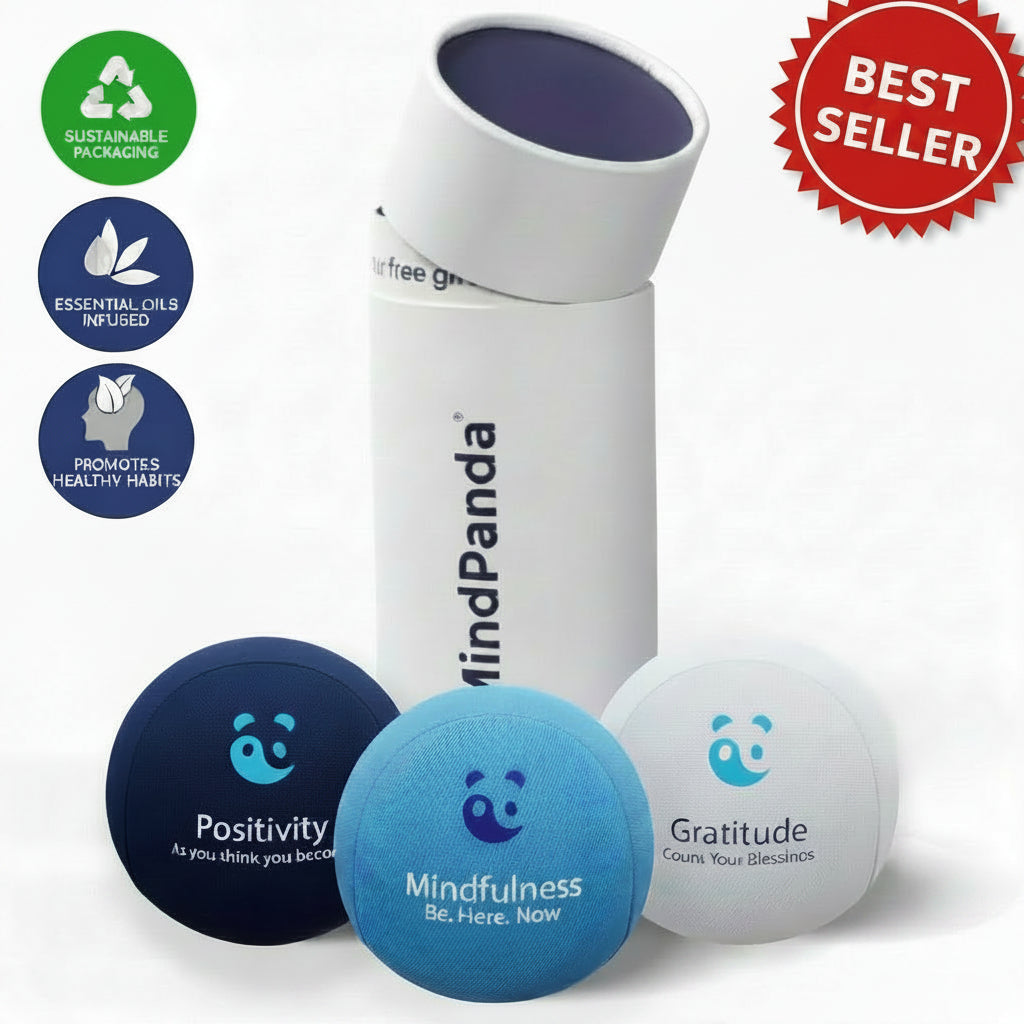
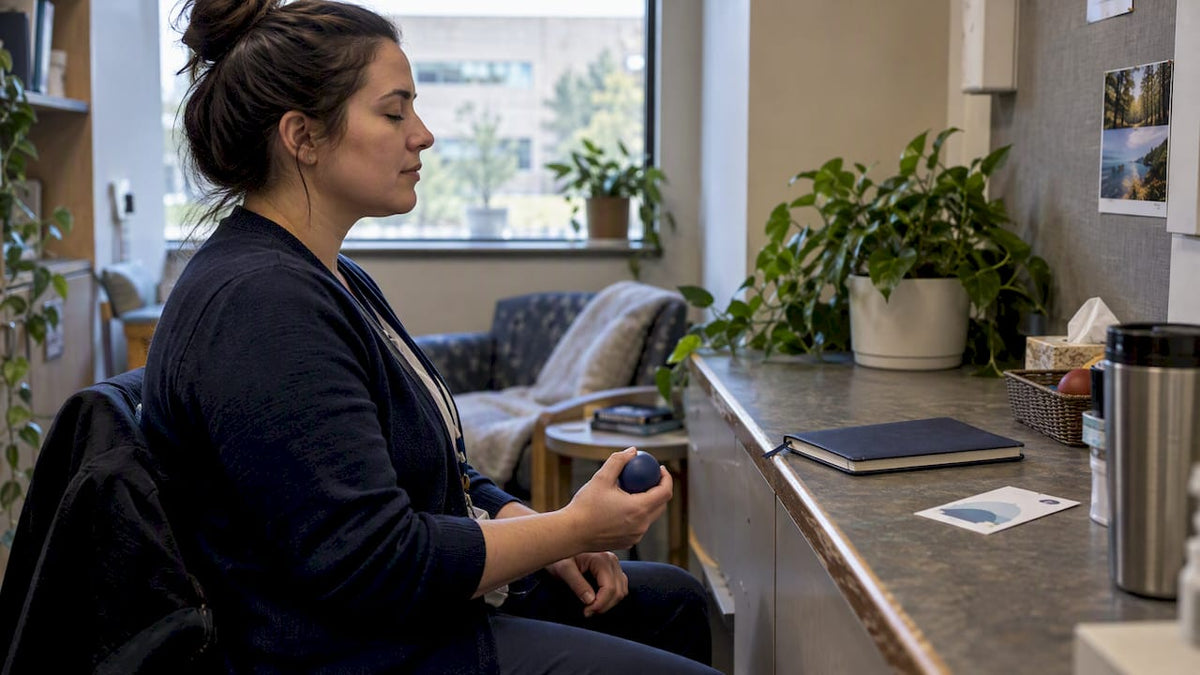
- A stress ball during a focus sprint gives your hands something to do while your mind stays on the task, instead of drifting to your phone.
- Mindful coloring or a short creative task for 5 minutes resets attention without requiring you to leave your desk.
- A mantra or sticky note near your monitor cues you to refocus after a notification pulls you away.
- A two-minute walk or desk stretch every couple of hours loosens the body and breaks up sitting.
- Aromatherapy, used carefully, can support a calming cue, though shared offices call for caution, which the next section covers.
Harvard Health frames mindfulness as paying attention to the present with openness and curiosity, not as emptying your mind, and points to practical techniques like box breathing and active listening as entry points, according to its explainer on mindfulness practices. That framing matters because people often give up on mindfulness thinking they are doing it wrong when their mind wanders.
Pro Tip: Keep one tactile object, one breathing cue, and one journal within arm’s reach so you never have to search for a tool when stress hits.

How to build a one-page personal policy you’ll actually follow
A policy only works if it fits on one page and takes seconds to read. Write a single mission sentence, such as “I pause for two minutes every two hours to reset my attention,” then set three rules covering where, when, and how.
- Pick your triggers. Use a calendar reminder, the end of each meeting, or an hourly timer, and assign one micropractice to each.
- Set a minimal dose. Three short sessions a day, 2 to 5 minutes each, is enough to build the habit without feeling like a burden.
- Track it simply. A checkbox on your planner or a one-line journal entry each evening is enough; a related review of workplace mindfulness interventions found that practices tied to natural triggers tend to stick better than standalone sessions, according to findings on PubMed.
- Review monthly. Look back at your tracking and drop whatever you skipped more than you did.
- Adapt for your setting. Remote workers can use camera-off time between calls; people in shared offices may need quieter or scent-free tools.
A practical checklist for mindfulness at work can help you fill in specifics once you have the skeleton down. For a structured approach to folding small habits into a packed day, a workflow for managing anxiety daily offers another angle on the same idea.
Safety rules for scented products in shared workspaces
Scent can genuinely help some people relax, but it carries real risks in an office. Over 70% of studies in a systematic review found that aromatherapy reduced anxiety, with lavender and citrus oils cited most often for calming effects, according to research on PubMed. That same evidence comes with caveats: diffusers release compounds that can affect indoor air quality, and not everyone in a shared space wants or can tolerate the smell.
- Skip diffusers in shared or poorly ventilated spaces and switch to a personal inhaler stick, a sealed aroma pendant, or a scent-free tactile tool instead.
- Dilute and label any essential oil you keep at your desk, and store it away from food and drink.
- Check ventilation before using any scented product for an extended stretch, since vapors can build up in closed rooms.
- Know the emergency steps: essential oils and reed diffuser liquids can be toxic if ingested or misused, and can cause skin or respiratory reactions, so keep contact information for poison control on hand, according to Poison Control’s guidance.
If a coworker has allergies or asthma, a scent-free option is the safer default.
Three ready-to-use routines for your workday
The goal is friction-free repetition, not perfect execution. Here are three short routines built around moments that already happen in your day.
- Morning (3 minutes): Open your planner, write one intention for the day, then run a two-minute breathing exercise before checking email.
- Mid-afternoon (5 minutes): Hold a stress ball during a 10-minute focus sprint, then switch to five minutes of mindful coloring or a short walk once the timer ends.
- Post-meeting (90 seconds): Do a 60-second box breath at your desk, then write one line in your journal about what the meeting left unresolved.
Remote workers can keep a small drawer kit, a stress ball, a pocket journal, and a breathing card, so the routine travels between home office setups without extra thought. A camera-off minute between video calls works as a natural post-meeting trigger. In a shared office, the same kit works just as well since none of it requires sound or scent.
Pro Tip: Consistency beats intensity: three 2-minute resets a day will do more for your stress levels than one 20-minute session you only manage once a week.

Why short, product-backed habits beat willpower alone
I’ve seen the same pattern over and over: people start with big ambitions, a 30-minute morning meditation, a journaling practice with pages of prompts, and quit within two weeks because the bar was too high. A commuter who switched to a 60-second breathing exercise at red lights and a one-line evening journal entry kept it up for months, not because the practice was impressive, but because it took no planning and no extra time.
The research backs this up: brief, consistent practices tied to things you already do work better than sessions that demand a clear calendar. A good policy is small enough that skipping it feels harder than doing it.
— Ravi
Build your starter kit with MindPanda
A stress ball for focus sprints, a journal for one-line check-ins, and a planner for morning intentions cover most of what this article recommends, and MindPanda’s stress ball collection is a quick place to start.
If you’d rather grab everything at once, the Thrive & Reflect Bundle pairs a journal with planning tools in one order, and scent-free options are worth choosing if you share a desk or office. Teams building kits for a whole group can look at bulk and branded options instead of ordering one at a time.
Sources
- Digital meditation to target employee stress (JAMA Network Open republished on PubMed)
- Aromatherapy systematic review (PubMed)
- Essential oils: Poisonous when misused | Poison Control
FAQ
What counts as a mindfulness at work policy?
It is a short, personal set of rules, not a company program, that tells you when and how to pause during the workday. A good version fits on one page and pairs a trigger, like the end of a meeting, with a quick action such as a breathing exercise or a journal entry.
How long should a mindfulness break be during work?
Most effective breaks run from 1 to 10 minutes, with research showing 5 to 10 minutes of daily digital meditation producing measurable stress reduction within 8 weeks, according to a large randomized trial. Shorter resets of 60 to 90 seconds work well between meetings or tasks.
Is aromatherapy safe to use at a shared desk?
Aromatherapy can help reduce anxiety for some people, but diffusers release compounds that may affect air quality and bother coworkers with allergies or asthma, according to Poison Control. Personal inhaler sticks or scent-free tactile tools are safer choices in shared spaces.
What products help build a consistent mindfulness habit?
A stress ball for focus sprints, a journal for quick check-ins, and a planner for morning intentions cover the main micropractices this article describes. MindPanda’s journals and planners are built around this kind of daily, low-effort use.
How do I stay consistent with mindfulness practices at work?
Tie each practice to something that already happens in your day, like the start of a shift or the end of a call, rather than relying on memory alone. Tracking with a simple checkbox or one-line journal entry, then reviewing monthly, helps you notice what’s sticking and what to drop.