When exam stress spikes, the fastest reset is a slow breathing cycle, a few minutes of movement, water and a small snack, and one tiny study task you can start right away. These four moves calm your body and give you a sense of control within minutes. The rest of this guide walks through the evidence behind them and how to practice them so they work when you need them most.
TL;DR:
- Breathing in a 4-2-7 pattern, movement for five minutes, and quick retrieval practice can rapidly reduce exam stress within minutes.
- Regular sleep, daily physical activity, and balanced nutrition are essential foundations that support emotional regulation during exams.
- Practicing familiar relaxation techniques like paced breathing and grounding exercises daily helps ensure they work effectively under pressure.
- Small, predictable study actions paired with calming cues lower anxiety and make starting to study less overwhelming.
- Recognizing symptoms like chronic sleep issues or panic attacks signals the need for professional support beyond self-care routines.
Table of Contents
- Quick-action toolkit: a checklist to use right now
- Study and scheduling strategies that reduce anxiety
- Sleep, movement, and nutrition: the foundation under everything else
- Concrete relaxation practices you can learn and rehearse
- Cognitive techniques: reframing and tiny exposures
- Day-of checklist: routines, pacing, and handling panic
- Recognizing when stress needs structured support
- How MindPanda resources support this toolkit
- A short practitioner’s note
- Try tools built for this exact routine
- FAQ
- Sources
Quick-action toolkit: a checklist to use right now
When panic hits, you do not need a complicated plan. You need something fast and familiar.
- Breathe in a 4-2-7 pattern: inhale for 4 seconds, hold for 2, exhale for 7, and repeat four times.
- Name 5 things you see, 4 you can touch, 3 you hear, 2 you smell, and 1 you taste.
- Move for 5 minutes: walk, stretch, or shake out your arms and legs.
- Drink water and eat a small snack if you have not eaten in a few hours.
- Pick one 10-minute retrieval practice task (close the book and write what you remember) and start it immediately.
Pro Tip: Rehearse this checklist during ordinary study sessions, not for the first time on exam day, so your body already recognizes the routine.
Study and scheduling strategies that reduce anxiety
Anxiety often grows in the space between “I should study” and actually starting. Closing that gap with small, predictable actions lowers the pressure.
- Use 25-5 study cycles (25 minutes of focused work, 5-minute break) and stretch them to 40-10 for denser material.
- Favor retrieval practice (self-quizzing, practice tests, flashcards) over rereading notes, since testing yourself surfaces gaps rereading hides.
- Build a realistic revision plan: cap your daily goal at two or three topics, protect one consistent sleep window, and schedule short active breaks between sessions.
- Pair a calming cue, like a slow breath or a tactile object, with your first tiny study action each day so starting feels less loaded.
A randomized controlled trial meta-analysis of test-anxious university students found that targeted interventions produced small but real reductions in anxiety symptoms, and the benefit compounded when students practiced consistently rather than once before a big test.
Sleep, movement, and nutrition: the foundation under everything else

No calming technique works well on four hours of sleep and an empty stomach. The CDC recommends that adolescents get 8 or more hours of sleep and at least 60 minutes of mostly aerobic activity daily, and both habits directly support attention and emotional regulation during high-pressure weeks.
Sleep and activity are not optional extras during exams. They are part of your preparation.
- Keep a consistent sleep and wake time, even the night before an exam.
- Build a 30 to 60 minute wind-down with no heavy screen use before bed.
- Take short walks, stretch, or join a casual game between study blocks instead of sitting for hours straight.
- Eat a light breakfast, skip heavy late-night caffeine, and keep a quick snack nearby for focus.
CDC analysis also links higher non-school screen use among teenagers to poorer rest and higher reported anxiety symptoms, which makes protecting sleep during exam season worth defending even when it feels like wasted time.
Concrete relaxation practices you can learn and rehearse
These micro-practices work best when they are familiar, not improvised under pressure.
- Paced breathing: inhale for 4 counts, hold for 4, exhale for 6, repeated for one to two minutes.
- Progressive muscle relaxation: tense your shoulders for 5 seconds, release, then do the same with your hands, jaw, and legs, noticing the contrast each time.
- 60-second visualization: picture a calm, specific place in detail, including one sound and one smell, until your breathing slows.
- Grounding 5-4-3-2-1: name what you can see, touch, hear, smell, and taste to pull attention out of a spiral.
A systematic review of nursing students found that complementary approaches, including guided imagery and progressive muscle relaxation, reduced test anxiety across several small trials, though study quality varied. Our breathing exercise guide walks through additional variations worth practicing.
Pro Tip: Practice one relaxation technique daily during study weeks, not just before the exam, so it becomes automatic rather than one more thing to remember.

Cognitive techniques: reframing and tiny exposures
Your thoughts about an exam can spike anxiety faster than the exam itself. A few low-effort shifts change that pattern.
- Spend 5 minutes before studying or testing writing freely about what worries you, without editing or stopping to think.
- Replace outcome language (“I have to get an A”) with process language (“I will review two chapters and test myself once”).
- Keep a short checklist to catch catastrophic thoughts: ask whether you are predicting the worst case as if it were certain.
- Simulate one short test-like task under mild time pressure before the real exam to make the format predictable instead of unknown.
Our guide on journal prompts for anxiety offers structured starting points if a blank page feels harder than the worry itself.
Day-of checklist: routines, pacing, and handling panic
The night before, pack your bag, set two alarms, and avoid last-minute cramming that disrupts sleep.
- Eat a light breakfast and drink water before you leave.
- Arrive with a buffer so you are not rushing.
- Use a slow breath before starting, and read each question carefully.
- Set rough time checkpoints so no single question eats your whole clock.
- If panic rises mid-exam, pause for one grounding cycle or slow breath, and ask the proctor for a minute if you need it.
Recognizing when stress needs structured support
Persistent sleep loss, missed classes, panic attacks, or pulling away from friends and schoolwork are signals that go beyond normal exam nerves. If thoughts of self-harm come up, reach out to a school counselor, trusted adult, or a crisis line immediately. A meta-analysis of preventive interventions found structured psychological and educational programs produce a measurable reduction in anxiety, so school counselors and student health services are worth contacting before stress becomes unmanageable.
How MindPanda resources support this toolkit
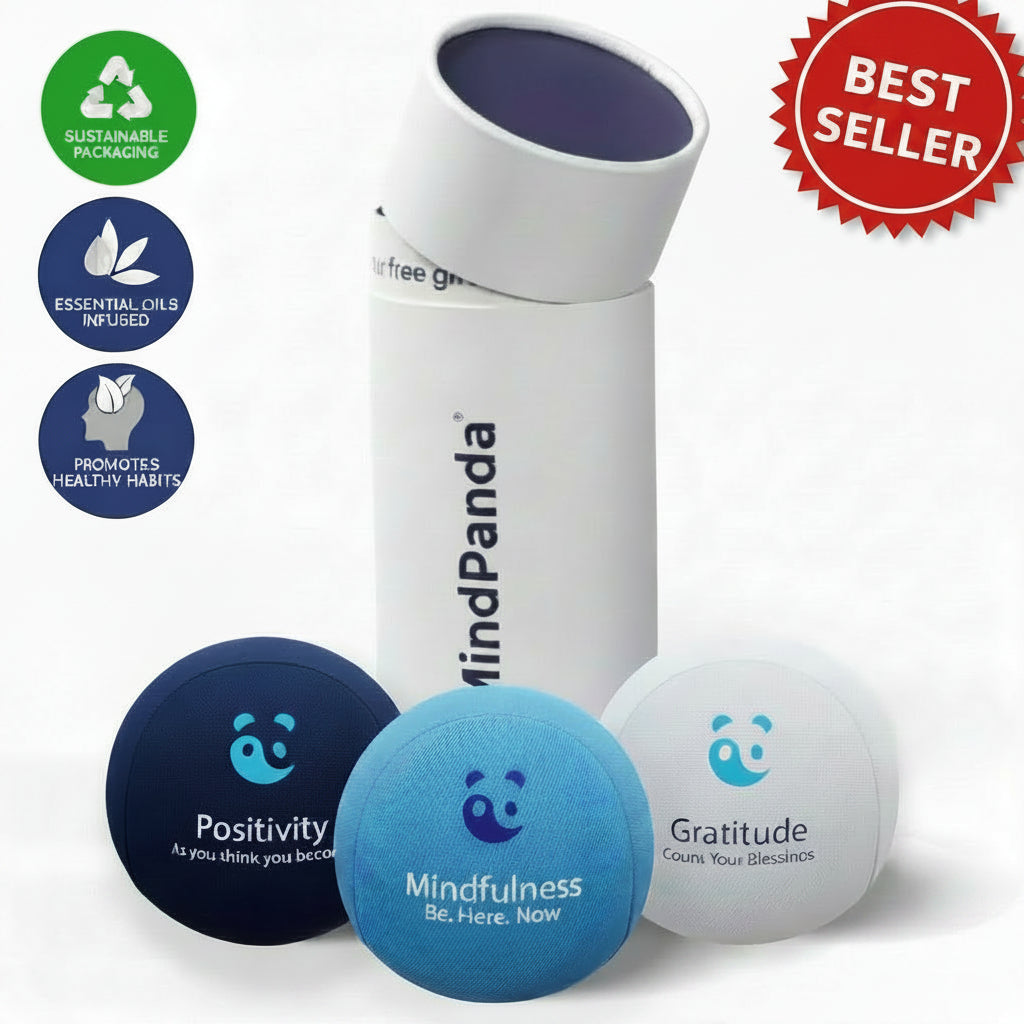
Planners, journals, and tactile tools will not replace counseling, but they fit naturally into the habits above. A daily planner supports the tiny-step scheduling described earlier, a journal gives structure to expressive writing, and a stress ball offers something physical to hold during a grounding or breathing practice. Our offerings reflect a broader focus on approachable, everyday self-care. These products work as supportive adjuncts alongside sleep, planning, and professional help when needed, never as a substitute for it.
A short practitioner’s note
Small, repeatable steps beat last-minute overhauls every time. Combining protected sleep, a realistic study plan, and one practiced calming skill does more than any single trick on its own. If stress stays heavy despite these steps, asking for help is a reasonable, normal move, not a failure.
— Ravi
Try tools built for this exact routine
We built our planners, journals, and stress balls around the same small, repeatable actions this guide describes, so your calming skill and your study plan live in one place instead of scattered across apps and sticky notes.
- A daily planner supports the tiny-step scheduling from the study planning section above.
- A journal gives expressive writing and reframing a dedicated, private space.
- A stress ball gives your hands something to do during a breathing or grounding practice.
| Product | Practice it supports |
|---|---|
| Balance productivity planner | Daily scheduling and tiny study tasks |
| Journals & Planners | Expressive writing and reframing |
| Stress Balls | Grounding and breathing practice |
Browse our journals and planners to find a format that fits your routine, or start with a stress ball for something to hold through your next practice session.
This article is general information, not a substitute for advice from a qualified doctor. Consult a qualified healthcare professional about your own circumstances before acting on anything here.
FAQ
What are some tips for college students with test anxiety?
Practice a paced breathing pattern daily, use retrieval practice instead of rereading, and simulate test conditions briefly before the real exam. A meta-analysis of test-anxious university students found targeted interventions produced measurable reductions in anxiety when practiced consistently.
What are some resources for managing stress?
School counselors, student health services, and primary care providers can connect you with brief, structured support such as school-based anxiety programs. Our sleep and anxiety routine guide and the Colossus Systems overview of student stress strategies offer additional practical approaches.
What coping strategies help teenagers experiencing stress?
Protecting sleep and daily movement matters most, since the CDC recommends 8 or more hours of sleep and at least 60 minutes of activity for adolescents. Pairing that foundation with grounding exercises and a consistent wind-down routine gives teens tools that work under pressure.
What strategies help manage exam stress as a student?
Combine a practiced calming skill, like paced breathing or progressive muscle relaxation, with a realistic study schedule built around retrieval practice. A systematic review of complementary interventions found techniques like guided imagery and muscle relaxation reduced test anxiety across several small trials.
When should exam stress be treated by a professional?
Persistent sleep loss, panic attacks, or avoidance that disrupts classes are signs to speak with a school counselor or primary care provider. The Pursuit Counseling guide to stress reduction outlines when self-help steps are not enough on their own.
Sources
- CDC adolescent sleep and activity guidance (MMWR)
- The efficacy of interventions for test-anxious university students: A meta-analysis of randomized controlled trials
- Interventional strategies to reduce test anxiety among nursing students: systematic review