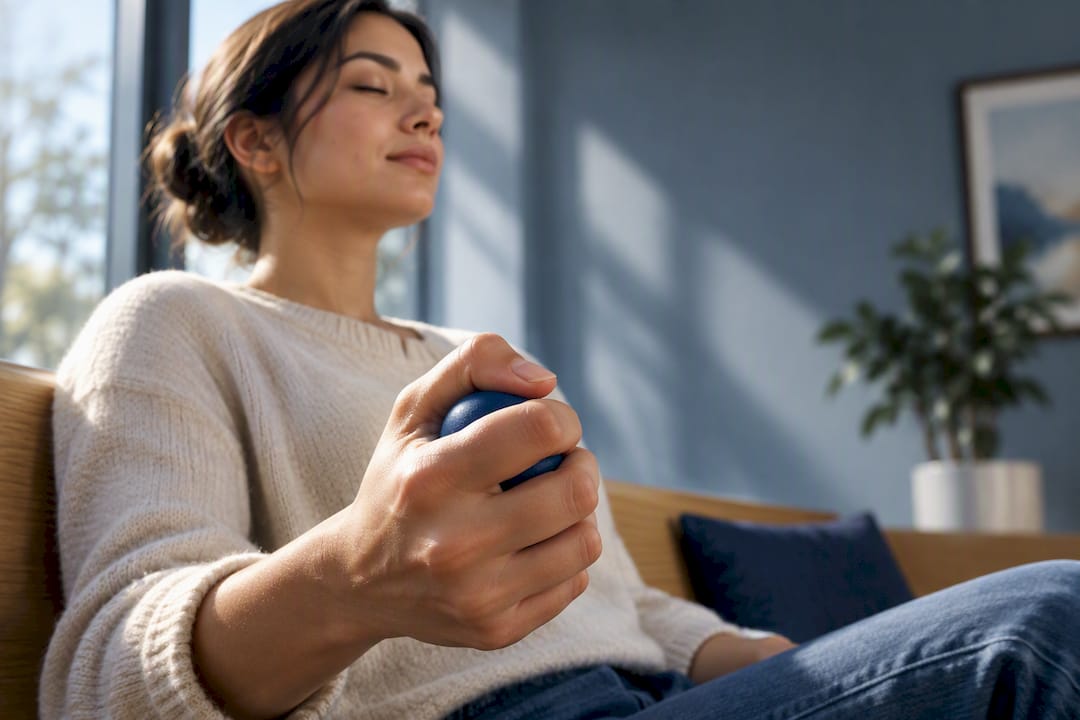
Yes, breathing with a stress ball works for most people dealing with acute stress. Squeezing on the inhale and releasing on a slow exhale gives your nervous system a physical anchor, which makes the breathing easier to sustain and the calm easier to reach. Try it now: inhale while squeezing, hold briefly, and exhale slowly while releasing your grip. It won’t fix chronic anxiety on its own, but for a spike of nerves before a meeting, a test, or a hard conversation, it’s one of the fastest tools available.
TL;DR:
- Squeezing a stress ball during exhalation enhances relaxation by activating the parasympathetic nervous system and providing a physical focus to distract from racing thoughts.
- Using a controlled inhale for 4 or 5 seconds, holding briefly, and then exhaling slowly for 6 to 8 seconds is effective, but individuals with respiratory issues should shorten or skip breath holds.
- The five-finger tracing method offers an accessible multisensory alternative for children or those who struggle with breath awareness, reinforcing focus and calm.
- Combining around 20 minutes of stress-ball use with specific breathing patterns has shown measurable reductions in fear, anxiety, and physiological markers before medical procedures.
- Stress balls are tools for situational relief, not a substitute for clinical treatment, and the resistance, material, and size should match hand strength and intended use.
Table of Contents
- How Do You Practice Breathing With a Stress Ball?
- What Are the Best Stress Ball Breathing Techniques?
- Why Does Squeezing a Stress Ball While Breathing Actually Help?
- What Should You Look for in a Stress Ball?
- How Do You Build a Habit and Adapt It for Panic or Kids?
- Where Does Mindpanda Fit Into This Practice?
- What Do People Actually Notice When They Try This?
- Try the Breathing Routine With a Stress Ball Built for It
- Sources
- FAQ
How Do You Practice Breathing With a Stress Ball?
You don’t need a quiet room or a meditation app. You need one hand, a ball, and about a minute.
Sit or stand with your shoulders relaxed and your feet flat on the floor if you’re seated. Hold the stress ball in your dominant hand, though switching hands halfway through can help if one side of your body tends to hold more tension. You can do this one-handed at a desk, in a car (parked), or standing in a hallway before you walk into a room full of people.
Here’s the core sequence:
- Inhale for 4 counts while squeezing the ball firmly, but not to the point of strain.
- Hold for 2 counts with the squeeze sustained.
- Exhale for 6 counts while slowly releasing your grip, letting your hand go loose by the end of the breath.
- Pause for 1 count before starting the next cycle.
Repeat that several times and you’ve used about a minute or so. That’s the whole routine. Calm’s guidance on stress-ball use backs this pairing specifically: inhaling while squeezing and exhaling while releasing amplifies the relaxation response compared to squeezing alone.
This works particularly well right before a high-stakes moment: two minutes before walking into an interview, during the last few minutes before a big exam, or in the middle of a panic spike at your desk when leaving the room isn’t an option. If you’re in a shared office, keep the ball low, near your lap, and slow your breathing rather than making it obvious. Nobody needs to know you’re doing a nervous-system reset.
Pro Tip: Count the exhale silently in your head rather than out loud. Vocalizing the count can shorten your breath without you noticing, which defeats the purpose of the longer exhale.
What Are the Best Stress Ball Breathing Techniques?
Three methods cover almost every situation you’ll run into: a general-purpose squeeze, a formal breath-hold pattern, and a tracing method that works well for kids or anyone who struggles to focus on breath alone.
The breath-synchronized squeeze
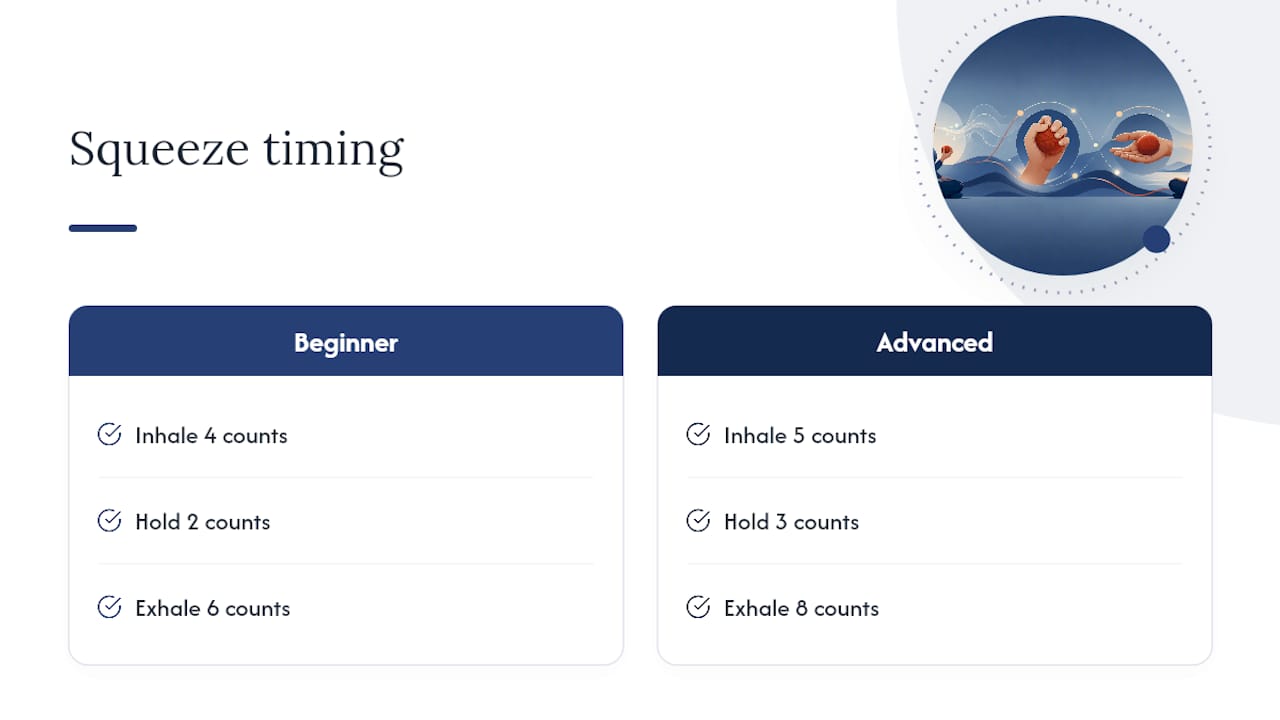
This is the technique described above, and it’s the one to default to. For beginners, keep the ratio simple: inhale 4, hold 2, exhale 6. As you get comfortable, advanced pacing stretches this to inhale 5, hold 3, exhale 8, which deepens the parasympathetic effect but takes more lung control. If you’re new to it, don’t force the longer counts on day one.
The 4-7-8 adaptation
The 4-7-8 method (inhale 4, hold 7, exhale 8) is a well-known breath pattern, and a registered clinical trial has specifically tested it alongside stress-ball exercise before upper GI endoscopy procedures, using sets of 4-7-8 breathing paired with around twenty minutes of stress-ball use to measure effects on fear, anxiety, and physiological markers like heart rate and blood pressure. That’s a meaningful data point: researchers thought the combination was worth testing in a clinical, pre-procedure anxiety context, not just a wellness blog context.
That said, a 7-count hold is long, and forcing it when you’re already anxious or short of breath can backfire. If you have asthma, COPD, or notice yourself feeling dizzy or lightheaded, shorten the hold to 2 to 3 counts, or skip the hold entirely and go straight from inhale to a slow exhale. Breathlessness guidance from UK patient resources on the “calming hand” technique makes the same point: the exhale matters more than the hold, and a longer, relaxed exhale is what settles breathlessness, not a longer breath hold.
Five-finger hand-trace breathing
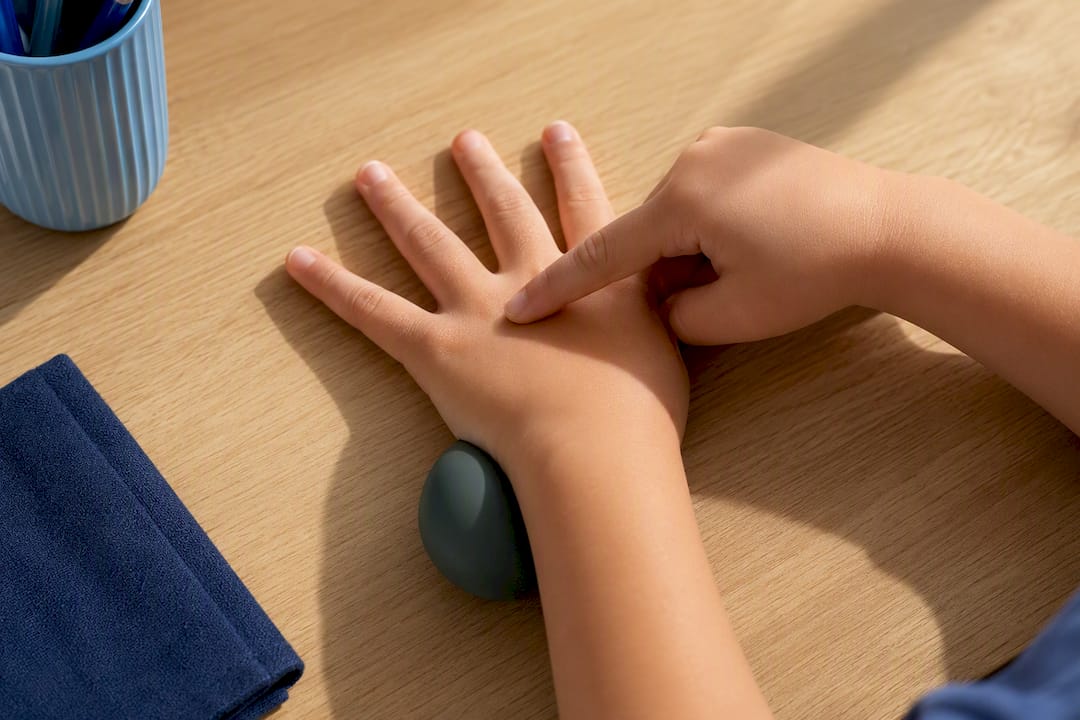
Trace the outline of your free hand with one finger of the hand holding the ball, or trace your stress-ball hand with the opposite index finger. Inhale as you trace up one side of a finger, exhale as you trace down the other side, moving finger to finger until you’ve traced all five. Cleveland Clinic describes five-finger breathing as a multisensory technique that’s especially accessible for children, since the physical tracing gives young kids something concrete to focus on instead of an abstract instruction to “breathe slowly.”
Safety cues across all three: stop immediately if you feel dizzy, lightheaded, or short of breath in a way that worsens rather than eases. People with asthma or COPD should favor shorter holds and never force a breath hold past comfort. This is a calming tool, not a lung-training exercise.
Why Does Squeezing a Stress Ball While Breathing Actually Help?
Two things happen at once, and that overlap is the whole mechanism. Squeezing gives your brain a concrete physical task to focus on, which pulls attention away from the racing thoughts driving your stress. At the same time, the slow, extended exhale you’re pairing with the squeeze signals your parasympathetic nervous system, the branch that lowers heart rate and eases muscle tension, to take over from the fight-or-flight response.
Roughly 20 minutes of stress-ball exercise combined with formal breathing sets was substantial enough a pairing that researchers built a registered clinical trial around it, testing effects on fear, anxiety, and physiological parameters before endoscopy procedures.
That’s a stronger evidence signal than most stress-relief tools get. It doesn’t mean the combination is a proven cure for anxiety disorders. Healthline’s review of stress-ball evidence is clear on this point: stress balls offer real tactile distraction and temporary relief for situational stress, but they’re not a substitute for treatment when someone has a diagnosed chronic anxiety condition.
Think of it as a circuit breaker, not a rewiring. It’s excellent for the spike, the flood of adrenaline before a presentation, the tight chest during a hard phone call, but it won’t address the underlying pattern driving daily anxiety. The main safety limit is simple: don’t squeeze so hard or so often that your hand cramps or aches, and if you feel dizzy from the breathing pattern, stop and breathe normally for a minute before trying again.
What Should You Look for in a Stress Ball?
The right ball depends on your hand strength and what you’re using it for, not just what looks appealing on a shelf.
- Material: Foam balls give the softest resistance and suit smaller hands, kids, or anyone with arthritis or hand pain. Gel-filled balls offer a firmer, more satisfying squeeze for people who want real resistance to work against. Fabric-covered, bead-filled balls sit in between and tend to hold their shape longest.
- Resistance: Match it to your grip. If your hand tires within a minute, the resistance is too high for repeated breathing cycles, since you want to sustain 8 to 10 cycles without hand fatigue undermining the exercise.
- Shape and size: Round balls are the standard choice for one-handed squeezing during breath work. Egg-shaped versions fit smaller or larger hands more comfortably and are a common pick in classroom stress-relief activities for kids.
- Extra features: Textured surfaces add a grounding, sensory element that pairs well with five-finger tracing. Aromatherapy-infused balls (scented with lavender or similar calming scents) can layer a second sense into the routine, though anyone with fragrance sensitivities or allergies should skip these.
- Care: Wipe with a damp cloth; avoid submerging foam or gel-filled balls in water. Replace one once it splits, leaks, or loses its rebound, usually after months of regular daily use.
How Do You Build a Habit and Adapt It for Panic or Kids?
A two-week habit doesn’t need a big commitment. Do the 60 to 90 second routine three times a day for 14 days: once in the morning, once mid-afternoon, once before bed. Set a phone reminder for the first week; by week two, you’ll likely reach for the ball automatically during real stress spikes, not just scheduled sessions.
For kids, shorten every count. Try inhale 3, exhale 4, and lean on the five-finger trace since the physical movement holds their attention better than counting alone. Frame it as a game: “trace your fingers and breathe like you’re smelling a flower, then blowing out a candle.”
During a genuine panic episode or hyperventilation, don’t try to force slow, controlled breathing right away, since that can feel impossible and add frustration on top of panic. Focus only on making the exhale longer than the inhale, even if both are short and shaky at first. Squeeze the ball as a grounding point for your hands while you let the exhale naturally stretch out over a few cycles.
- Squeeze once, hard, and notice the sensation in your hand.
- Let the exhale run longer than you think it needs to.
- Repeat for one minute before checking in on how you feel.
If panic episodes are frequent, pair this with guided breathing audio or, better, a conversation with a therapist. A stress ball is a first-response tool, not a treatment plan.
Where Does Mindpanda Fit Into This Practice?
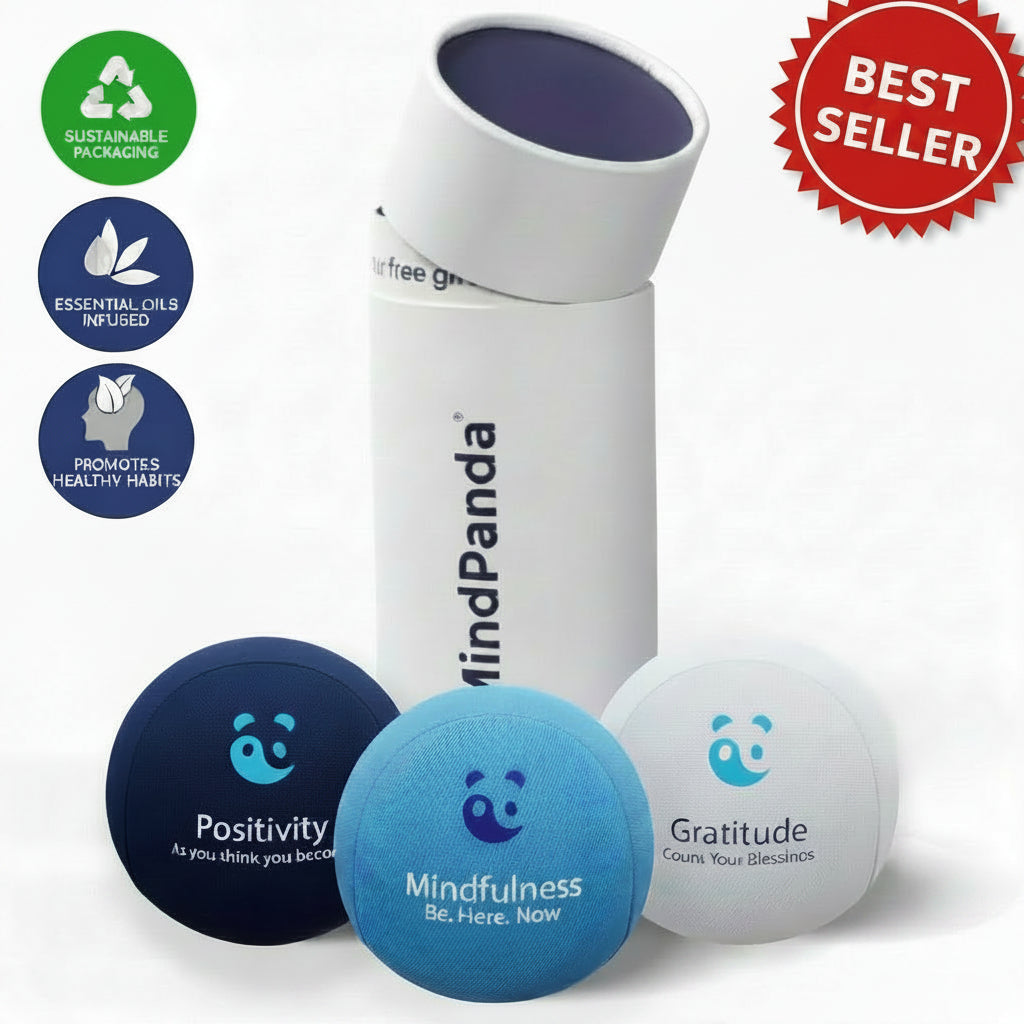
Some stress balls are designed with breathing routines in mind, offering varied resistance levels, size options, and textured or aromatherapy variants to support use with breath work. That’s a small design detail, but it’s the difference between a tool you use once and one you actually keep on your desk.
Mindpanda’s blog also publishes practical routines, including a breakdown of quick stress-ball exercises and a piece on when stress balls help anxiety and when they don’t, aimed at setting honest expectations rather than overselling a foam ball as therapy.
Author: Ravi
Products like these are tools for the moment, not clinical treatment. If stress or anxiety is interfering with daily life, sleep, or work on a regular basis, that’s a signal to talk to a doctor or licensed therapist, not just add another wellness gadget to the desk drawer.
What Do People Actually Notice When They Try This?
Most people notice something within the first minute, usually a drop in shoulder tension or a slower heartbeat, though how strong that relief feels varies a lot from person to person and day to day. Some people respond better to the breath-synchronized squeeze; others get more out of the five-finger trace, especially if their mind wanders on plain counting.
Treat the first two weeks as an experiment. Jot down which technique you used and how you felt afterward, even a one-line note. Patterns show up fast. If none of it moves the needle after consistent practice, or if anxiety feels constant rather than situational, that’s worth raising with a professional rather than pushing harder on the same tool.
— Ravi
Try the Breathing Routine With a Stress Ball Built for It
Mindpanda’s approach to stress relief starts with the object in your hand, not just the advice on the page. Rather than grabbing a generic foam ball off a shelf, you can pick resistance and texture that actually match the breathing routines in this guide, from a soft foam squeeze for kids practicing five-finger tracing to a firmer gel option for adults doing the 4-7-8 adaptation.
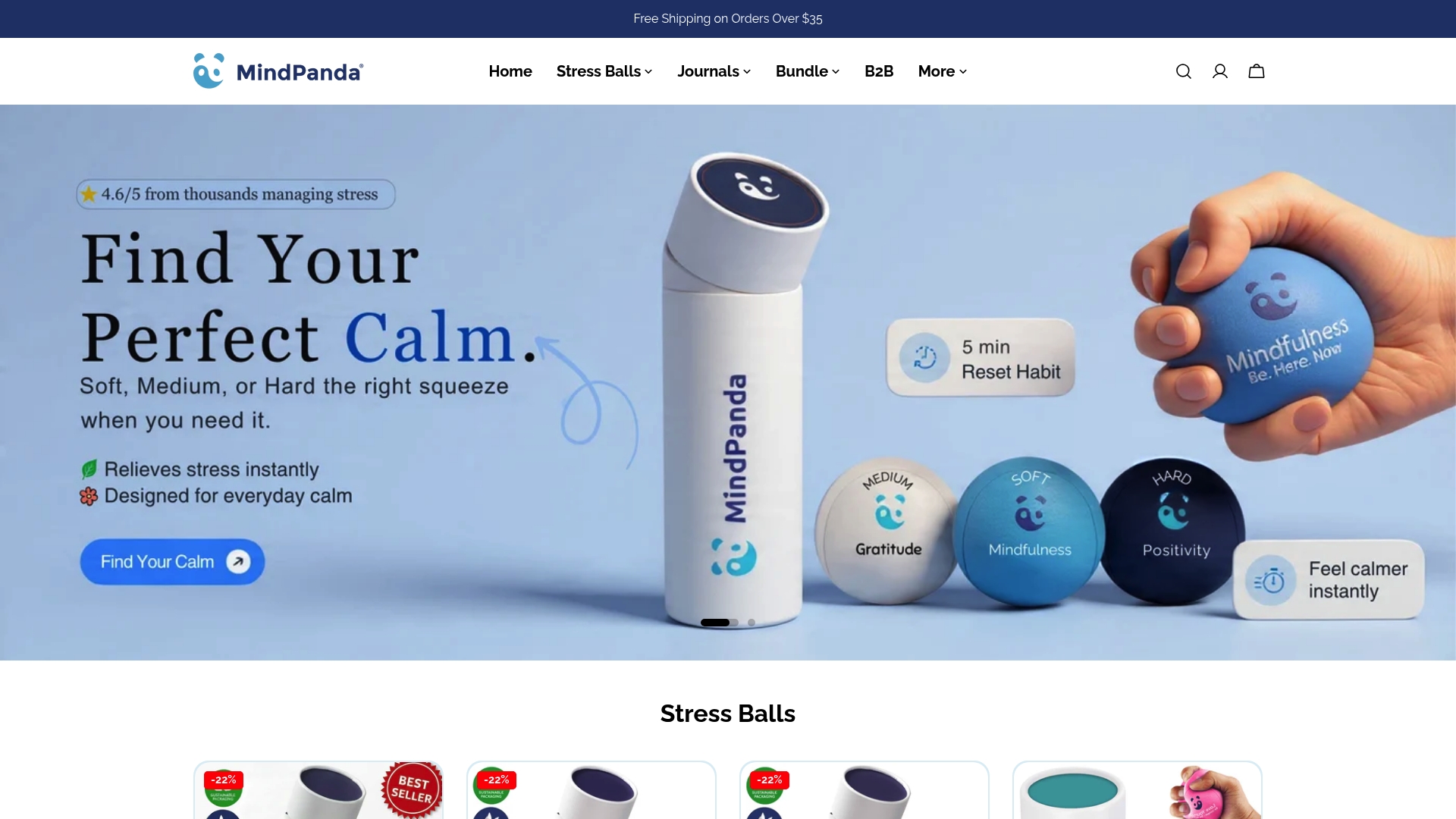
Browse the full stress ball collection to find the resistance and size that fits your hand and your routine, whether that’s a single ball for your desk or a set for practicing with kids at home. If you want to pair breath work with daily reflection, the Balance productivity planner gives you a place to log which technique worked and when, so the two-week habit-building period actually produces useful patterns instead of vague impressions. For teams looking to bring stress-relief tools into the workplace, Mindpanda’s corporate gifting and bulk order options make it simple to outfit a whole office at once. None of these replace clinical care, but they make the daily practice a lot easier to stick with.
Sources
- The Effect of Stress Ball and 4-7-8 Breathing Technique on Fear, Anxiety and Physiological Parameters
- Do stress balls really work? Plus, how to use them for anxiety — Calm Blog
- Try five-finger breathing for deep relaxation — Cleveland Clinic
- Do stress balls really work? Plus how to use them for anxiety — Healthline
FAQ
Can Stress Cause Shortness of Breath?
Yes. Stress activates the fight-or-flight response, which often makes breathing shallow and rapid, and that pattern can itself create a feeling of breathlessness even when nothing is physically wrong with your lungs. Slowing the exhale, whether through a stress ball routine or the calming hand technique, directly counters that pattern.
Can Deep Breathing Help With Panic Attacks?
Deep, slow breathing can ease some panic symptoms, particularly when the focus is on extending the exhale rather than forcing a deep inhale. Trying to force a full, controlled breathing pattern the moment panic hits often backfires, so starting with just a longer exhale and a physical anchor like a stress ball squeeze tends to work better in the first minute.
What Breathing Exercises Can Help With Hyperventilation?
The priority during hyperventilation is slowing down and lengthening the exhale, not taking bigger breaths. Techniques like the calming hand method and gentle five-finger tracing work well because they give your hands something to focus on while your exhale gradually stretches out.
How Do Navy SEALs Breathe Under Stress?
Military and tactical training programs often teach structured box breathing, a pattern of equal-count inhale, hold, exhale, and hold again, to manage stress before high-pressure situations. The core principle, controlled timing paired with a physical or mental anchor, is the same one behind breath-synchronized stress-ball squeezing, just without the ball.
Is Breathing With a Stress Ball Enough on Its Own for Anxiety?
It works well for situational spikes, like nerves before a meeting or a sudden stress flare, but it isn’t a standalone treatment for chronic anxiety disorders. If anxiety is persistent or interferes with daily life, pair the practice with professional support rather than relying on the ball alone.